 English
 Español
 Português
 Deutsch
 Français
 Italiano
 Nederlands
 العربية
 日本語
 한국어
 ไทย
Turn the Curve Into a Stone List
A visual arc is not a complete sourcing instruction. Number each position, give the dimensions and identify the center. The supplier should be able to connect every proposed stone to one location in your design.
Image 1 of 3: Face-up studio view
Matched Lab-Grown Diamonds / Business sourcing
Drawing-led sets with a deliberate size progression, supplied against a numbered design and an agreed approval sequence.
Preferences are a brief, not a live inventory selection.
A product brief, not just a grade list
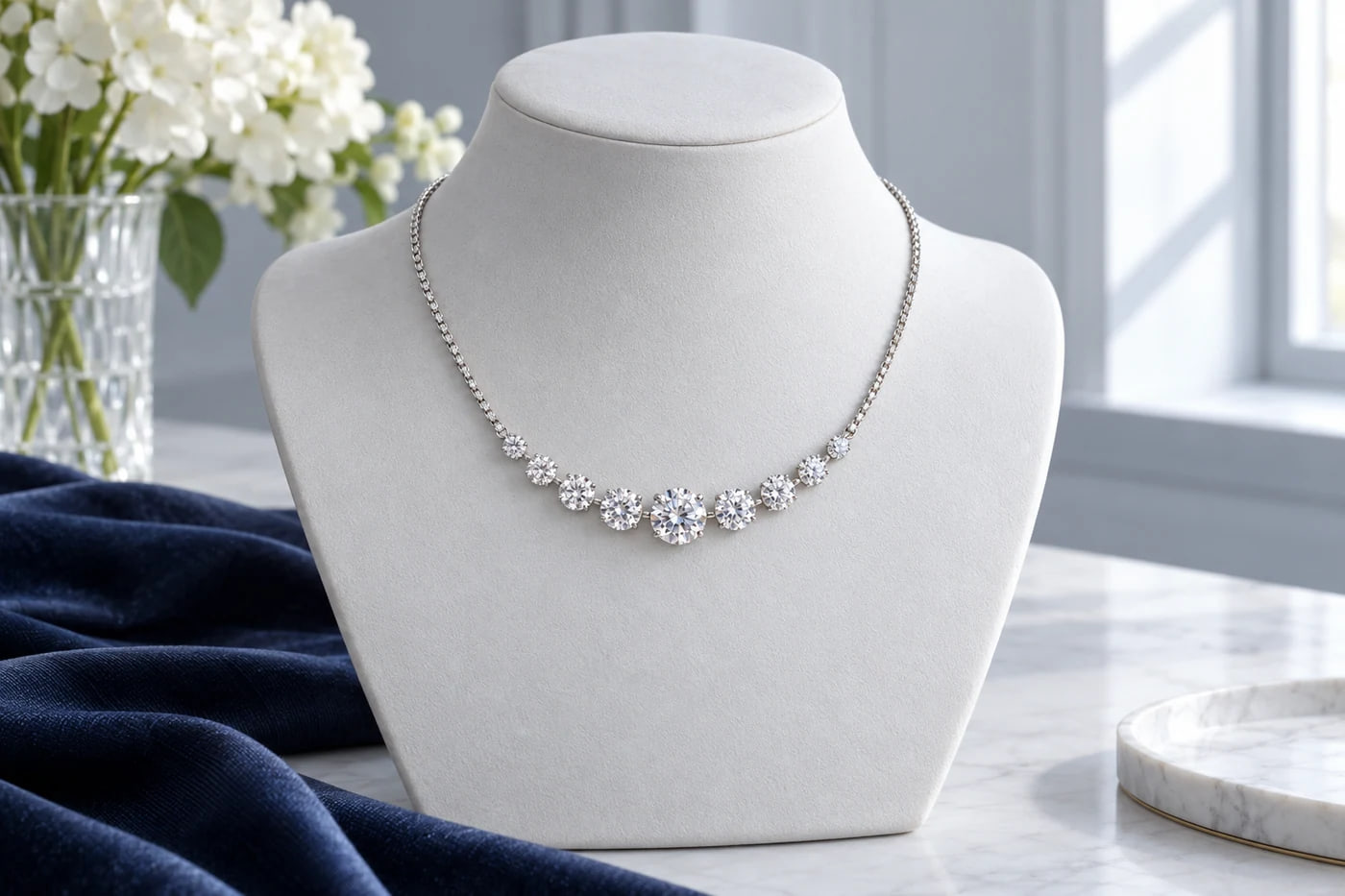
Graduated lab-grown diamond sets organize several stones into an intentional sequence rather than a bag of mixed sizes. The reference layout on this page uses nine round diamonds: one largest center stone and four corresponding positions on each side, tapering toward the ends. The picture illustrates a layout idea, not a ready-made stock set or a confirmed capability to reproduce every progression. Translate your design into a numbered bill of materials, with required dimensions, counts and visual relationships at each position. Review feasibility and a proposed sample arrangement before fixing the setting. Individual weights, set total, matching criteria and supply arrangements must then be confirmed for the actual selected group.
01 / Define the actual requirement
Separate the product description, sample values and information that must be confirmed for the actual selected goods.
| Material | Laboratory-grown diamond |
|---|---|
| Reference layout | 9 round brilliant diamonds: a center plus four paired positions |
| Progression | Largest at center; left/right sizes decrease toward both ends |
| Illustrative diameter sequence | 2.00 / 2.25 / 2.50 / 2.75 / 3.00 / 2.75 / 2.50 / 2.25 / 2.00 mm; request example only |
| Position mapping | Number every stone location and identify corresponding left/right positions |
| Actual weights | Record each selected stone and the measured set total; no guessed conversion |
| Visual consistency | Agree color relationship, facet appearance and paired-position matching |
| Feasibility / sample approval | Specialist directed sourcing; validate the layout and repeat route first |
| Growth method | Confirm CVD or HPHT for the proposed goods |
| Documentation | Confirm the available laboratory report or batch documentation |
| Post-growth treatment | Confirm disclosed treatment information for the proposed goods |
| Order unit | One numbered graduated set; count and weights tied to the approved BOM |
| MOQ / price / lead time | Confirmed only in the quotation for the agreed specification |
| Growth method | Confirm CVD or HPHT for the proposed goods |
|---|---|
| Documentation | Confirm the available laboratory report or batch documentation |
| Post-growth treatment | Confirm disclosed treatment information for the proposed goods |
IGI and GIA services have their own report formats. Use the actual issuing laboratory's wording rather than adding a blanket quality claim. IGI report background · Current GIA services
| Reference layout | 9 round brilliant diamonds: a center plus four paired positions |
|---|---|
| Actual weights | Record each selected stone and the measured set total; no guessed conversion |
| Order unit | One numbered graduated set; count and weights tied to the approved BOM |
| MOQ / price / lead time | Confirmed only in the quotation for the agreed specification |
Send a numbered BOM, layout drawing and the intended visual rhythm.
02 / Choose against the design
Use these product-specific checks to make your quotation request more precise.
A visual arc is not a complete sourcing instruction. Number each position, give the dimensions and identify the center. The supplier should be able to connect every proposed stone to one location in your design.
A sequence can graduate by diameter, outline area or another design requirement; those are not the same as a fixed carat progression. State the intended visual rhythm and have the setter review its relationship to the mount.
In a symmetrical layout, the stone on one side should be compared with its corresponding position on the other. Approve both the sequence as a whole and the relationship within those paired positions.
A one-off sample arrangement does not demonstrate a repeatable set program. Discuss the supply route, accepted variation, replacement approach and inspection record before treating a graduated concept as an ongoing collection product.
03 / Plan from the finished design
The finished setting or production workflow determines which measurements and matching decisions belong in the enquiry.
APPLICATION 1
A necklace can build toward a focal center through a deliberate size progression. The nine-round reference uses one largest middle stone and four corresponding positions on each side. Define every location and approve the actual stones before finalizing the links and spacing.
Brief This Application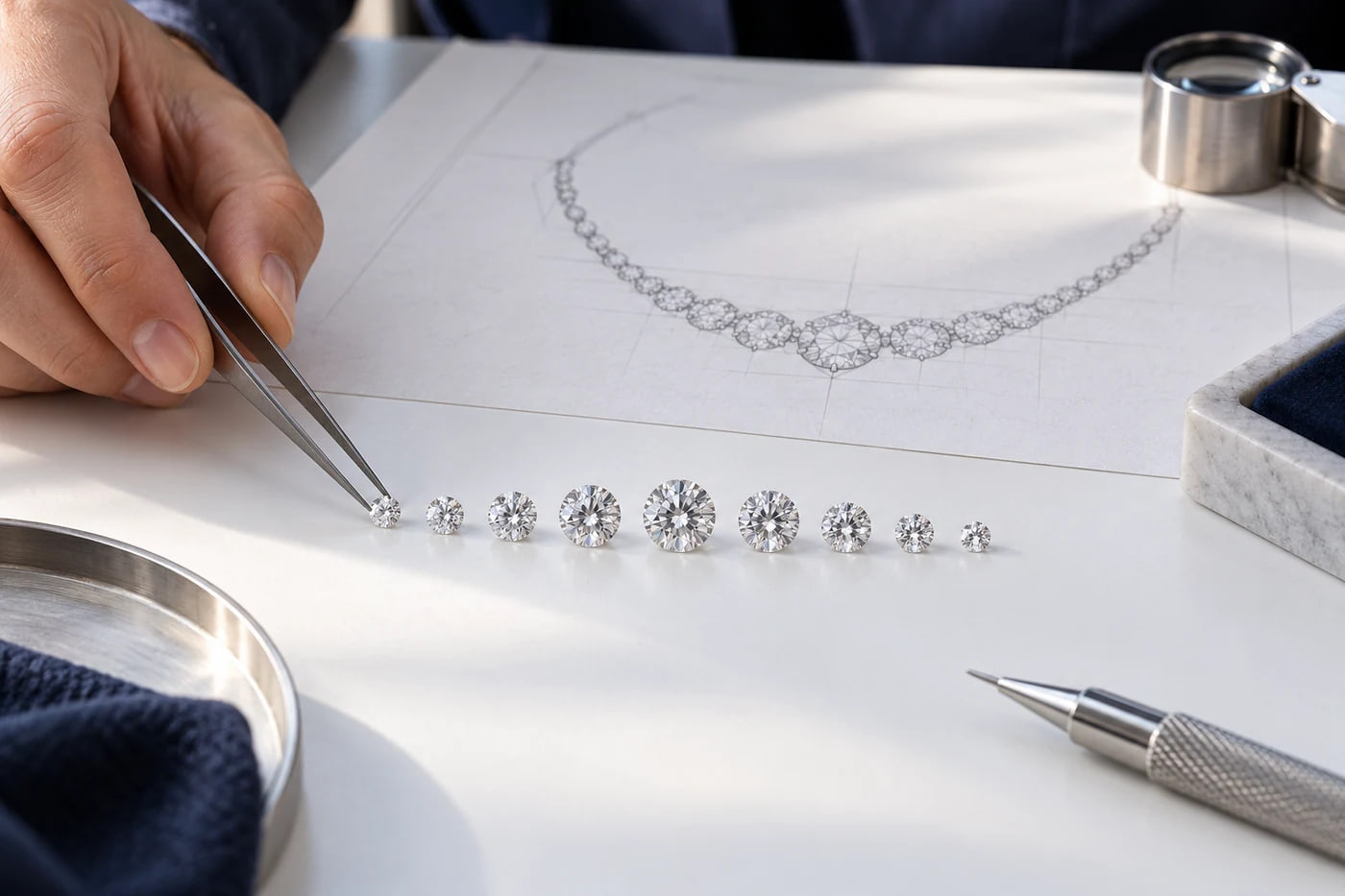
APPLICATION 2
Place the proposed selection on the numbered drawing to judge the complete progression. Compare the four corresponding left/right pairs as well as the center, and keep revisions to dimensions or positions visible in the approval record before the set is packed.
Brief This ApplicationADDITIONAL DESIGN USE
A bracelet may use a centered progression or another specified rhythm. Show the actual layout and distinguish corresponding pairs from individually sized positions so a quote can identify the intended set rather than a miscellaneous mixed group.
Brief This Application04 / Your buying model
Test a deliberate progression before committing the metal structure or a production program.
Include in the RFQ: Send a numbered BOM, layout drawing and the intended visual rhythm.
Connect each stone position to the actual seats and inspection record.
Include in the RFQ: Define dimensions, corresponding pairs, count and the method for measuring total weight.
Develop a one-off set without confusing a proposed sample with confirmed recurring supply.
Include in the RFQ: Identify the fixed design constraints, sample approval stages and future replacement needs.
05 / Qualitative procurement scenarios
Use a specific business scenario to prepare an enquiry. These examples do not assert national preferences, market size or confirmed orders.
| Market | Buying scenario | RFQ focus |
|---|---|---|
| United States | Graduated line-jewelry proposals | Numbered sequence, paired positions and sample approval |
| United Kingdom | One-off bespoke necklace and bracelet layouts | Design envelope, progression intent and setter review |
| Australia | Collection sample and replenishment assessment | Approved BOM, variation limits and reserve strategy |
For a US-facing jewelry proposal, a graduated-set brief should show which position belongs to each stone. Compare the overall visual progression before reducing the proposal to a total carat figure. The reference is a design-planning scenario, not evidence of a national trend.
For a bespoke layout, determine whether the design requires a strictly symmetric progression or a different intentional sequence. Provide the numbered drawing and approve the proposed selection with the setter. Feasibility and available supply remain specific to the project.
For a studio considering a graduated collection, treat the sample as an opportunity to establish the stone list and acceptance criteria. A separate supply review should determine whether later sets and replacement positions can be sourced. No repeat capability is assumed from the illustration.
06 / A practical comparison
Compare the properties that change the purchasing decision, then review the actual selected stones or parcel.
| Buying point | Graduated set | Same-size calibrated parcel |
|---|---|---|
| Size plan | Intentional change from position to position | One defined dimensional group |
| Record structure | Numbered BOM and progression map | Counted group with one dimension specification |
| Matching task | Corresponding positions plus overall visual rhythm | Consistency across equal-size stones |
| Weight record | Individual values and set total | Actual count and parcel total |
| Approval focus | Layout, feasibility and position-specific fit | Repeated-setting fit and group appearance |
08 / Before you source
No. It is an illustrative way to explain a numbered progression brief. The actual dimensions, shape sequence, availability and set assembly need project-specific confirmation. Do not treat the generated layout as proof of a ready-to-ship product or a recurring supply program.
Not necessarily. The design may need a progression in diameter or face-up appearance rather than evenly spaced carat increments. Explain the intended rhythm, provide dimensions for each position and record the actual weights of the selected stones instead of relying on an approximate conversion.
Number the positions across the complete layout and identify the center. Mark which positions correspond on the left and right, for example the first and last stones in the reference arc. The same map should follow the proposed selection, approval record and packing list.
Submit the intended shapes and dimensions as a new feasibility brief. Fancy-shaped progressions add contour and orientation requirements to the size sequence. The nine-round reference does not establish available stock or a proven ability to reproduce another shape program.
A replacement needs the original position number, dimensions, visual reference and surrounding-stone context. Discuss the reserve and replacement approach while developing the sample. Later supply should be compared with the accepted set rather than assumed to match from the position’s nominal size alone.
Approve the numbered layout, actual proposed stones, progression, matching criteria and evidence records. Confirm the set count, individual weights and total, together with commercial and delivery terms. If the design will repeat, establish the supply and acceptance process separately from one sample’s approval.
09 / Prepare the next conversation
Start with the fixed requirements and explain where the sourcing selection can vary.
Send a numbered BOM, layout drawing and the intended visual rhythm.
YOUR PREFERRED REQUIREMENT
Graduated Lab-Grown Diamond Sets
Continue to our contact form with your selected specifications and send your requirements directly to our sourcing team.
Review your product selection and requirements on our contact form.
Keep the buying brief connected
Matched Lab-Grown Diamonds / SOURCING ON REQUEST
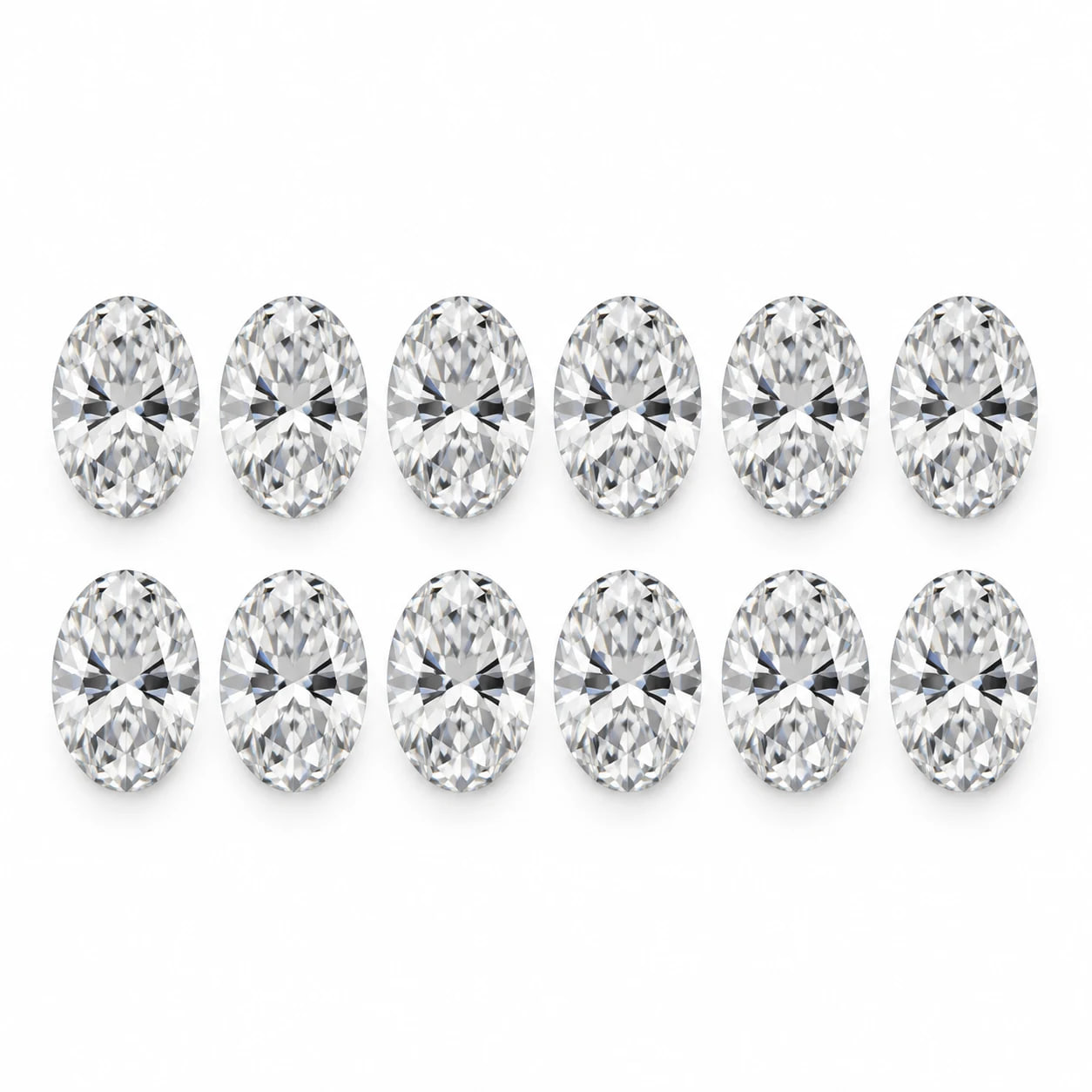
Counted same-size groups for collection layouts and repeat settings, built around agreed dimensions rather than nominal weight alone.
Explore Product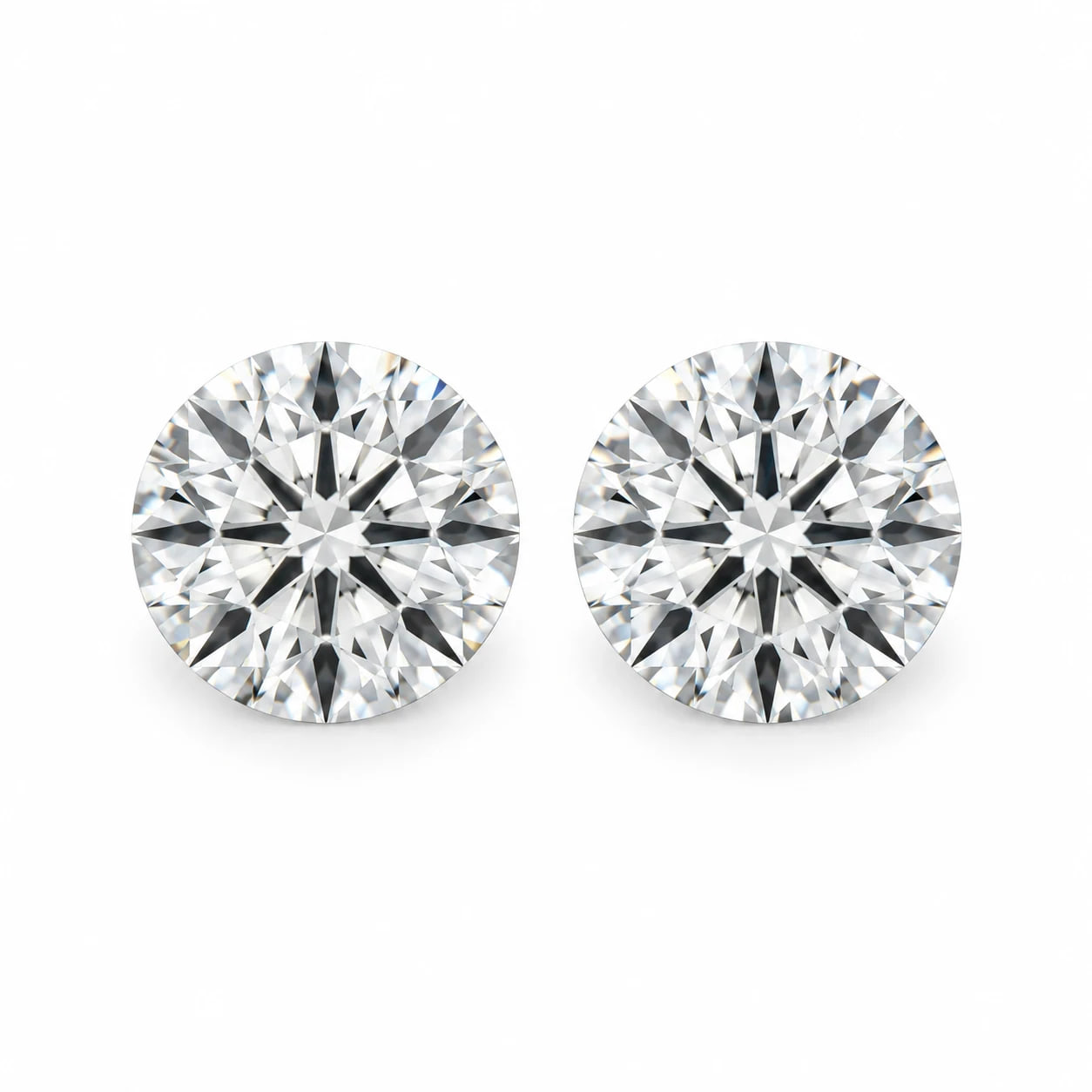
Matched Lab-Grown Diamonds / SOURCING ON REQUEST
Two round loose diamonds reviewed together for earring programs, custom pairs and clearly defined repeat orders.
Explore Product
Loose Lab-Grown Diamonds / SOURCING ON REQUEST
Specify round brilliant center stones and matching pairs by diameter, report details and face-up appearance for your next jewellery order.
Explore Product