 English
 Español
 Português
 Deutsch
 Français
 Italiano
 Nederlands
 العربية
 日本語
 한국어
 ไทย
Define the Pink You Mean
A broad pink label does not fix tone, saturation or modifying hue. Share a consistent reference and explain what can vary. Do not interpret an edited lifestyle image as a measurable or laboratory-confirmed color target.
Image 1 of 3: Face-up studio view
Fancy Color Lab-Grown Diamonds / Business sourcing
Pink loose diamonds for bespoke color designs, with the actual hue, outline and supporting documentation reviewed before selection.
Preferences are a brief, not a live inventory selection.
A product brief, not just a grade list
Pink lab-grown diamonds require a color-led selection process as well as the dimensional checks used for any loose stone. A pink reference can range in appearance, so two appealing photographs should not be treated as proof of a matched tone. The illustrative stone here is a pink cushion cut, combining a softened outline with the chosen color direction. Describe the intended shade, metal context, dimensions and documentation needs before the sourcing comparison begins. Keep any formal color grade tied to the actual report and confirm the disclosed growth and treatment information separately. MEITUO uses those requirements to coordinate a specific proposal, with availability and commercial terms agreed for the selected goods.
01 / Define the actual requirement
Separate the product description, sample values and information that must be confirmed for the actual selected goods.
| Material | Laboratory-grown diamond |
|---|---|
| Reference shape | Cushion cut with a softened square outline |
| Illustrative weight request | 2.00 ct per stone; sample target only |
| Illustrative dimensions | 7.50 × 7.50 × 4.80 mm; reference configuration, not live inventory |
| Reference color | Soft pink visual direction; no formal intensity grade assigned |
| Hue and tone reference | Provide a consistent reference and identify acceptable modifying hues |
| Clarity and cutting details | Confirm the actual report fields and face-up appearance |
| Other shape requests | Oval, radiant or another clearly defined outline, subject to sourcing review |
| Growth method | Confirm CVD or HPHT for the proposed goods |
| Documentation | Confirm the available laboratory report or batch documentation |
| Post-growth treatment | Confirm disclosed treatment information for the proposed goods |
| Order unit | Individual loose stone; coordinated pairs or groups require a separate matching brief |
| MOQ / price / lead time | Confirmed only in the quotation for the agreed specification |
| Clarity and cutting details | Confirm the actual report fields and face-up appearance |
|---|---|
| Growth method | Confirm CVD or HPHT for the proposed goods |
| Documentation | Confirm the available laboratory report or batch documentation |
| Post-growth treatment | Confirm disclosed treatment information for the proposed goods |
IGI and GIA services have their own report formats. Use the actual issuing laboratory's wording rather than adding a blanket quality claim. IGI report background · Current GIA services
| Illustrative weight request | 2.00 ct per stone; sample target only |
|---|---|
| Order unit | Individual loose stone; coordinated pairs or groups require a separate matching brief |
| MOQ / price / lead time | Confirmed only in the quotation for the agreed specification |
Provide a consistent hue reference, cushion outline and setting context.
02 / Choose against the design
Use these product-specific checks to make your quotation request more precise.
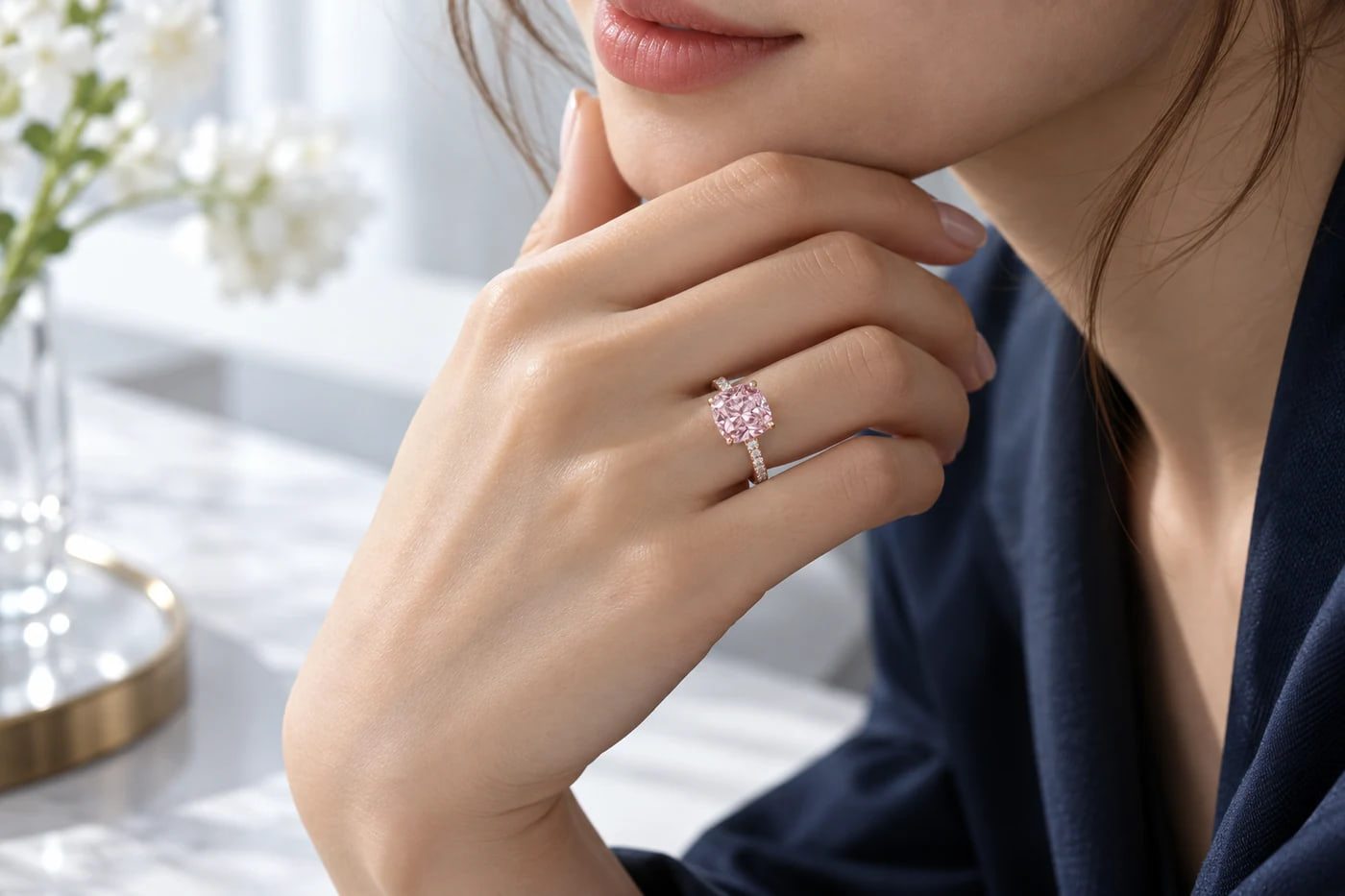
A broad pink label does not fix tone, saturation or modifying hue. Share a consistent reference and explain what can vary. Do not interpret an edited lifestyle image as a measurable or laboratory-confirmed color target.
A square or elongated cushion can change the composition of a ring or pendant. Specify the intended outline and compare the actual face-up color distribution, keeping the dimensional approval connected to the design rather than to a generic shape name.
The surrounding metal and any colorless accents create the context in which the pink diamond will be viewed. Describe that setting and ask how the proposed stone can be reviewed, rather than relying on isolated screen color alone.
Pink is a visual direction until the proposed stone’s evidence establishes a specific description. Keep formal color names, growth information and treatment disclosure as issued, avoiding rarity, investment or untreated claims that the supplied documents do not substantiate.
03 / Plan from the finished design
The finished setting or production workflow determines which measurements and matching decisions belong in the enquiry.
APPLICATION 1
A pink cushion can be selected around a client-approved color direction and ring silhouette. Identify square versus elongated proportions, the intended metal and any surrounding colorless accents before comparing proposed stones.
Brief This Application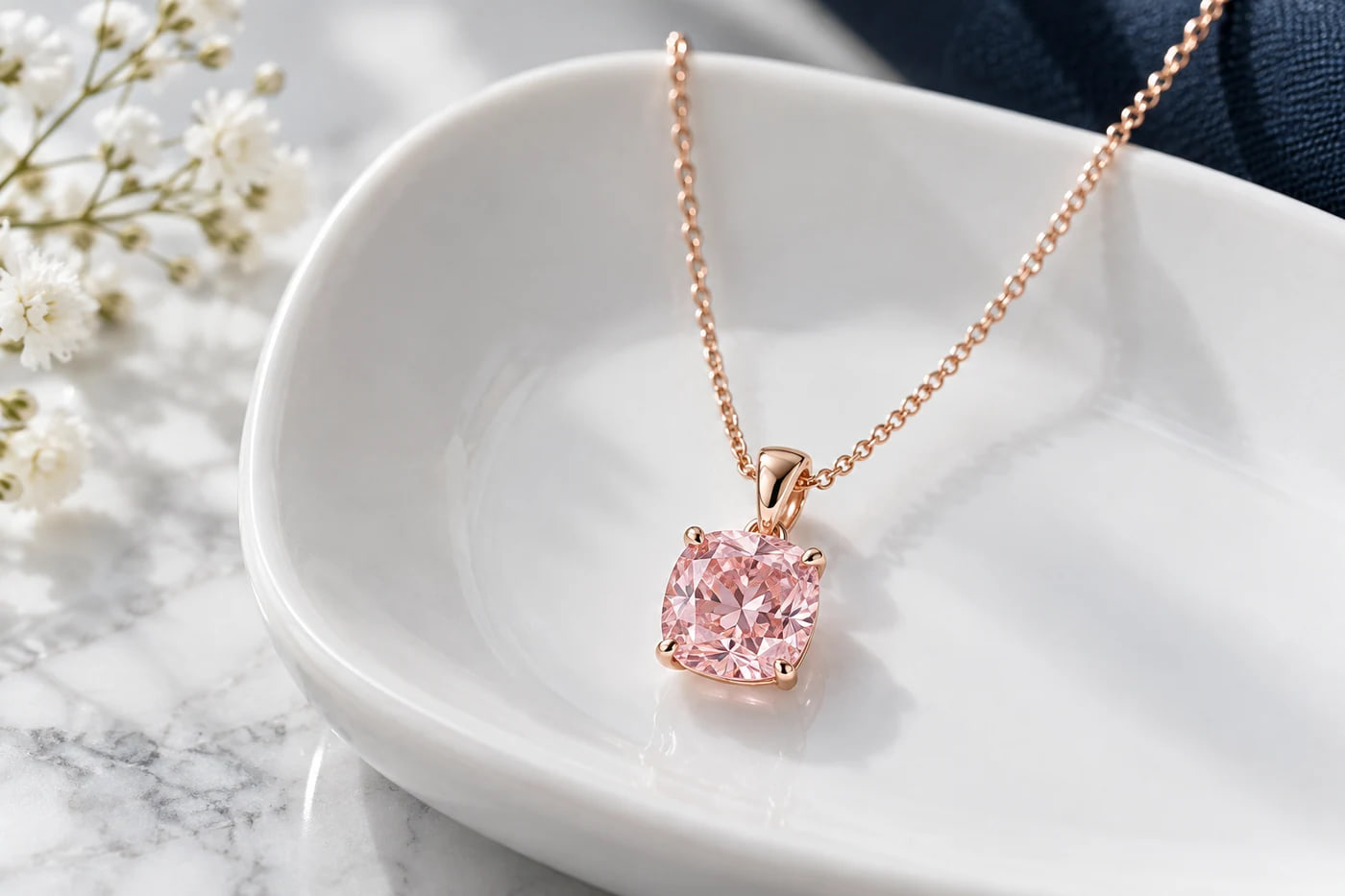
APPLICATION 2
For a pendant, describe the desired outline, orientation and visible metal around the stone. Review the actual cushion dimensions and face-up color before the mount is fixed, especially when the design depends on a specific soft color effect.
Brief This ApplicationADDITIONAL DESIGN USE
A collection can share a pink reference without assuming that every new stone carries an identical hue. Record accepted variation, compare each proposed stone and distinguish the visual coordination goal from any formal laboratory color description.
Brief This Application04 / Your buying model
Translate a client’s pink color direction into a stone-specific proposal with realistic approval expectations.
Include in the RFQ: Provide a consistent hue reference, cushion outline and setting context.
Maintain a coherent color story while making the limits of stone-to-stone matching explicit.
Include in the RFQ: State which tone variations fit the collection and how each new stone will be approved.
Keep the selected pink diamond’s records aligned with both product descriptions and the actual mount.
Include in the RFQ: Request the individual document information and confirm dimensions before setting.
05 / Qualitative procurement scenarios
Use a specific business scenario to prepare an enquiry. These examples do not assert national preferences, market size or confirmed orders.
| Market | Buying scenario | RFQ focus |
|---|---|---|
| United States | Personalized pink-center proposals | Hue reference, cushion proportions and exact document wording |
| United Kingdom | Client-led bespoke color commissions | Accepted tone, intended metal and sample approval |
| Australia | Made-to-order color designs | Actual stone review, mount constraints and repeat variation |
For a US-facing custom proposal, give the buyer a stone-specific comparison rather than a generic pink promise. The proposal should connect the actual color evidence, dimensions and design imagery. No claim about national popularity, scarcity or investment performance is implied by this scenario.
For a bespoke commission, discuss what the client means by pink before finalizing a cushion outline. Include the intended metal and explain the approval reference. Any formal color or treatment description must remain tied to the selected stone’s supporting information.
For a made-to-order design, select and approve the pink stone before committing to a close-fitting mount. A later commission may require a new color comparison even when the same reference is used. Keep repeat planning separate from an assumption of identical future supply.
06 / A practical comparison
Compare the properties that change the purchasing decision, then review the actual selected stones or parcel.
| Buying point | Pink cushion reference | Pink oval request |
|---|---|---|
| Outline | Softened square or elongated cushion | Continuous elongated oval |
| Dimension review | Length, width, depth and corner contour | Length, width, depth and ratio |
| Color approval | Actual hue and distribution of the selected stone | Actual hue and distribution of the selected stone |
| Setting question | How corners and cushion contour fit the design | How the elongated silhouette fits the design |
| No automatic winner | Select the individual stone and outline that suit the brief | Select the individual stone and outline that suit the brief |
08 / Before you source
The image is a color-direction illustration, not a measured or reserved diamond. Share your preferred reference and define acceptable variation, then review actual proposed stones. Display settings, lighting and image processing mean a website image cannot guarantee an exact physical color match.
Yes, this page’s sample configuration uses a softened square cushion outline. Other shapes can be requested separately with dimensions and references. Neither the picture nor the example carat weight establishes live inventory or the availability of every color-and-shape combination.
If the project requires or excludes a particular hue direction, state that preference with a consistent reference. Follow the actual report wording where available rather than simplifying it to a different color name. The selected stone’s appearance should still be reviewed in the intended design context.
Only make a treatment claim when the actual evidence supports the wording used. Confirm growth and post-growth treatment information for the proposed stone, preserving the document and disclosure. A pink appearance or a general supplier description is not sufficient proof of an untreated history.
Ask for a pair-specific selection with shared color and outline criteria. Compare the proposed stones together under consistent conditions and retain individual measurements and documents. Similar color labels do not automatically establish identical appearance or suitability for the two finished pieces.
Provide the desired color reference, shape and dimensions, approximate weight, document requirements and setting concept. Include quantity, destination and the approval sequence. Availability, exact stone data and commercial terms can then be discussed for a defined requirement rather than an undefined pink category.
09 / Prepare the next conversation
Start with the fixed requirements and explain where the sourcing selection can vary.
Provide a consistent hue reference, cushion outline and setting context.
YOUR PREFERRED REQUIREMENT
Pink Lab-Grown Diamonds
Continue to our contact form with your selected specifications and send your requirements directly to our sourcing team.
Review your product selection and requirements on our contact form.
Keep the buying brief connected
Fancy Color Lab-Grown Diamonds / SOURCING ON REQUEST
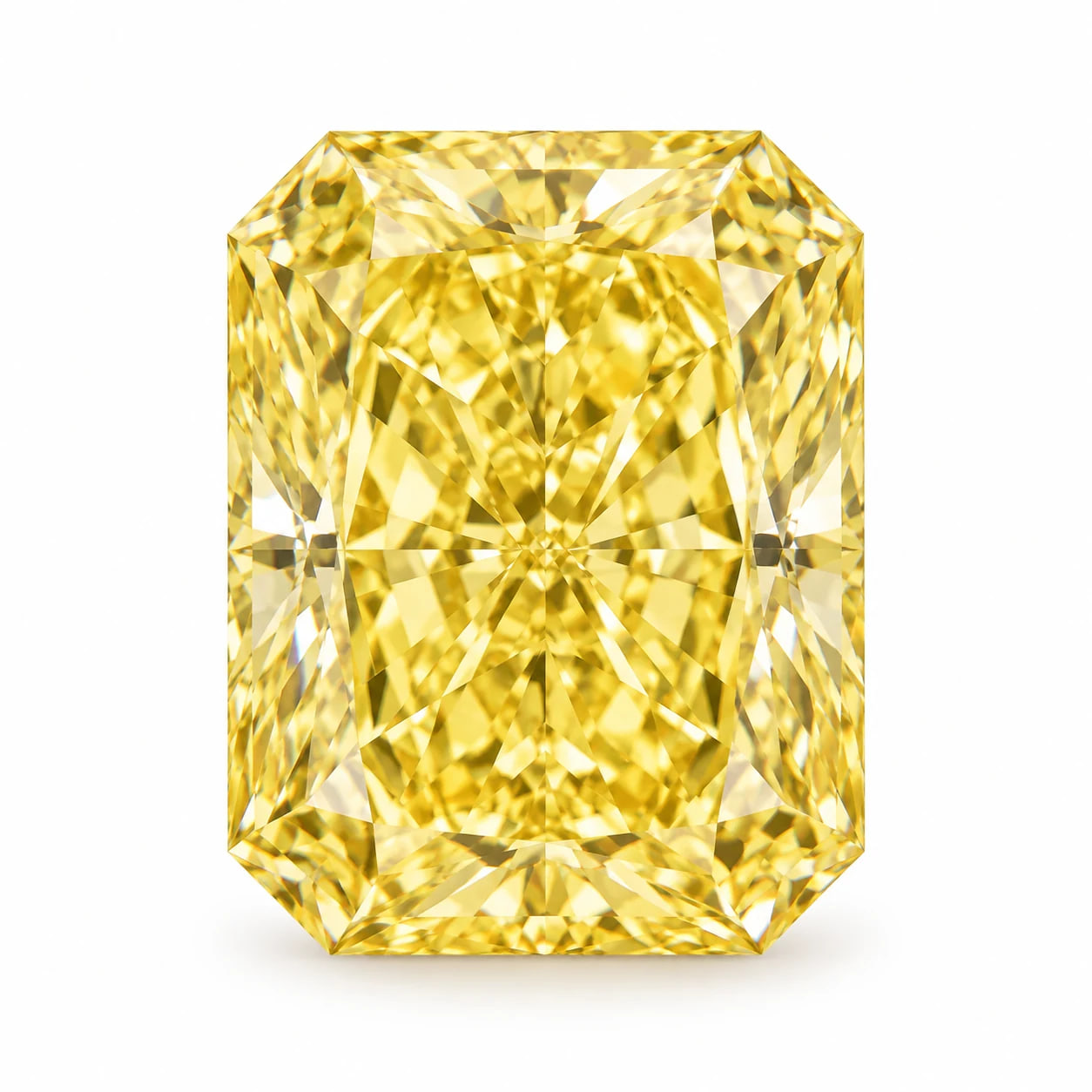
Yellow loose diamonds for design-led rings and pendants, with color appearance and supporting information reviewed stone by stone.
Explore Product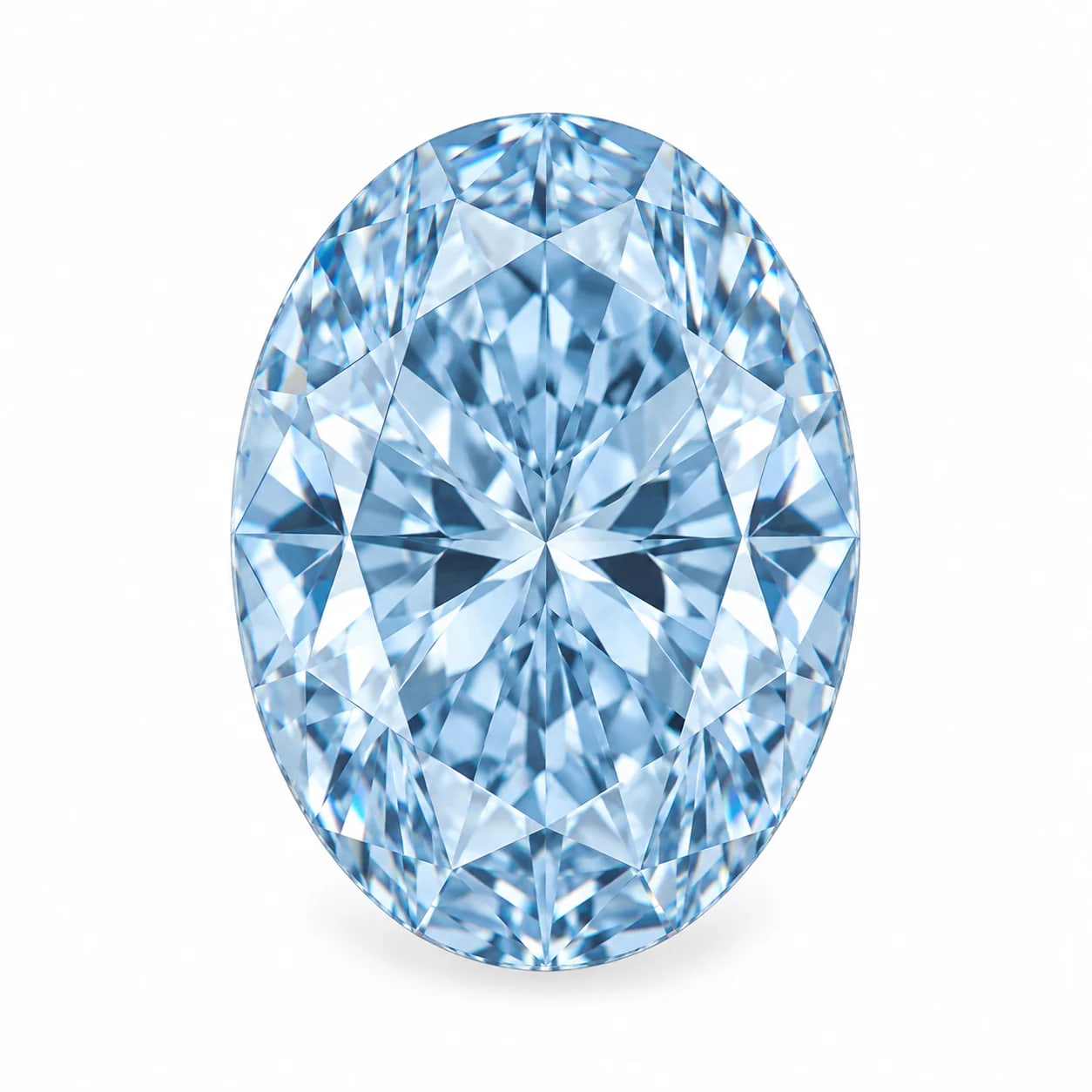
Fancy Color Lab-Grown Diamonds / SOURCING ON REQUEST
Blue loose diamonds for distinctive rings and pendants, evaluated through actual color, dimensions and disclosed stone information.
Explore Product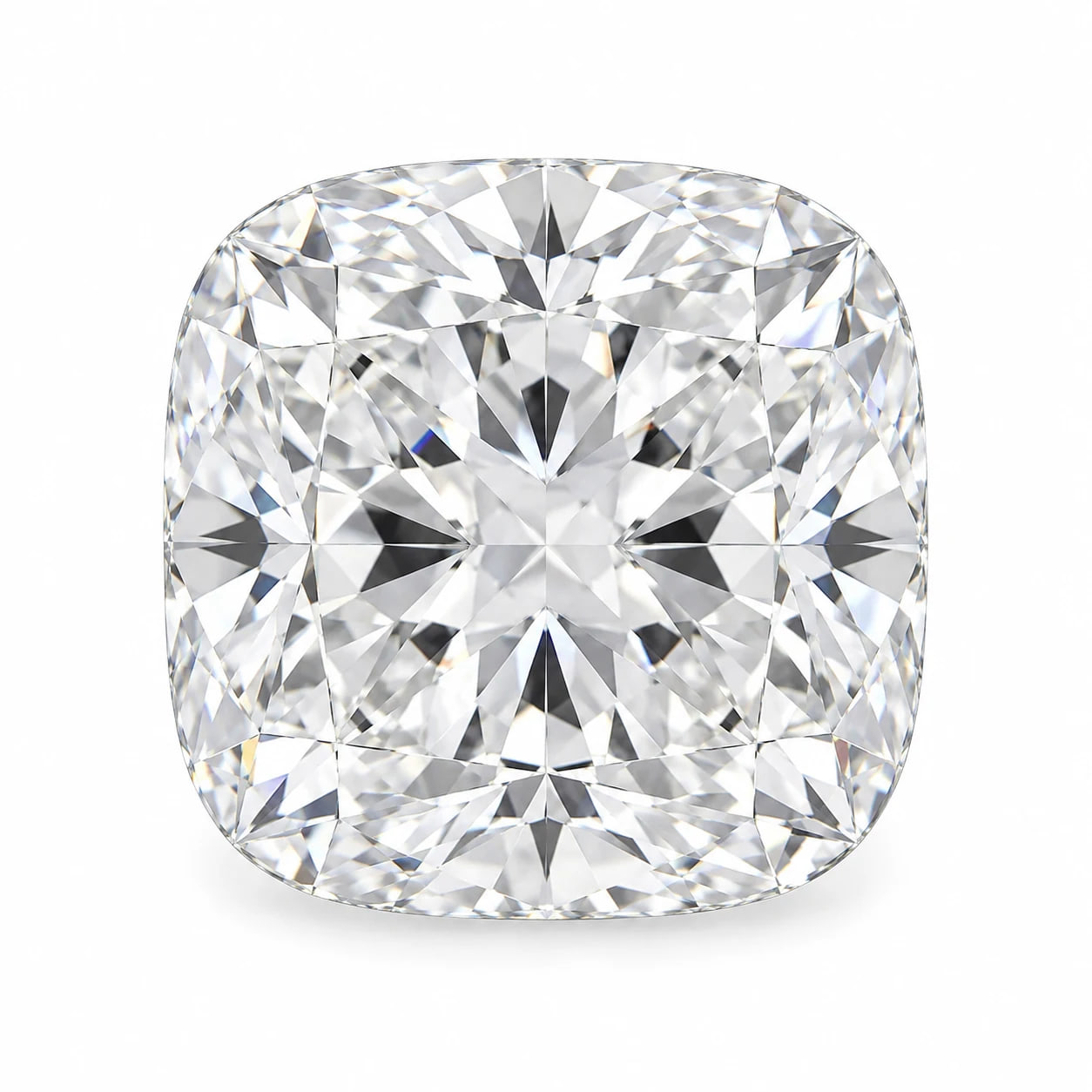
Loose Lab-Grown Diamonds / SOURCING ON REQUEST
Build a cushion-cut diamond brief around square or elongated outlines, facet appearance and the dimensions of your finished design.
Explore Product