 English
 Español
 Português
 Deutsch
 Français
 Italiano
 Nederlands
 العربية
 日本語
 한국어
 ไทย
Describe the Curve Precisely
Two stones can share a chord length while projecting outward by different amounts. Include a contour drawing and the maximum projection from the straight edge so the supplier can assess the actual D-shaped silhouette.
Image 1 of 3: Face-up studio view
Lab-Grown Diamond Side Stones / Business sourcing
Mirrored D-shaped side diamonds, selected around the center outline and the curvature of your finished design.
Preferences are a brief, not a live inventory selection.
A product brief, not just a grade list
Half-moon lab-grown diamond side stones combine one straight inner edge with a rounded outer contour. The resulting D-shaped outline can soften a three-stone layout, but the words half moon do not determine the exact curvature, chord length, depth or cutting style. A pair should be reviewed in its left and right positions beside the center reference, not only as two loose stones with similar grades. Begin with a face-up drawing and the mount’s constraints. MEITUO uses that information for a directed sourcing discussion, with the proposed pair, available evidence and repeat-order feasibility confirmed before the design becomes a production specification.
01 / Define the actual requirement
Separate the product description, sample values and information that must be confirmed for the actual selected goods.
| Material | Laboratory-grown diamond |
|---|---|
| Product form | Loose left/right half-moon side-stone pair |
| Outline | One straight chord edge and one rounded D-shaped outer contour |
| Illustrative drawing | 4.00 mm chord × 2.00 mm projection; sample dimensions, not stock |
| Curvature / symmetry | Approved by contour reference and paired layout |
| Cutting style | Confirm the proposed facet arrangement; no generic grade assumed |
| Center relationship | Identify inner edges, side angle and clearance in the mount |
| Weight record | Actual weight per stone and combined pair weight |
| Growth method | Confirm CVD or HPHT for the proposed goods |
| Documentation | Confirm the available laboratory report or batch documentation |
| Post-growth treatment | Confirm disclosed treatment information for the proposed goods |
| Order unit | Matched side pair, subject to outline-specific sourcing confirmation |
| MOQ / price / lead time | Confirmed only in the quotation for the agreed specification |
| Curvature / symmetry | Approved by contour reference and paired layout |
|---|---|
| Cutting style | Confirm the proposed facet arrangement; no generic grade assumed |
| Growth method | Confirm CVD or HPHT for the proposed goods |
| Documentation | Confirm the available laboratory report or batch documentation |
| Post-growth treatment | Confirm disclosed treatment information for the proposed goods |
IGI and GIA services have their own report formats. Use the actual issuing laboratory's wording rather than adding a blanket quality claim. IGI report background · Current GIA services
| Weight record | Actual weight per stone and combined pair weight |
|---|---|
| Order unit | Matched side pair, subject to outline-specific sourcing confirmation |
| MOQ / price / lead time | Confirmed only in the quotation for the agreed specification |
Provide the center outline, desired side projection and paired-layout reference.
02 / Choose against the design
Use these product-specific checks to make your quotation request more precise.
Two stones can share a chord length while projecting outward by different amounts. Include a contour drawing and the maximum projection from the straight edge so the supplier can assess the actual D-shaped silhouette.
The straight edges often sit nearer the center in a mirrored arrangement. Show the intended orientation and angle on the design, allowing the setter to review how the edges and prongs relate to the center stone.
A half-moon pair should read as a balanced frame. Compare the curves, facet appearance and dimensions in their intended positions; individual grading similarities are not a substitute for approving the paired silhouette.
A generic half-moon label cannot preserve an approved curvature for later orders. Store the accepted drawing and visual reference, and reconfirm whether the same contour can be sourced when the design is repeated.
03 / Plan from the finished design
The finished setting or production workflow determines which measurements and matching decisions belong in the enquiry.
APPLICATION 1
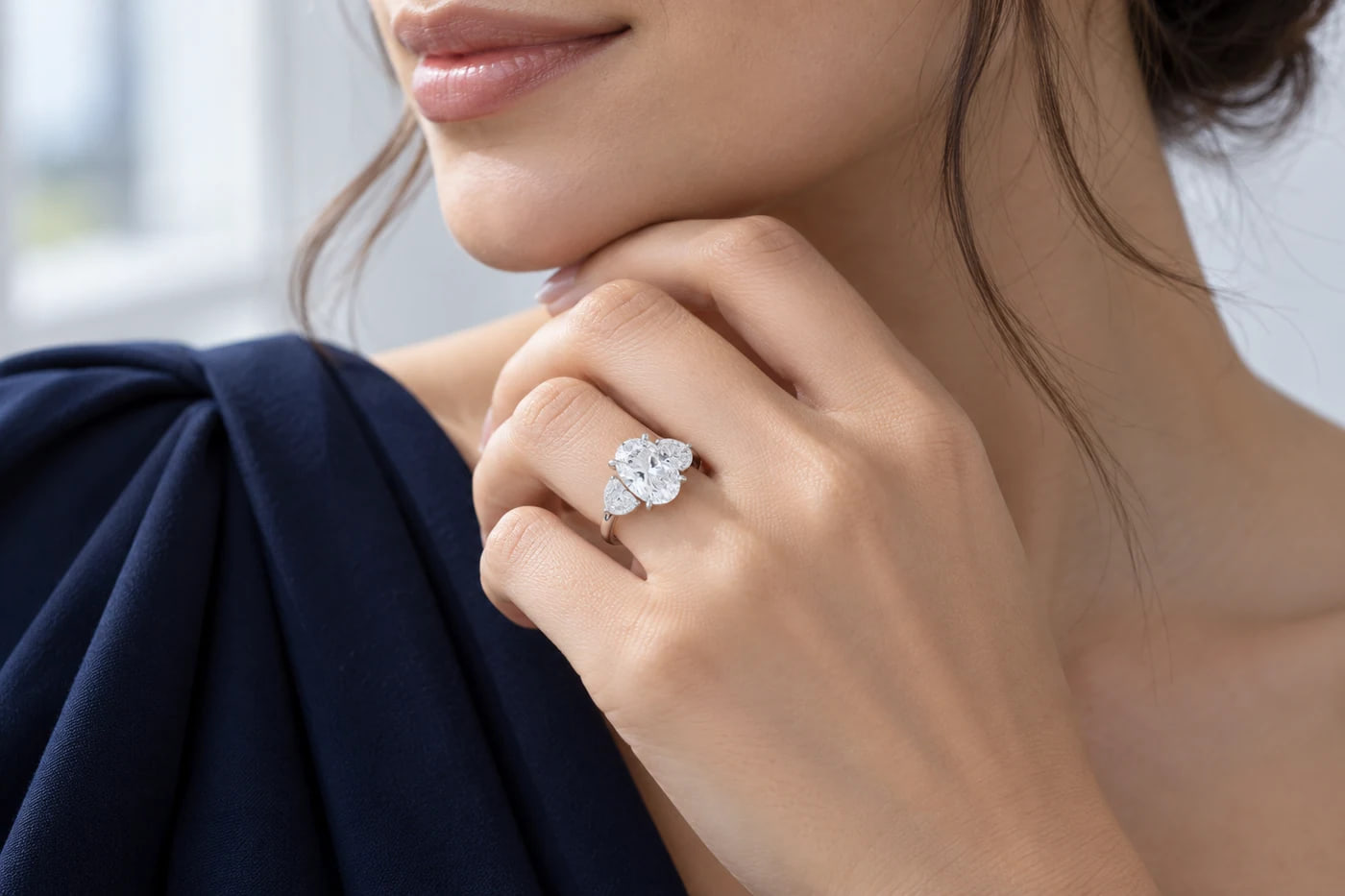
A curved side pair can be evaluated around an oval center when the design calls for rounded shoulders. Match the combined arrangement to the ring drawing, including any gap and the intended side angle.
Brief This Application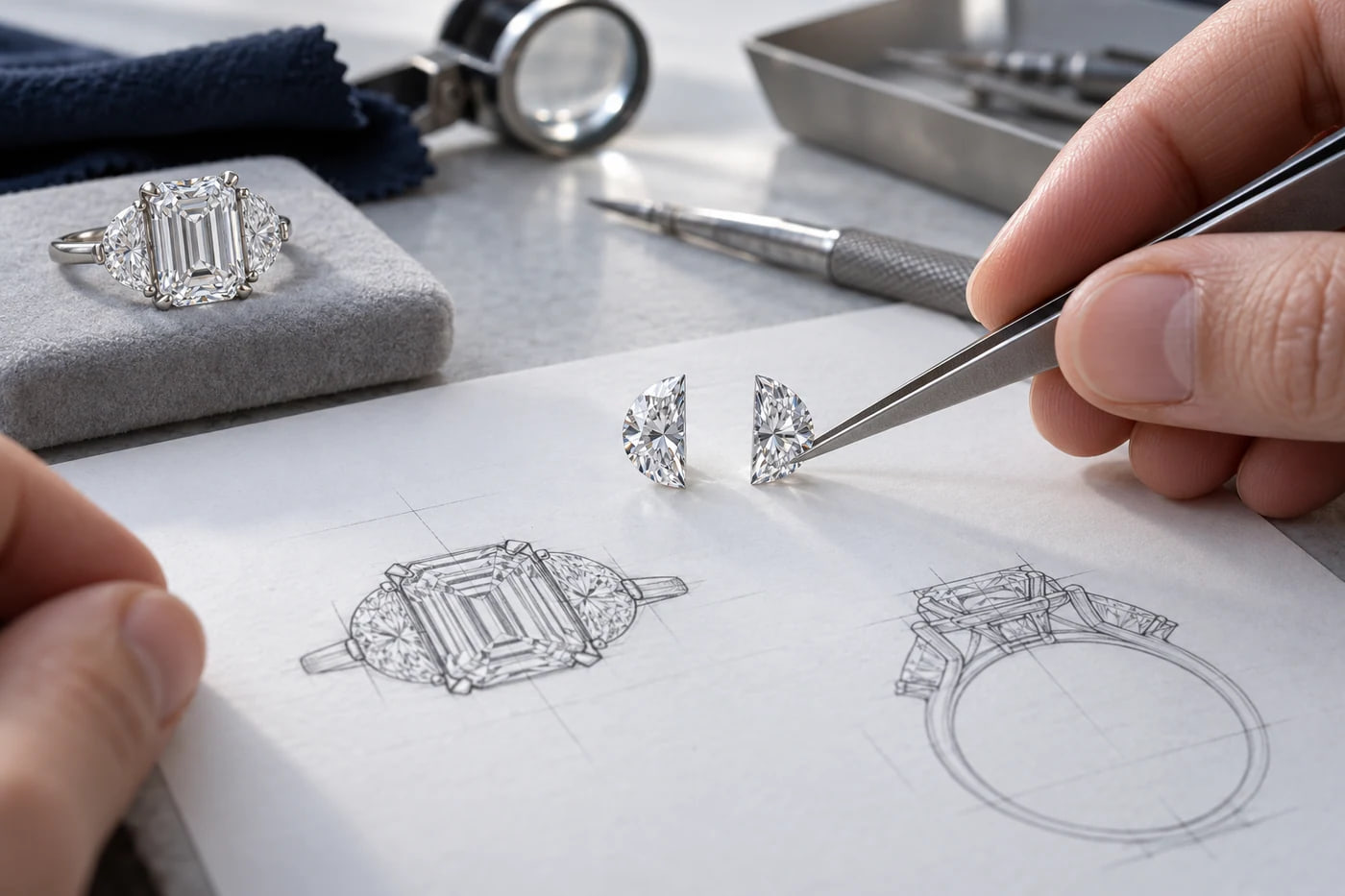
APPLICATION 2
For a sample layout, use a drawing and the proposed loose pair to establish curvature and position before fixing the metal seats. Keep the left/right orientation clear in the approval record.
Brief This ApplicationADDITIONAL DESIGN USE
A cushion center and rounded sides may form a coherent custom composition. The specific corner shape and half-moon curvature need to be reviewed together rather than selected from names alone.
Brief This Application04 / Your buying model
Balance curved sides against a client’s selected center without assuming a universal half-moon proportion.
Include in the RFQ: Provide the center outline, desired side projection and paired-layout reference.
Determine how chord edges, curved contours and depth constraints interact with the mount.
Include in the RFQ: Submit a face-up contour and seat drawing with orientation identified.
Preserve the approved rounded silhouette through sample review and later sourcing discussions.
Include in the RFQ: Retain both side references and identify one-off versus repeat-order needs.
05 / Qualitative procurement scenarios
Use a specific business scenario to prepare an enquiry. These examples do not assert national preferences, market size or confirmed orders.
| Market | Buying scenario | RFQ focus |
|---|---|---|
| United States | Rounded three-stone bridal layouts | Chord, projection, center outline and pair approval |
| United Kingdom | Center-led bespoke commissions | Full silhouette drawing and setter acceptance |
| Australia | Custom collection sampling | Sample outline, approval stages and repeat feasibility |
For a bridal layout offered to US clients, a visual trio reference helps turn a half-moon request into a specific stone arrangement. Record the curve and placement as part of the brief. This illustrates a project workflow rather than a statement about national demand.
A jeweller working around an existing center can use the complete silhouette to judge how far the side stones should project. Send the curve reference before committing the mount. The exact proposed pair must still be checked against the final drawing.
For a sample collection, establish the desired half-moon contour with the design team before asking whether it can support later orders. Keep that feasibility discussion separate from approval of one attractive pair; repeat availability remains subject to confirmation.
06 / A practical comparison
Compare the properties that change the purchasing decision, then review the actual selected stones or parcel.
| Buying point | Half-moon | Trapezoid |
|---|---|---|
| Outer silhouette | Rounded D-shaped contour | Angular four-sided contour |
| Inner-edge reference | Straight chord and curved projection | Parallel edge lengths and side angles |
| Layout effect | Curved framing of the center | Geometric framing of the center |
| Pair review | Curve, projection and mirror balance | Angles, width and mirror balance |
| Selection basis | Actual contour and design fit | Actual contour and design fit |
08 / Before you source
The half-moon outline intended here is D-shaped: one straight edge and one rounded outer edge. It is not a thin crescent. Include a clear contour reference so the sourcing team does not interpret a casual shape description differently from your design.
Give the chord length, the maximum projection from the chord to the curve, and any depth constraint. A drawing is useful for the full contour and corner details. Identify the intended inner edge and the left/right positions beside the center.
Submit the center dimensions and the complete proposed ring silhouette. Half-moon suitability depends on the actual curves, proportions and setting arrangement. Review the proposed stones together and obtain the setter’s approval rather than assuming that any two named shapes automatically fit.
The intended pair should meet agreed mirror-balance and appearance criteria. What can be accepted depends on the design and setting. Define those criteria before selection; do not rely only on similar carat weights or a broad color and clarity range.
The supply route and exact contour require confirmation for the request. Treat the page as a place to define a specialist brief, not a live inventory guarantee. A sample image does not establish availability for every chord size or repeat production requirement.
Retain the accepted contour drawing, center reference, side placement, dimensions and matching criteria. If another pair is proposed later, compare it against those records. Confirm commercial terms and any revised acceptance requirements for each new order.
09 / Prepare the next conversation
Start with the fixed requirements and explain where the sourcing selection can vary.
Provide the center outline, desired side projection and paired-layout reference.
YOUR PREFERRED REQUIREMENT
Half-Moon Lab-Grown Diamond Side Stones
Continue to our contact form with your selected specifications and send your requirements directly to our sourcing team.
Review your product selection and requirements on our contact form.
Keep the buying brief connected
Lab-Grown Diamond Side Stones / SOURCING ON REQUEST
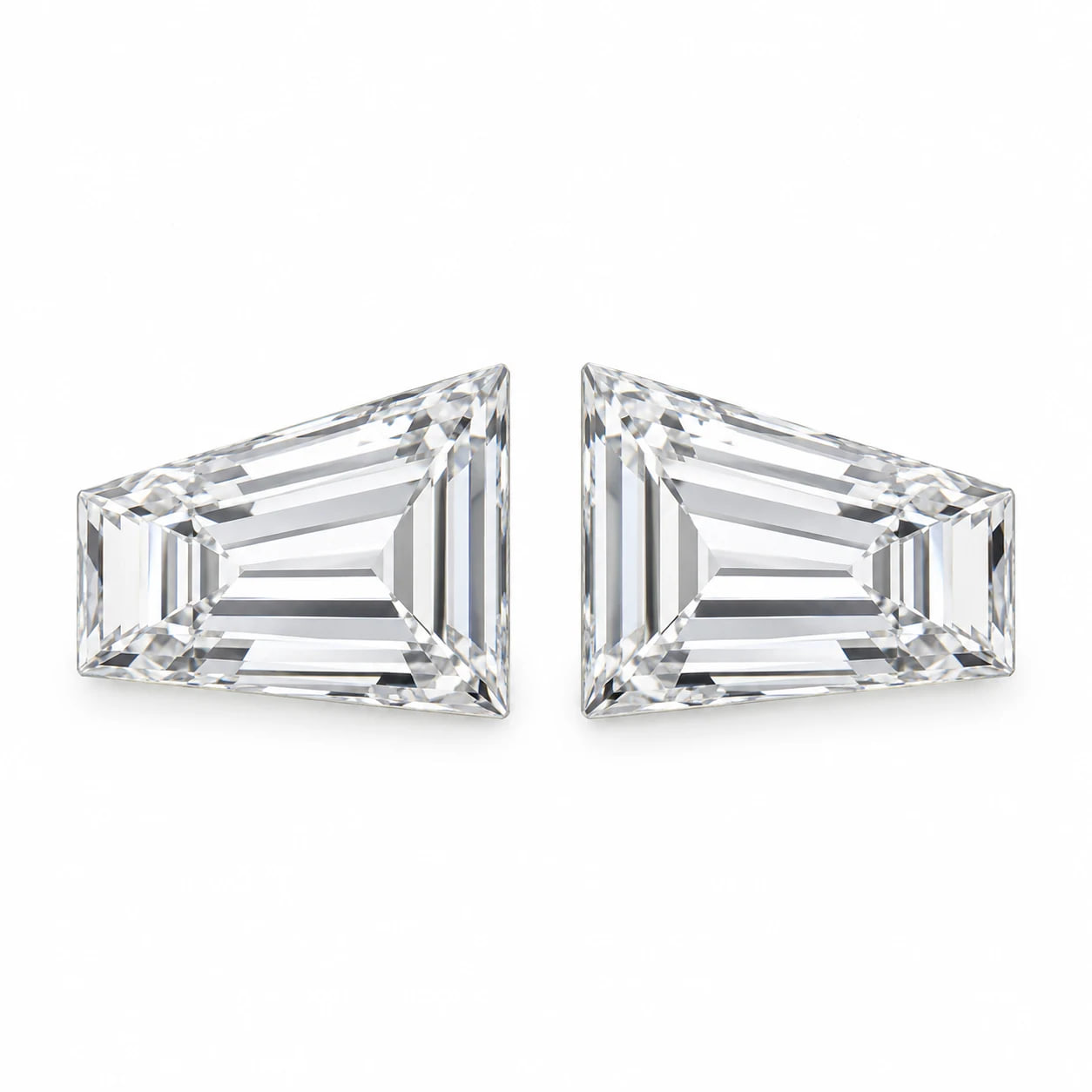
Broad geometric side stones for three-stone designs, sourced from an explicit outline and paired-layout reference.
Explore Product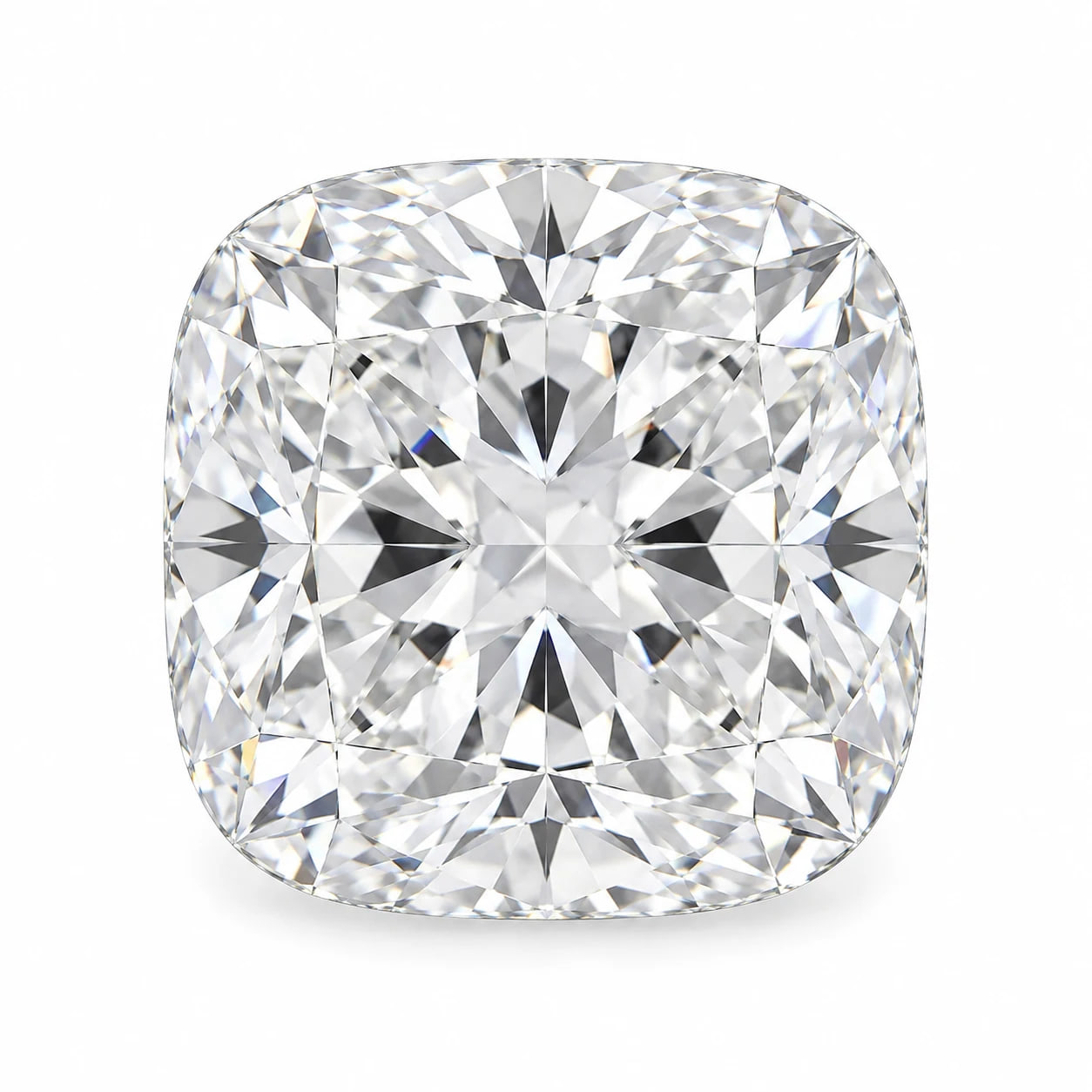
Loose Lab-Grown Diamonds / SOURCING ON REQUEST
Build a cushion-cut diamond brief around square or elongated outlines, facet appearance and the dimensions of your finished design.
Explore Product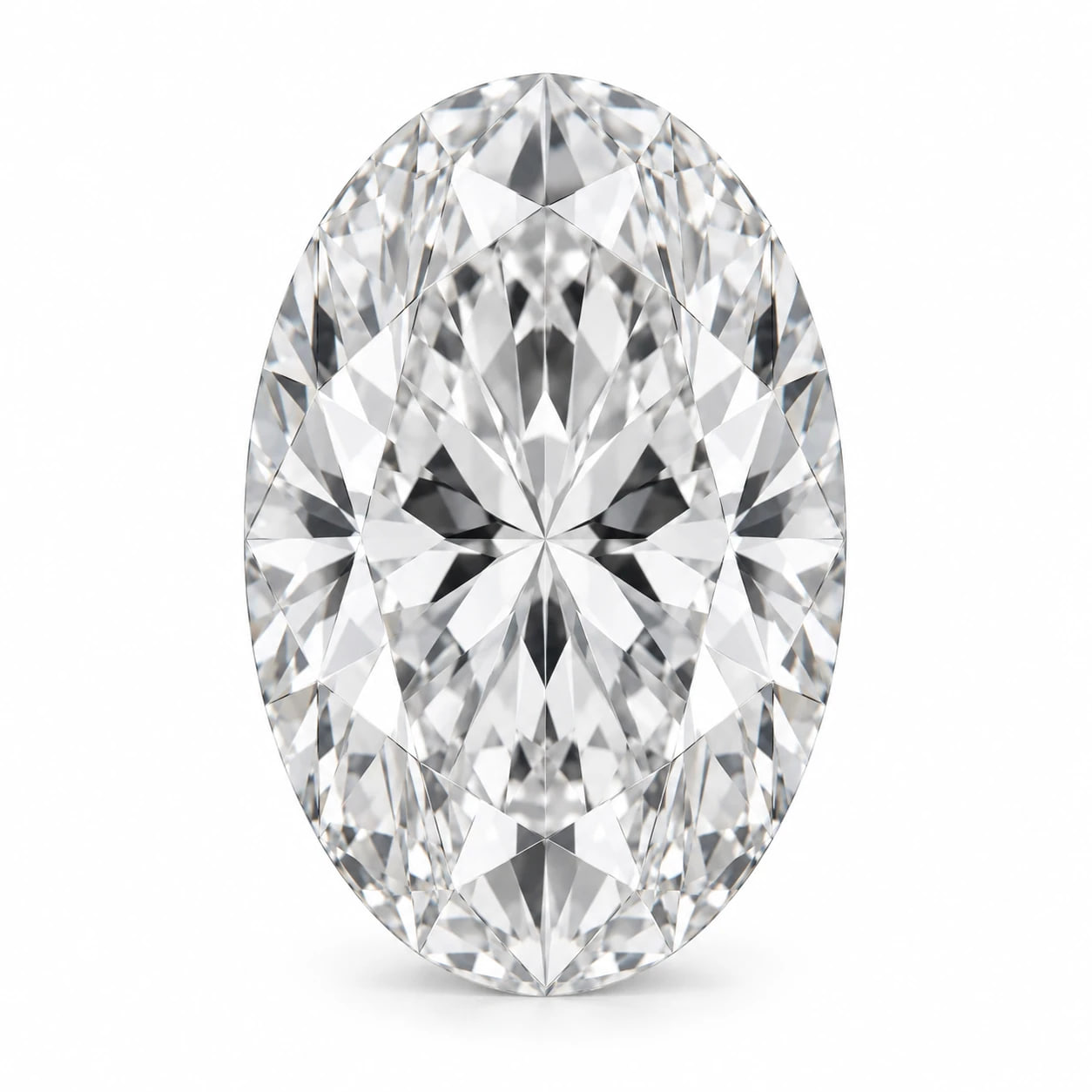
Loose Lab-Grown Diamonds / SOURCING ON REQUEST
Source loose oval center stones and matched pairs for bridal collections, bespoke jewellery and repeat business orders.
Explore Product