 English
 Español
 Português
 Deutsch
 Français
 Italiano
 Nederlands
 العربية
 日本語
 한국어
 ไทย
Define What “Bullet” Means
A shape name can be interpreted differently by different cutting or sourcing teams. Use a five-sided contour drawing that identifies the flat base, long edges and pointed end so the intended geometry is unmistakable.
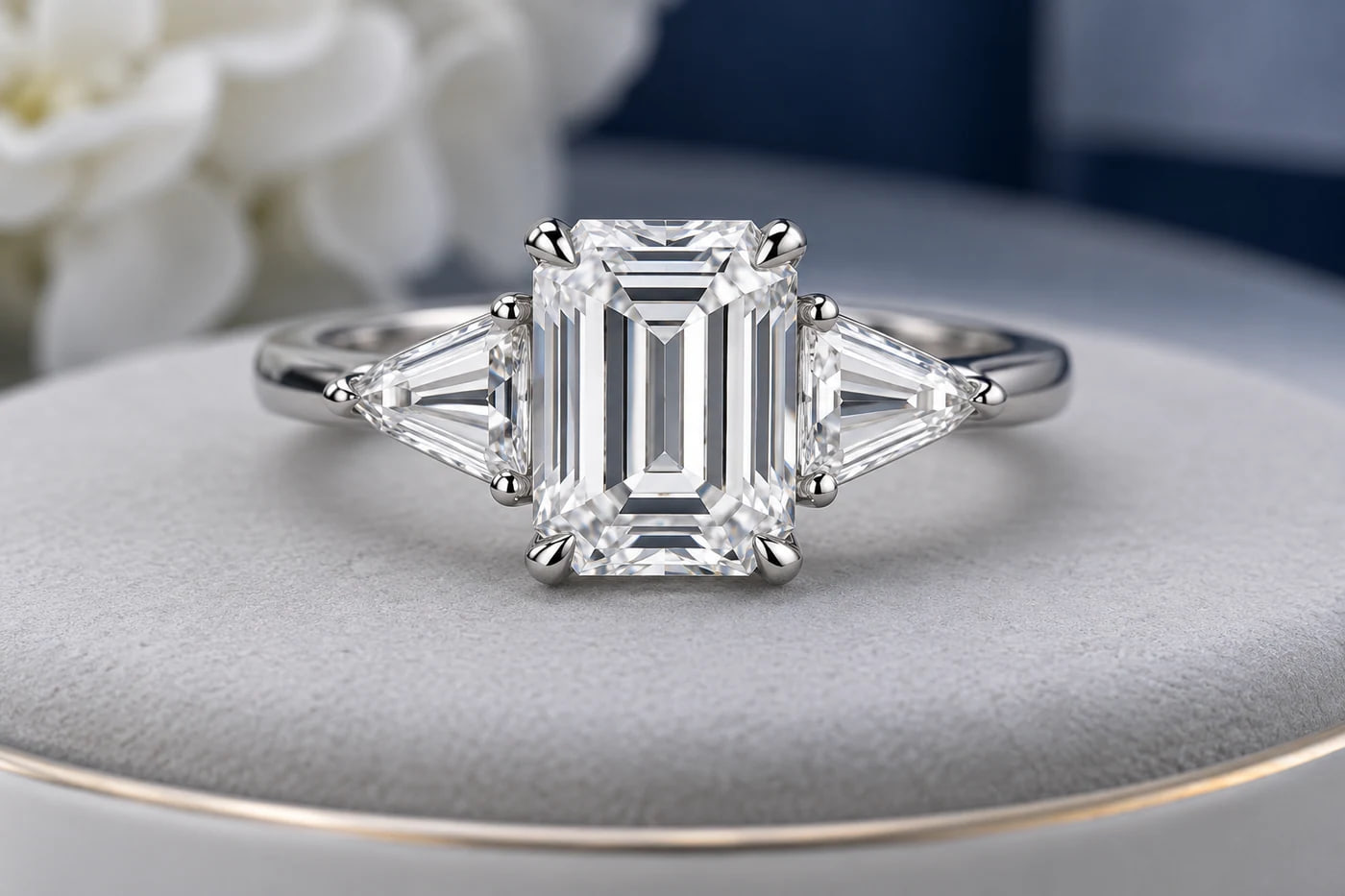
Image 1 of 3: Face-up studio view
Lab-Grown Diamond Side Stones / Business sourcing
Elongated five-sided diamond accents, with a flat base and pointed end matched to the architecture of your setting.
Preferences are a brief, not a live inventory selection.
A product brief, not just a grade list
Bullet-shaped lab-grown diamond side stones use an elongated five-sided outline: a flat base, two long sides and a pointed end formed by two angled edges. The shape can support a directional ring shoulder or a custom geometric layout, but the bullet name does not establish its exact proportions. Describe the base width, overall length, point geometry and cutting style with a drawing. For a side pair, identify how the flat bases meet the center setting and how the tips face outward. MEITUO treats this as a specialist sourcing brief, with actual selection, dimensions and repeat feasibility confirmed before any inventory or production commitment is made.
01 / Define the actual requirement
Separate the product description, sample values and information that must be confirmed for the actual selected goods.
| Material | Laboratory-grown diamond |
|---|---|
| Product form | Loose elongated five-sided bullet side stones |
| Outline | Flat base, two long sides and two angled edges forming one point |
| Illustrative dimensions | 4.00 × 2.00 mm overall envelope; sample drawing, not available stock |
| Tip geometry | Specify point length, angle and corner treatment from the reference |
| Cutting style | Step-cut reference; other requested patterns require confirmation |
| Pair layout | Flat bases inward / points outward unless the design shows otherwise |
| Approval record | Each contour and weight plus the full left/right arrangement |
| Growth method | Confirm CVD or HPHT for the proposed goods |
| Documentation | Confirm the available laboratory report or batch documentation |
| Post-growth treatment | Confirm disclosed treatment information for the proposed goods |
| Order unit | Specialist side pair or individual stone, subject to directed sourcing |
| MOQ / price / lead time | Confirmed only in the quotation for the agreed specification |
| Cutting style | Step-cut reference; other requested patterns require confirmation |
|---|---|
| Growth method | Confirm CVD or HPHT for the proposed goods |
| Documentation | Confirm the available laboratory report or batch documentation |
| Post-growth treatment | Confirm disclosed treatment information for the proposed goods |
IGI and GIA services have their own report formats. Use the actual issuing laboratory's wording rather than adding a blanket quality claim. IGI report background · Current GIA services
| Pair layout | Flat bases inward / points outward unless the design shows otherwise |
|---|---|
| Order unit | Specialist side pair or individual stone, subject to directed sourcing |
| MOQ / price / lead time | Confirmed only in the quotation for the agreed specification |
Supply the five-sided drawing and explain the role of its point and base.
02 / Choose against the design
Use these product-specific checks to make your quotation request more precise.
A shape name can be interpreted differently by different cutting or sourcing teams. Use a five-sided contour drawing that identifies the flat base, long edges and pointed end so the intended geometry is unmistakable.
Two stones can share the same overall envelope while their pointed ends begin at different positions. Show the point length and angles, especially where the tip must align with a narrow shoulder or another geometric element.
In a side pair, the flat bases and their angle can define the transition to the center setting. Share the center reference and the proposed gap so the actual stones can be considered as one architectural arrangement.
A specialist outline may be feasible for one design without becoming a regular supply line. Preserve the approved contour and clarify whether the project is one-off or intended for repetition before making a collection commitment.
03 / Plan from the finished design
The finished setting or production workflow determines which measurements and matching decisions belong in the enquiry.
APPLICATION 1
A bullet pair can create a directional transition from a center stone toward the shank. State how the bases align with the center and how much space the points occupy in the ring design.
Brief This Application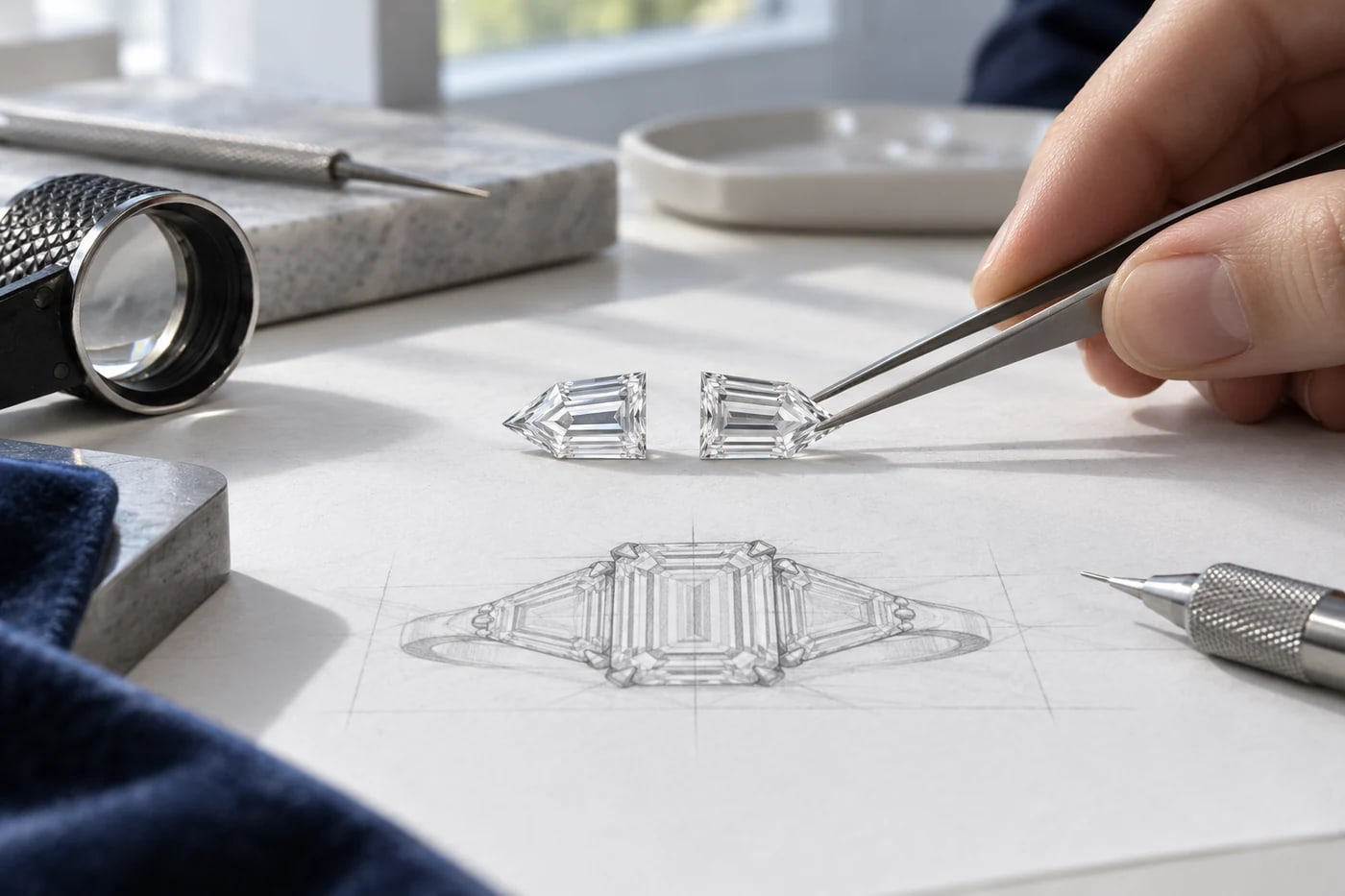
APPLICATION 2
For a custom pair, compare the actual outlines on the approved design before committing the mount. The length of the points and the placement of the bases should be visible in the approval record.
Brief This ApplicationADDITIONAL DESIGN USE
An individual bullet outline can form part of a pendant with a deliberate point direction. Identify the role of each edge in the motif and have the setting team review how the actual stone will be held.
Brief This Application04 / Your buying model
Develop a distinct directional contour without assuming that a specialist shape has standard proportions.
Include in the RFQ: Supply the five-sided drawing and explain the role of its point and base.
Match a specialist side pair to an approved center and ring shoulder design.
Include in the RFQ: Show the center dimensions, inner junction and left/right layout.
Review feasibility, actual geometry and the mount together before a design becomes a repeat program.
Include in the RFQ: Identify the sample approval steps and whether continuing supply is required.
05 / Qualitative procurement scenarios
Use a specific business scenario to prepare an enquiry. These examples do not assert national preferences, market size or confirmed orders.
| Market | Buying scenario | RFQ focus |
|---|---|---|
| United States | Custom geometric bridal settings | Base width, point geometry and full ring layout |
| United Kingdom | One-off architectural commissions | Five-sided contour, facet reference and mount approval |
| Australia | Design sampling and repeat assessment | Approved sample, retained contour and future sourcing check |
For a US-facing custom setting, describe the bullet pair as a specialist geometry requirement rather than a standard accessory. A complete face-up drawing helps the sourcing discussion focus on the center junction and shoulder direction. Availability remains specific to the proposed outline.
A bespoke commission may use the bullet silhouette as a defining design feature. Confirm the actual contour before fixing the metal architecture, and distinguish its point geometry from that of a pear or marquise. This is an editorial purchasing scenario, not a demand statistic.
For a small studio, a sample project can test the intended silhouette and setting. A separate discussion should establish whether that outline can support later orders. Keep the approved drawing and do not promise a recurring supply merely because a first pair has been proposed.
06 / A practical comparison
Compare the properties that change the purchasing decision, then review the actual selected stones or parcel.
| Buying point | Bullet-shaped side stone | Straight baguette |
|---|---|---|
| Outline | Elongated five-sided shape with one point | Four-sided rectangular shape |
| End geometry | Flat base opposite a pointed end | Two flat nominally equal-width ends |
| Drawing detail | Point length, base width and angles | Length, width and corner treatment |
| Layout direction | Point orientation is essential | Long-axis direction is essential |
| Supply brief | Confirm the specialist contour | Confirm the specified rectangle |
08 / Before you source
It is an elongated five-sided contour with a flat base and one pointed end. Two long sides connect the base to the angled point edges. Use the supplied drawing rather than the name alone, because outline proportions and terminology can vary.
No. A marquise has a rounded elongated outline with a point at both ends, while the bullet contour here has one flat base and one pointed end. Those different geometries need different setting information and should not be substituted without revising the design.
Include the intended step-cut appearance and a visual reference in the brief. The actual facet arrangement and availability must be confirmed for the proposed stones. Do not assume that every stone described as bullet-shaped has the same cutting style.
Compare the base width, overall length, point geometry, contour and face-up appearance in the intended left/right positions. Keep per-stone measurements and weights separate from the pair total. Similar grades alone do not establish that the architectural arrangement is balanced.
They remain a specialist sourcing candidate until the exact outline and supply route are established. Generated illustrations and occasional examples are not proof of available inventory. If your design will repeat, discuss feasibility and acceptance criteria before committing to a collection schedule.
Include a face-up contour, base width, overall dimensions, point detail, depth limits and the center relationship. Identify which dimensions are fixed and what can change during sampling. The setter should review the actual proposed stone before seats are finalized.
09 / Prepare the next conversation
Start with the fixed requirements and explain where the sourcing selection can vary.
Supply the five-sided drawing and explain the role of its point and base.
YOUR PREFERRED REQUIREMENT
Bullet Shaped Lab-Grown Diamond Side Stones
Continue to our contact form with your selected specifications and send your requirements directly to our sourcing team.
Review your product selection and requirements on our contact form.
Keep the buying brief connected
Lab-Grown Diamond Side Stones / SOURCING ON REQUEST
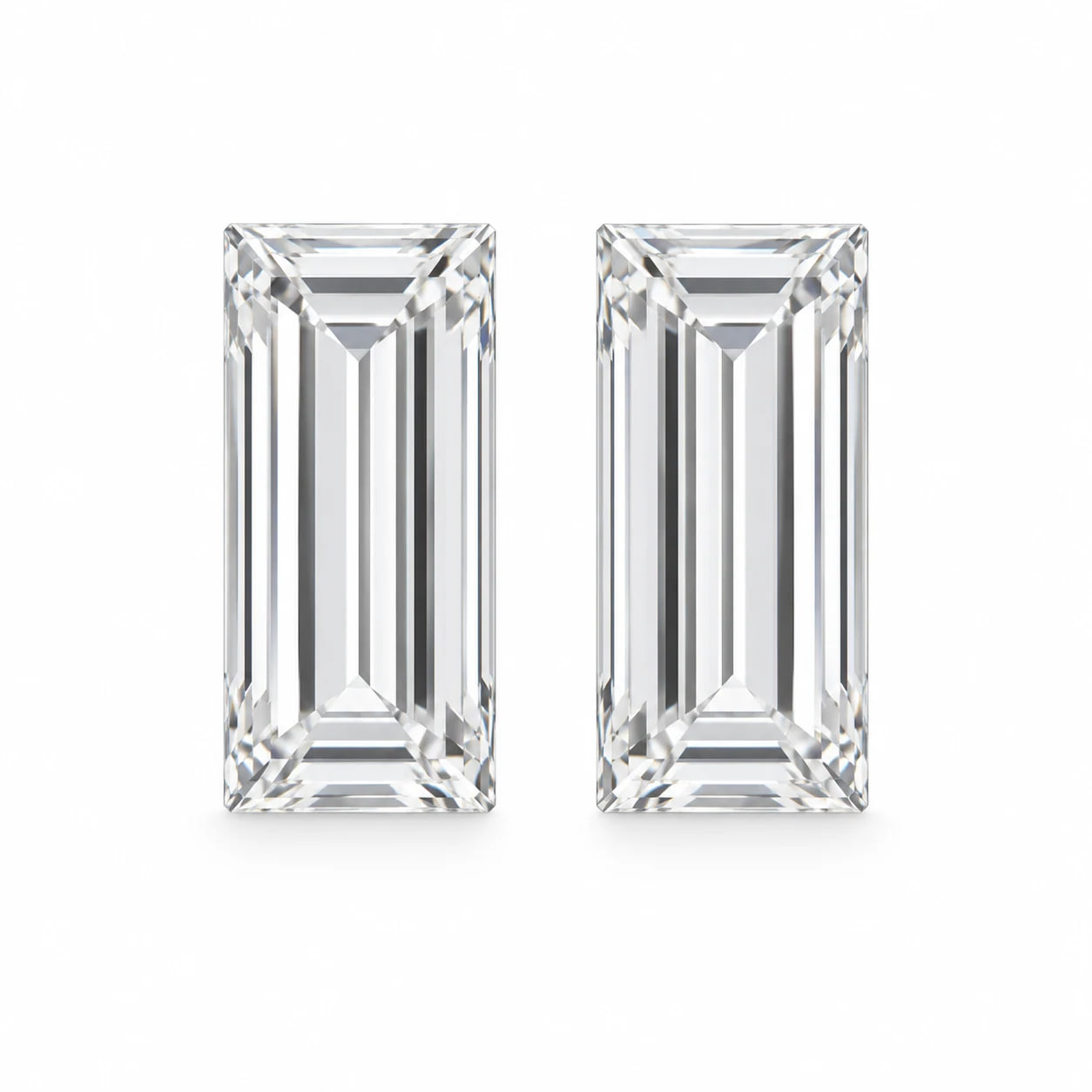
Clean rectangular step-cut diamonds for linear accents, channel layouts and precisely specified side-stone pairs.
Explore Product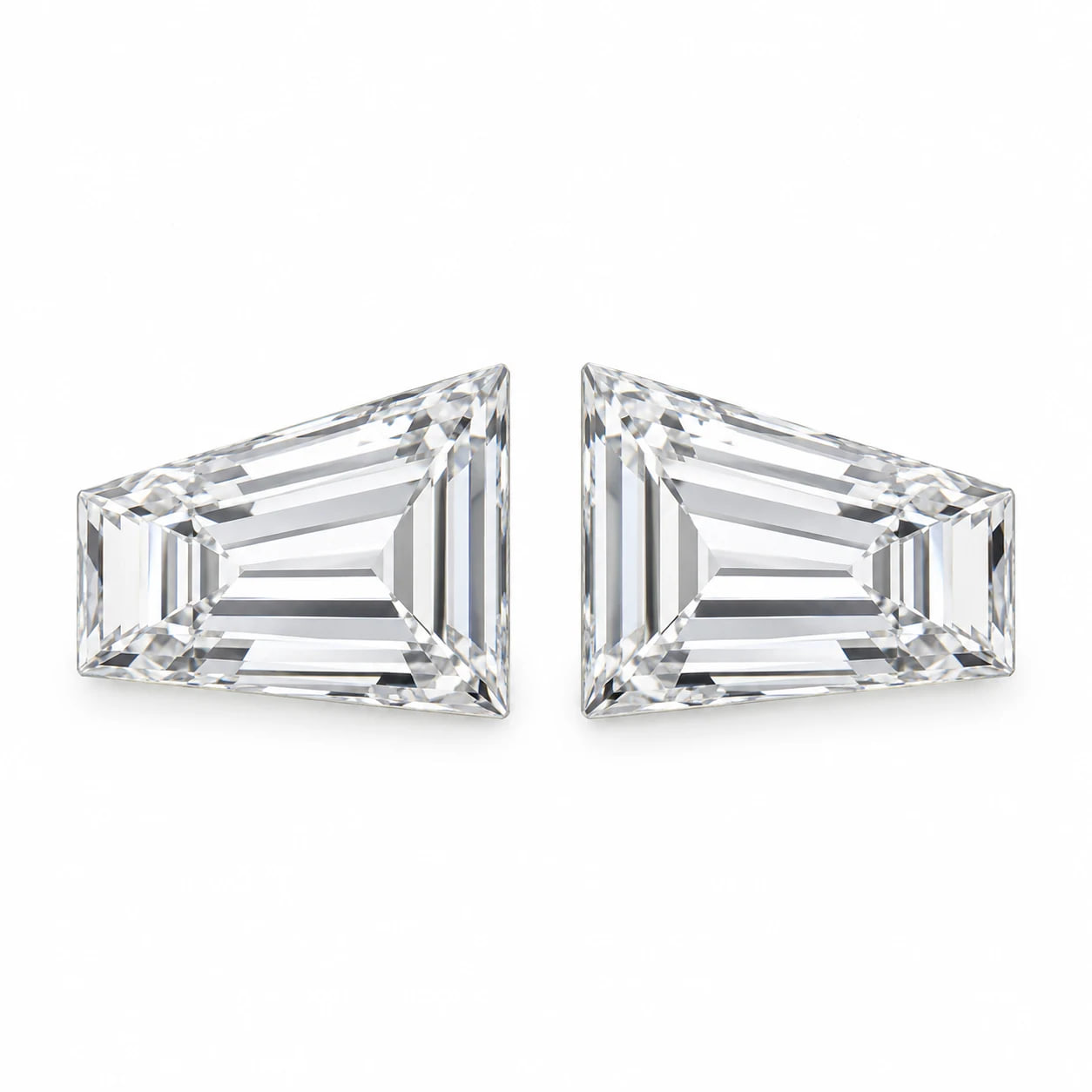
Lab-Grown Diamond Side Stones / SOURCING ON REQUEST
Broad geometric side stones for three-stone designs, sourced from an explicit outline and paired-layout reference.
Explore Product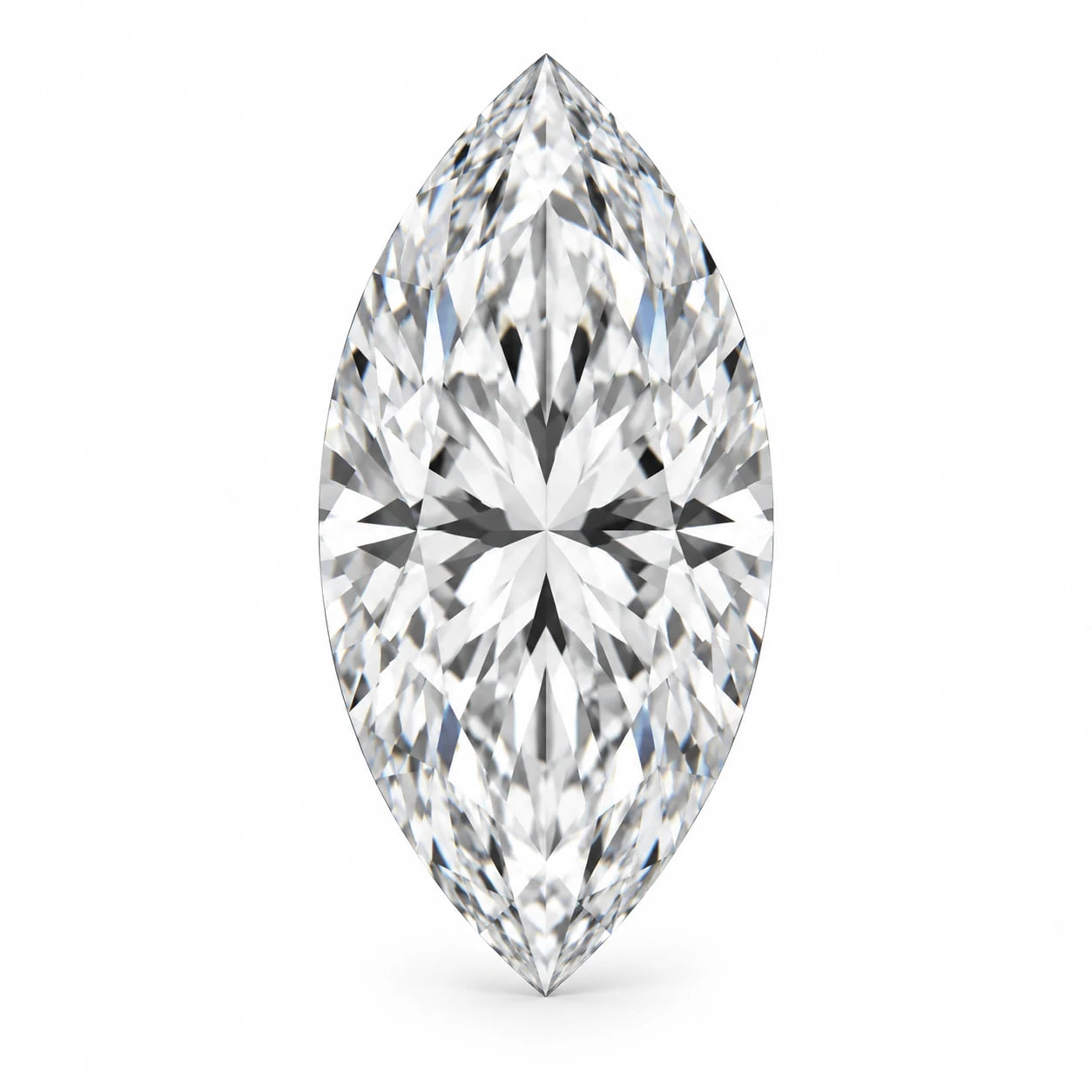
Loose Lab-Grown Diamonds / SOURCING ON REQUEST
Specify marquise lab-grown diamonds through aligned points, balanced shoulders, face-up appearance and the orientation of your ring or earring design.
Explore Product