 English
 Español
 Português
 Deutsch
 Français
 Italiano
 Nederlands
 العربية
 日本語
 한국어
 ไทย
Quick Answer
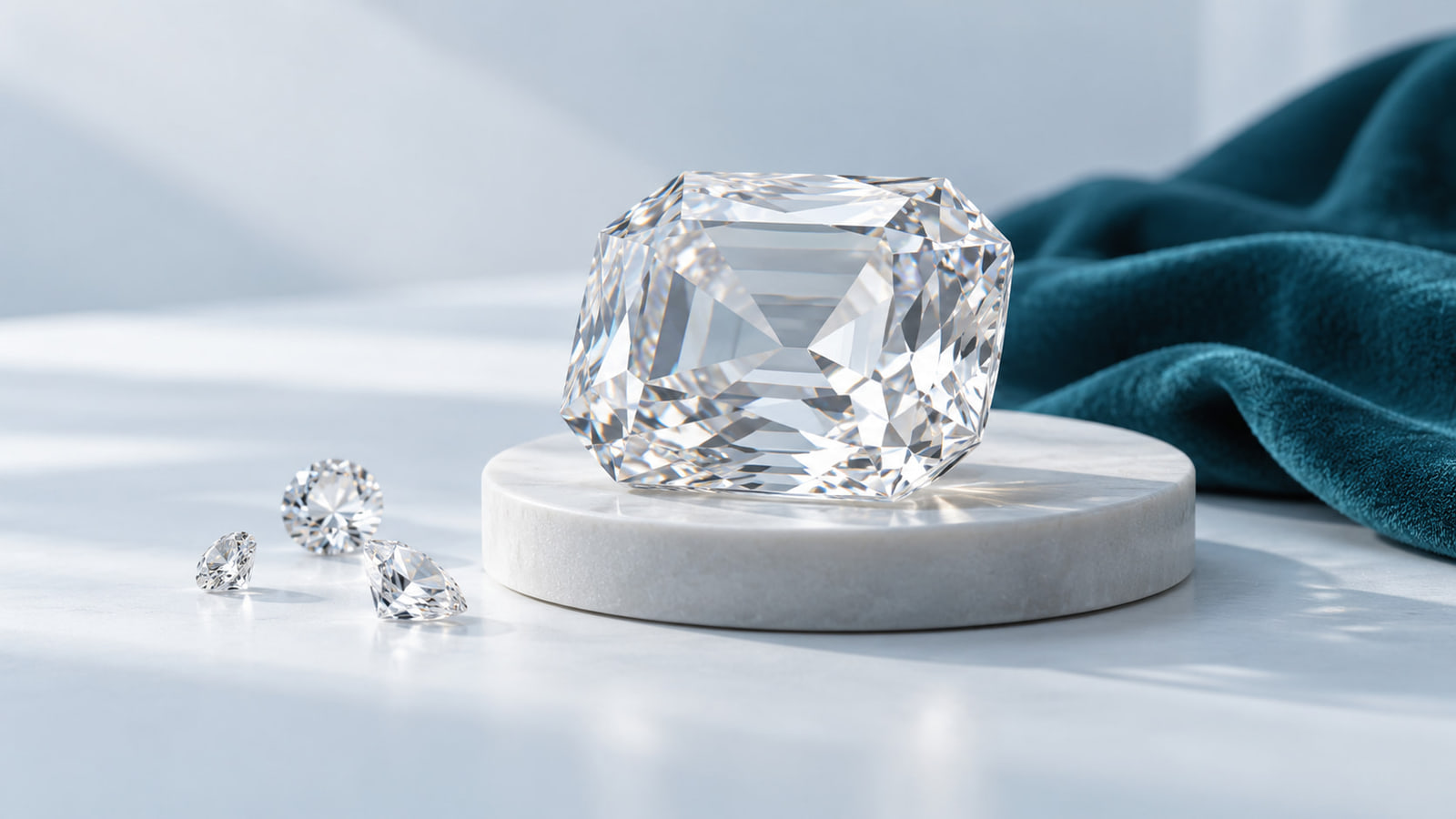
There is no useful single answer to largest lab grown diamond without naming the category and date. Checked on October 30, 2026, primary pages available for this guide document a 75.33 ct polished square-emerald CVD diamond in IGI's May 2024 announcement and a 150.42 ct synthetic uncut diamond in Guinness World Records, verified in November 2021. IGI also reports a 190 ct starting rough for the polished stone, illustrating why these differently scoped claims cannot form one simple leaderboard. These are documented milestones, not a claim that this search establishes every current global record. For buying, specify polished dimensions, appearance, documents and availability separately. A record announcement does not establish that the stone is for sale or reproducible.
What Does Largest Lab-Grown Diamond Actually Measure?
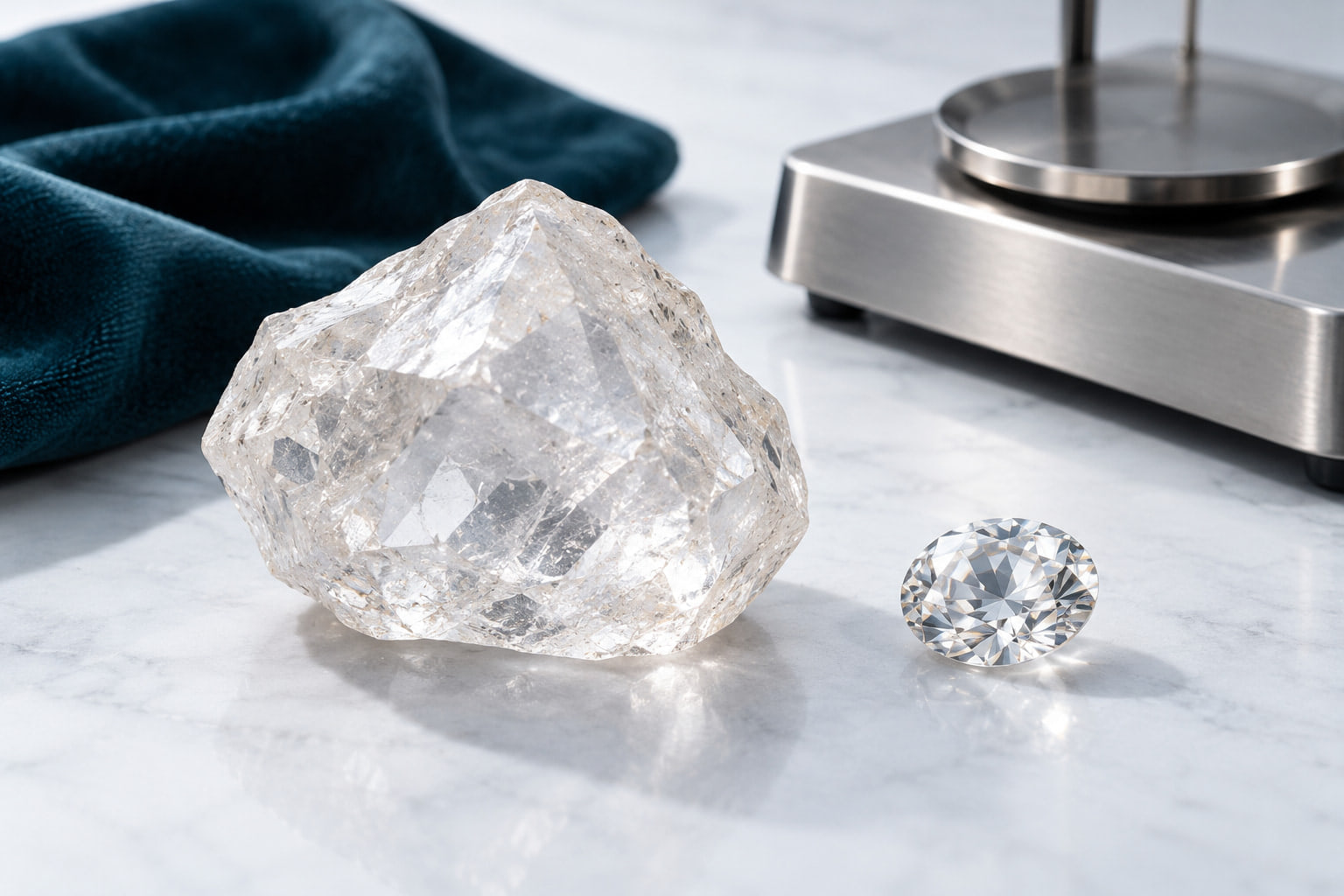
Ask what object was weighed. A rough crystal includes material that may be removed during planning and polishing. A polished loose gem is a finished stone with a particular shape and depth. A sculpted diamond ring has a hole and a different use from a conventional center stone. An industrial plate may be valued for usable area or thickness rather than gemstone appearance. The same word largest can conceal these differences.
Also distinguish a single crystal from a polycrystalline body or an assembly. Multiple diamond grains or pieces can form a large useful object without being one jewelry-quality crystal. Do not equate a shipment's aggregate carat weight with the mass of its largest individual stone. A parcel containing one hundred 1 ct stones is not a 100 ct diamond. This sounds elementary, but photographs of production trays can encourage precisely that misunderstanding.
The Guinness uncut-diamond record page lists 150.42 ct and a verification date of November 16, 2021. It also cautions that online records are not immediately updated. Treat its category and date as part of the evidence, not as disposable small print. A different claim needs its own supporting category definition.
Use the shape planning guide once the object is known to be a polished jewelry stone. A record weight cannot substitute for a usable outline.
Which Documented Records Can a Buyer Compare Responsibly?
IGI's May 7, 2024 announcement describes the 75.33 ct Celebration of India and a separate 30.69 ct ring-shaped diamond. It reports a 190 ct rough starting point for the former. These facts belong together: removing the rough-to-polished relationship can create a misleading comparison with an uncut record in another registry.
| Documented item | Measurement and source date | What it supports | What it does not prove |
|---|---|---|---|
| Celebration of India | 75.33 ct polished; IGI, May 2024 | A documented square-emerald CVD milestone | Current stock, repeatability or a complete 2026 global ranking |
| Its reported starting rough | 190 ct; same IGI announcement | The stated rough-to-polished context | A separate Guinness-certified uncut record |
| Guinness synthetic uncut entry | 150.42 ct; verified November 2021 | That registry's published uncut category entry | A polished gem of the same mass |
| Infinity Ring | 30.69 ct; IGI, May 2024 | A sculpted ring-shaped diamond object | A conventional loose center of equivalent spread |
The comparison is deliberately limited. The presence of a larger reported rough in one announcement does not silently rewrite another organization's registry. Record organizations may have different eligibility, submission and verification procedures. If a marketing campaign requires an absolute current superlative, obtain direct confirmation of the specific claim from the responsible authority before publication.
The source review date is October 30, 2026. The underlying milestone dates remain 2021 and 2024. Rechecking a historical page today does not turn its historical statement into a newly achieved record.
Why Can the Heavier Diamond Look Smaller From Above?
Carat weight is mass; face-up dimensions describe the visible footprint. A deep stone can retain more mass below its outline than a shallower stone of similar width. This matters especially when a buyer is commissioning a display piece and assumes a weight target guarantees a particular visual impact. Request length, width and total depth in millimeters, plus a scale reference in an unedited photograph.
Compare only sufficiently similar outlines when using an area proxy. Length multiplied by width provides a bounding rectangle, not actual stone area. For a rectangle it can be a useful first filter; for a pear or an irregular sculpted piece, the empty space inside that rectangle may be substantial. A drawing or scan is more informative than pretending every outline occupies the same fraction.
Extreme dimensions create practical review questions. Can the intended setting accommodate the actual depth? Does the design leave enough access for inspection and cleaning? Can the buyer obtain packaging that restrains the stone without relying on a generic small-stone box? These are project decisions requiring a real sample or detailed model, not universal engineering tolerances supplied by a blog.
When the inquiry concerns an actual center stone, start with the loose-stone selection scope. Give dimensions and visual requirements before asking for the largest possible weight. That makes it possible to reject an impressive but unsuitable candidate before money is committed.
How Should a Buyer Compare Two Extreme-Size Proposals?
Hypothetical example: the exhibition-center brief. A brand considers two invented polished-stone proposals. Candidate A weighs 18 ct and measures 19 by 15 mm. Candidate B weighs 20 ct and measures 18 by 14 mm. Their bounding rectangles are 285 and 252 square millimeters. A therefore has about 13.1% more bounding-rectangle area despite weighing 10% less than B. These figures describe fictional proposals, not available MEITUO goods or market averages.
The brand wants visual coverage within a particular display aperture, so A deserves further review. That is not enough to select it. The team must inspect outline, depth, transparency, inclusions and movement under the planned lighting. If A has an unacceptable dead region or cannot fit the mounting, the area calculation has identified an interesting candidate rather than a winner. Likewise, B's additional weight does not prove better brilliance or quality.
The buyer builds a comparison sheet with proposed use, exact item identifier, document reference, dimensions, video filename and decision status. A revised photograph must retain the same item reference. The supplier must identify whether each candidate exists, is reserved elsewhere or is only an estimated custom outcome. A rendering of a proposed stone cannot be logged as an inspected physical item.
Finally, the team separates acceptance of the stone from approval of the finished display. The jeweler confirms the mounting using actual geometry; the buyer confirms the stone using agreed appearance criteria. A bespoke statement project needs both decisions, even if the stone's weight is its main publicity hook.
How Do Extreme-Size Inquiries Differ Across Supplier Markets?
A buyer may encounter a record through a trade-show display, a grower announcement or a trader's sales message. Identify the role of the person answering the inquiry and the physical status of the proposed item. The following country panels focus on different evidence handoffs rather than treating a country's production reputation as a substitute for item-level inspection.
USA / exhibition and retail requests
How Should a US Exhibition Buyer Evaluate a Record Display?
A US buyer may first see an extreme-size stone at a trade event or in a retailer's publicity. IGI's 2024 announcement connected its two named stones with the JCK Las Vegas display and a later New York display. That historical exhibition information does not establish where either stone is held or offered today. Confirm the current seller and the physical location before arranging an inspection.
For a retail campaign, separate the exhibit story from the purchasable item. If the displayed stone is not the stone a customer can order, sales materials should make that relationship clear. Obtain permission and evidence for any record language rather than assuming a photograph authorizes a superlative.
A US buyer commissioning a statement setting should involve the setting maker early. Send actual depth and outline data before approving the stone reservation. Ask how the stone will be inspected, transported and returned if rejected, and distinguish these commercial arrangements from any independent gemological examination.
CHINA / growth and sourcing terminology
How Should a China Inquiry Distinguish a Crystal From a Gem?
A China-facing extreme-size inquiry should specify whether the request concerns gemstone material or an industrial diamond product. GIA's 2024 research summary describes Chinese production spanning HPHT melee and industrial products as well as CVD gemstones. That breadth makes a vague request for the biggest diamond particularly easy to misunderstand. An impressive industrial plate is not automatically a suitable faceted jewelry center.
Ask the supplier to identify material form, crystal structure, dimensions and intended use in the first response. If the offer is rough, do not compare its weight directly with a polished-gem requirement. Ask who will plan the cut and whether any polished yield is a proposal or an established result.
Qingdao-based coordination through MEITUO can help organize these distinctions, but it does not imply that the stone was grown locally. Keep grower, cutter, seller and examination laboratory as separate roles. Require a specific item file before discussing a reservation or representing the candidate to a client.
INDIA / CVD and cutting proposals
How Should an Indian Large-Stone Proposal Document Rough-to-Polished Scope?
For an Indian proposal, the distinction between growth achievement and polished product is central. The IGI milestone announcement identifies Ethereal Green and describes processing in Surat; it provides evidence for those named items rather than a guarantee about every Indian producer. A buyer should still ask who owns the offered stone, who cut it and which party is responsible for the quotation.
If the seller offers custom production from a large CVD rough, request separate rough and polished specifications. The planned weight should be marked as estimated until the stone is finished. Include the intended outline, maximum depth and review milestones. A reported yield from another celebrated stone cannot be treated as the yield your project will obtain.
For an existing polished candidate, require its own continuous video and measurement record. Keep the cutting proposal, laboratory document and commercial offer together under one item identifier. If the candidate changes during negotiation, reopen the appearance review instead of accepting the previous file as evidence for a replacement.
What Evidence Should Precede a Large-Stone Reservation?
Use a staged sequence. First confirm that the stone exists and that the seller can offer it. Next receive item-specific measurements, dated photographs and a continuous rotation video. Then review available independent documentation and resolve any mismatch between report dimensions and the offered item. Only after that should the buyer evaluate a reservation agreement, inspection period and financial exposure.
Keep the record claim separate from the quality file. A press release can establish that a milestone was announced; it does not necessarily provide all the information needed to buy the stone today. A current laboratory document can describe examined material; it does not prove the seller's authority to sell it. A logistics quotation does not establish insurance coverage for the actual value and route. Each document answers a different question.
Define what happens if the submitted item differs from the approved candidate. Substitution by a heavier stone should require renewed approval because dimensions, cutting style and appearance can change. Define who bears agreed examination, return and transport costs if the item fails the written acceptance conditions. Use the component-scope guide to keep stone acceptance distinct from later jewelry work.
For a planned custom stone, replace a promise of exact final outcome with milestone review and explicit tolerances. The buyer should know whether the offer is for a specific finished item or an attempt to produce one. Do not infer a guaranteed growth duration from the time reported for a famous record.
What Can MEITUO Coordinate for an Extreme-Size Inquiry?
MEITUO supports sourcing and supply-chain coordination from Qingdao, Shandong, China. For an unusually large laboratory-grown diamond, its useful role begins with translating a broad size ambition into an item-selection brief: intended use, polished dimensions, cutting preferences, quality requirements, document needs and the review sequence.
MEITUO can support supplier communication, product selection, requirement confirmation and order follow-up. It should not be assumed to have access to the record stones discussed here or to hold extreme-size inventory. Current availability, custom feasibility, documents, MOQ, lead time and shipping terms must be confirmed for the particular request. A buyer can also discuss side stones or a graduated companion set after the center geometry is established.
Send a dimensional brief to [email protected] with the distinction between requirements and preferences clearly marked. MEITUO does not grow diamonds, issue independent grading reports or guarantee a record outcome. Its coordination can make supplier responses easier to compare without turning an unverified superlative into a procurement promise.
How Should the Largest Lab-Grown Diamond Search Become an RFQ?
Replace largest available with a measurable target and an acceptable alternative. State whether weight is a hard minimum, whether dimensions matter more than mass, and whether the project needs a conventional loose stone or a sculpted object. Include the mounting or display envelope when it is already known.
Add a claim-evidence requirement only if the project actually needs a record statement. Many designs benefit from a suitable large stone without requiring a global ranking. For projects that do, define the record category, responsible verifier, claim date and permitted wording before approving campaign copy. Keep the source snapshot in the marketing file.
The RFQ checklist can structure the request. Attach a comparison sheet so each seller answers the same questions and distinguishes existing goods from proposed production.
We are exploring a laboratory-grown diamond for [project and intended use]. Target polished weight is [range] with face-up dimensions [length and width] and maximum depth [value]. Acceptable cutting styles, color appearance and clarity requirements are [details]. Please distinguish existing inspected goods from proposed custom production. Provide item-specific dimensions, current photographs, continuous video, available independent documents and any treatment information. State reservation conditions, review period, substitution policy and responsibility if the actual stone fails the agreed criteria. Record-setting status is [required or not required]; any record claim must include category, date and primary evidence.
FAQ: What Is the Largest Lab-Grown Diamond? Reading Records
What Is the Largest Lab-Grown Diamond Documented Here?
The verified primary material includes IGI's May 2024 announcement of a 75.33 ct polished CVD diamond and Guinness's published 150.42 ct uncut entry verified in 2021. They are different categories. This October 30, 2026 review does not establish a complete current global ranking.
Why Does the Article Also Mention a 190 Ct Rough?
IGI reports that starting rough for the 75.33 ct polished stone. It shows why a polished announcement and a registry's uncut entry cannot be merged without checking definitions and verification procedures. A larger reported rough does not automatically create a newly certified registry record.
Is a Large Diamond Plate the Same as One Large Gem?
No. Clarify whether it is single-crystal or polycrystalline, its usable dimensions and its intended application. Industrial performance and jewelry appearance are different acceptance questions. Aggregate weight also must not be described as the weight of one stone.
Does More Carat Weight Guarantee More Face-up Size?
No. Depth and outline influence the visible footprint. Compare actual length and width, then inspect the stone. A bounding rectangle can help compare similar outlines, but it is not a measurement of true face-up area or optical performance.
Can MEITUO Source the Record Stones in the Article?
No such access or availability is established. MEITUO can coordinate an inquiry based on your requirements and seek supplier responses. Treat any proposed item as a separate offer requiring current evidence, availability confirmation and commercial review.
Should a Custom Project Require the Largest Possible Stone?
Usually a dimensional target and acceptance criteria produce a more useful inquiry. If a record claim is essential, specify the exact category and verifier. Otherwise, prioritize the stone that fits the design, appearance brief and review process rather than an undefined superlative.