 English
 Español
 Português
 Deutsch
 Français
 Italiano
 Nederlands
 العربية
 日本語
 한국어
 ไทย
Quick Answer
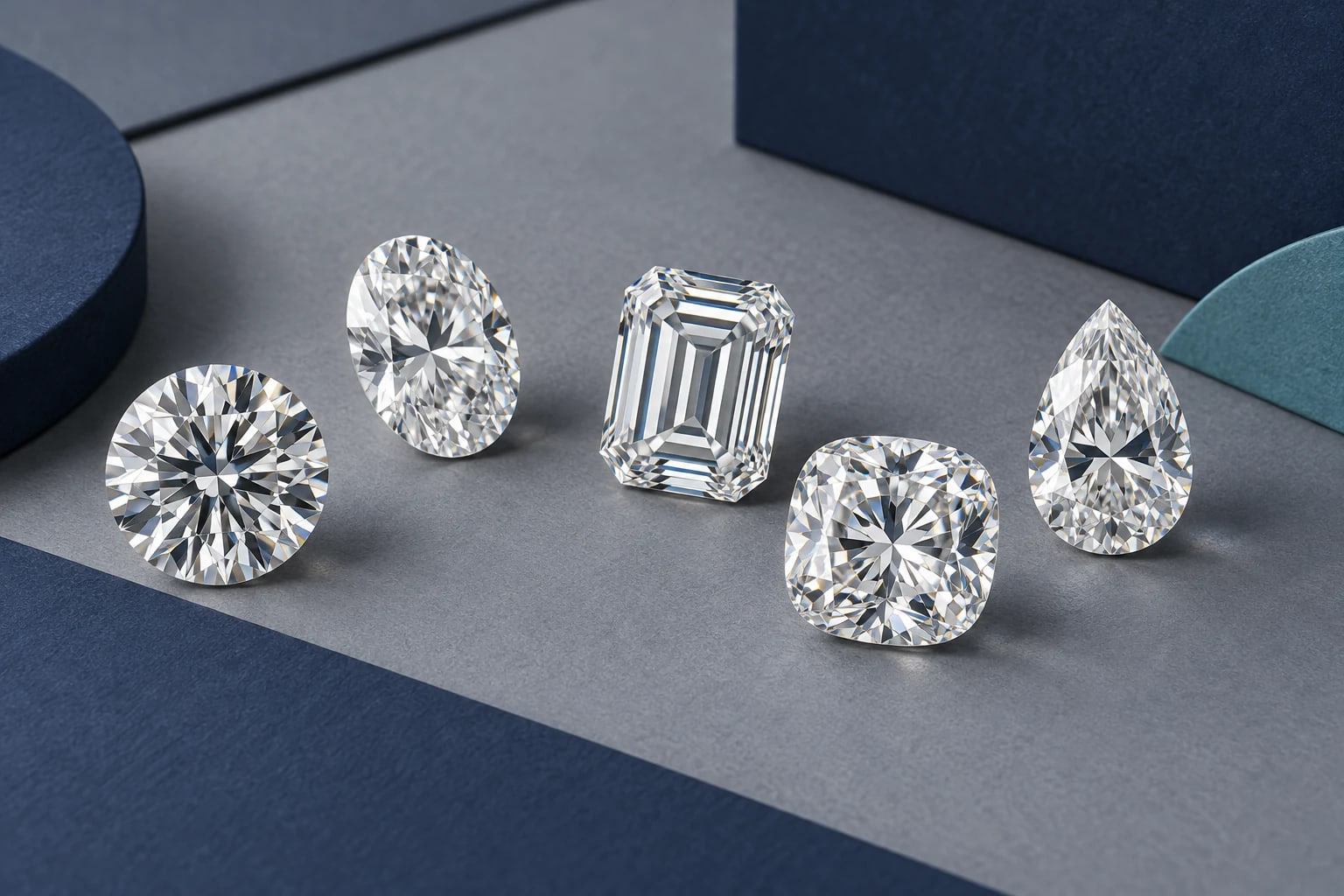
Choose diamond shapes as part of a collection strategy, then confirm the specific outline, measurements and setting requirements for each product. Start with the customer and design language you want to serve. Compare relevant samples in the intended jewelry, keep the opening assortment manageable and use consistent product information to explain the choices. A shape name identifies a family of options rather than a complete stone specification. The right selection is the one your design, purchasing and selling teams can bring together into a coherent offer and maintain through future sourcing decisions.
Decide What Shape Should Do for Your Collection
Begin with the role of the collection rather than a list of every available cut. An engagement offer may need a clear route between a few center-stone choices. An everyday range may rely on a repeated outline across rings, pendants and earrings. A designer-led collection might use contrast between a central form and its surrounding stones. These are different tasks. Write a short description of the customer, occasion and product experience you want to create. It gives the shape discussion a purpose and helps your team recognize which options belong together before the sourcing process expands.
Treat style associations as your brand’s interpretation, not a prediction of what every buyer wants. You may choose an angular form to support a geometric collection or a rounded outline to connect several softer designs. That is an intentional design decision. It does not establish that the shape will automatically command a premium or sell faster. Test whether the selected form works with your actual product presentation and customer conversation. A useful assortment is one you can explain clearly, with reasons for the choices that go beyond a supplier’s temporary list of available stones.
Distinguish the collection’s shared language from the options offered within one product. A range can use one recognizable outline in several jewelry types, while an engagement model may deliberately offer alternative shapes. Decide where variation helps the customer and where it makes the product harder to understand or source. This is particularly valuable for a first collection, when each extra option creates additional work in sampling, product content and coordination. The opening selection should give you a manageable way to learn about the offer rather than turn the catalog into a substitute for positioning.
Separate Outline, Cutting Style and Individual Proportions
Use the shape name as the beginning of the brief. The outline and the facet arrangement are related but distinct aspects of the product, and examples within a named family can still differ. GIA’s shape guide discusses both outline and cutting style, including the different visual character of brilliant and step-cut arrangements. Read the official shape guide. For your sourcing task, describe the actual option you intend to review rather than assuming a familiar family name gives every supplier the same complete picture.
Add the dimensional relationship that matters to the design. A rectangular outline may be more elongated in one proposed item than another. A cushion family can include different outline and faceting choices. If your team has a visual reference, include it and explain which aspects are important. Do not ask the supplier to copy an image exactly without checking the actual product and setting requirements. The reference should guide the discussion, while the final selection is approved from the information and sample relevant to the offered goods.
Keep the chosen description consistent across the team. A designer may use a shape term informally, while the buyer needs enough detail to request an equivalent option. The content team then needs wording that describes the product accurately for customers. Bring those interpretations together before the first quotation is accepted. A short agreed description with measurements and a sample reference is more useful than a long list of adjectives that different people interpret differently. It also gives the next sourcing request a clearer starting point when the original individual item is no longer the option being considered.
| Shape family | Outline to clarify in the brief | Design decision to make |
|---|---|---|
| Round | Circular outline and relevant diameter information | How it coordinates with the setting and surrounding stones |
| Oval | Rounded elongated outline and length-to-width relationship | Which proportions suit the intended product |
| Emerald | Clipped rectangular outline and step-cut style | How that visual pattern belongs in the collection |
| Cushion | The intended rounded-corner outline and actual cutting style | Whether the proposal fits the chosen reference |
| Pear | Rounded end, point and orientation | How the point is presented in the design |
| Marquise | Elongated outline with two points | How the outline and mounting work together |
Evaluate Dimensions Rather Than Treating Carat Weight as a Drawing
Use measurements to connect the stone with the jewelry. Carat weight describes mass, while the design needs to accommodate physical dimensions. Two offers with the same weight description may not create the same visible footprint or fit the same mounting. For a fixed setting, ask the technical contact which dimensions are essential and what variation can be considered. For a developing design, decide which proportions you want to compare before requesting samples. The purchasing brief should make it clear whether the stone is being chosen for an existing mounting or the mounting will be developed around the selection.
A simple ratio can help describe an elongated outline, but it is not an automatic beauty score. In a hypothetical comparison, a stone measuring 9.0 by 6.0 millimeters has a length-to-width ratio of 1.50. Another measuring 9.6 by 6.0 has a ratio of 1.60. The second outline is more elongated by this calculation. Your team still needs to review the actual shape and intended product. These are illustrative dimensions, not recommended specifications, available stock or a rule that one ratio is better for every customer.
Keep height and other relevant fit questions in the setting discussion when they affect the design. Do not use a top-view comparison to approve a feature it cannot show. Ask for the views or sample review that resolve the actual requirement. Your decision record should say which option was approved and why it suits the product. That makes the measurements useful beyond the first purchase: when an alternative is proposed later, the supplier can understand the intended outline and fit rather than working from weight alone or a shape label with no supporting context.
Use Shape Differences to Create an Understandable Assortment
| Hypothetical outline comparison | Length | Width | Calculated ratio | Interpretation |
|---|---|---|---|---|
| Example A | 9.0 mm | 6.0 mm | 1.50 | A description of this example’s proportions |
| Example B | 9.6 mm | 6.0 mm | 1.60 | More elongated by the stated calculation; not an automatic quality preference |
Choose a small number of roles for the opening range. One shape might anchor the collection, another provide a distinct alternative and a third belong only in a special design. Explain the role of each before adding more options. If two products answer the same customer need with no clear difference in presentation, you may be creating unnecessary assortment complexity. Conversely, a deliberate contrast can make the collection easier to browse when the choice is meaningful. The aim is not to minimize the range at all costs, but to make each addition earn its place in the offer.
Build an illustrative assortment map with the product type on one axis and the selected shape family on the other. Mark the combinations you intend to launch, sample or defer. This makes the workload visible. Adding a second shape to three product types may require several new samples, images and specification records, even when the overall collection still sounds small in conversation. Your team can then decide where the next option contributes enough value to justify that work. A simple map prevents an early sourcing discussion from expanding into an unplanned catalog.
Use customer feedback to refine the map. Record the questions people ask about the shape options and whether the presentation helps them understand the choice. Avoid treating a few informal preferences as a market-wide result. The first collection gives you observations about your audience and execution, not a universal ranking of diamond shapes. MEITUO can help you discuss relevant product options and low-MOQ starting points around that plan. The buying decision remains focused on a collection your business can present and learn from rather than a claim that a particular outline guarantees demand.
| Hypothetical opening range | Oval direction | Round direction | Buying decision |
|---|---|---|---|
| Pendant | Sample for the collection anchor | Defer for now | Validate one main product story |
| Stud earrings | Review as a coordinated pair | Sample as a clear alternative | Compare the customer choice and matching work |
| Ring | Develop with the selected mounting | Not in the first range | Keep launch scope tied to design capacity |
This is a planning example, not a recommended assortment or a statement about shape popularity.
Bring the Setting Into the Shape Decision Early
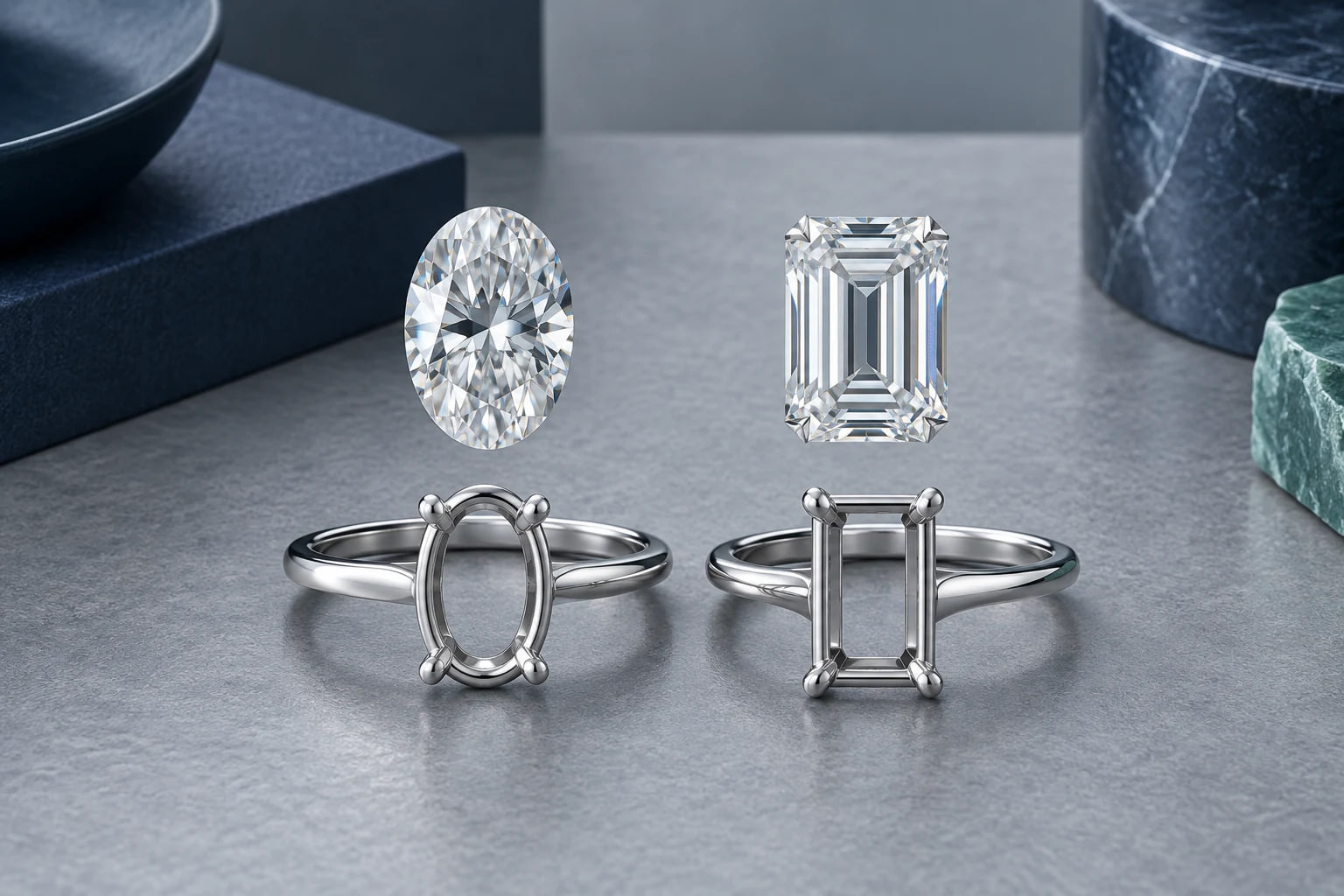
Review the shape and mounting together before the product is treated as ready to source repeatedly. The outline may influence the orientation, visual balance and way the stone is presented in the piece. Ask your designer or setter which practical questions need approval. If a proposal includes a pointed or otherwise distinctive outline, discuss how the mounting supports the intended design. GIA’s shape guide notes that shape and setting choices interact; your project should translate that general consideration into the actual product requirements rather than copy a setting instruction without design review.
Distinguish a stone-selection issue from a mounting-development issue during sampling. If the outline does not work with the piece, identify whether the desired response is a different stone proportion or a change to the setting. A supplier cannot resolve an unclear design choice simply by sending more options. Include the relevant technical contact in the discussion and retain the approved reference. This is especially useful when several people work on the project, because a product image alone may not explain which part of the combination the team has accepted.
For a range using the same shape in multiple jewelry types, confirm the requirements for each product separately. A pendant and a ring may share an outline language while using different dimensions or settings. Do not automatically carry the approved specification from one into the other. Keep the common collection story visible, but let the individual purchase line describe what the actual piece needs. This gives you a coherent brand range without turning visual coordination into a requirement that every stone or mounting must be interchangeable.
Compare Visual Character With Useful Sample Views
Ask for views that help your team evaluate the actual design question. If you are comparing outlines, a consistent face-up view can help. If the setting or profile matters, request the appropriate additional view or physical sample. For a pair, review both stones together. Keep the relationship between media and offered goods clear: an image may show the individual item, a representative sample or a general design concept. Those are different references. A beautiful category photograph can inspire the collection without becoming evidence that a specific proposed stone meets the brief.
Make the comparison manageable by limiting the question in each review. You might compare two outline proportions within the chosen family or decide whether a contrasting family belongs in the range. Avoid changing shape, dimensions, setting and presentation simultaneously if your team needs to understand which difference drove the preference. A focused exercise creates feedback the supplier can act on. Record the accepted reference and the reason for the choice, including any conditions that remain for the mounting or finished-product trial.
Review the sample in the context of your selling materials. If the shape’s distinction is difficult to communicate in the planned images, consider whether different photography or a clearer explanation is needed. Do not assume the customer will infer every design detail from a specification table. Your team can connect the visual choice with a short description of why the option belongs in the collection. That work is part of preparing a sellable offer and can influence which samples deserve further development before the opening order is expanded.
Coordinate Center Stones, Pairs and Side Stones Deliberately
Decide which relationships in the design need coordinated selection. A center stone with side stones may use contrasting outlines on purpose. A pair for earrings may need a closer visual relationship. A collection can repeat one shape family without requiring every separate product to be matched. Describe these tasks independently so the supplier understands the selection work. A general instruction to use the same shape everywhere can hide the specific relationship that matters within a pair or multi-stone piece.
For a multi-stone design, create a component map showing the roles and intended positions. State which measurements are fixed and which can change as the design develops. If the center option changes, ask whether the surrounding components still work before treating the set as approved. This prevents a revised individual item from being inserted into a design that was evaluated as a complete arrangement. Your product team should retain the combined decision as well as the relevant item information, particularly when the collection will be repeated across future orders.
Use the appropriate product category once the relationship is clear. Our matched-selection guide covers the pairing task in more detail, while the side-stone category provides a relevant starting point for coordinated designs. Here, the shape decision should explain how the forms work within the collection. Keeping that purpose distinct helps your team use the specialist pages without duplicating every topic in one purchasing brief or treating a shape family as a complete design specification.
Present Shape Choices With Consistent Product Information
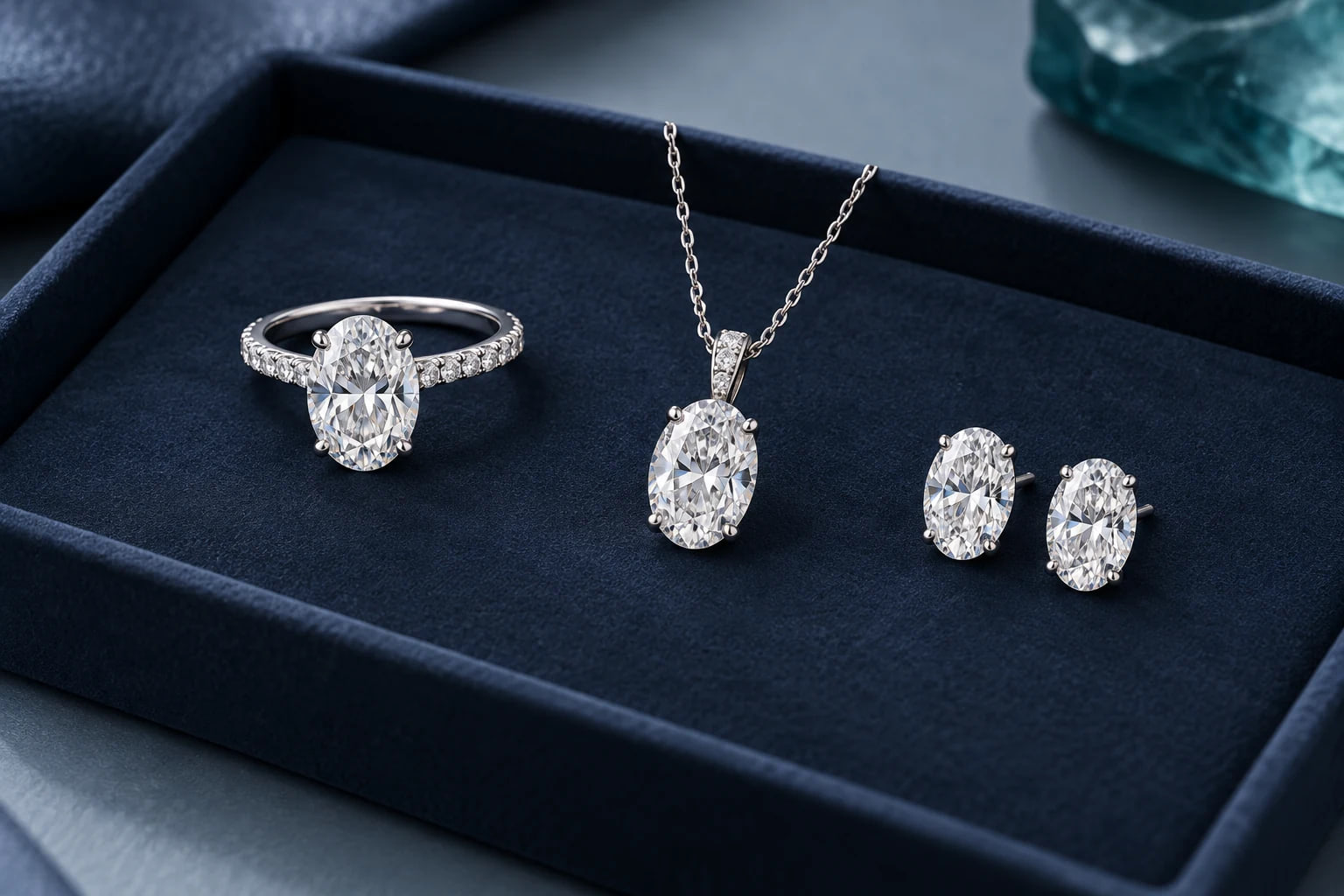
Choose a content structure that makes the options easy to compare. Use the same kind of measurements, views and description for the products being presented. If one listing has detailed dimensions and another only a weight label, the customer may struggle to understand the intended choice. Your own sales team will also find the range easier to explain when the information is consistent. Make the product differences visible without adding unsupported claims about which shape is inherently most valuable or universally more attractive.
MEITUO supports product images, video, specification copy and collection presentation resources. Connect these materials to the selected items or clearly identified representative designs. Your brand then supplies the positioning and customer explanation that give the range a recognizable identity. If a product option changes, update the affected media and specification record together. The shape name may remain the same while the individual dimensions or presentation needs change, so a familiar title should not prevent the content team from checking the current product details.
Keep educational comparisons separate from the item’s actual description. A general guide can explain shape families and design considerations, while the product page states what is offered. Do not use a conceptual size illustration as a precise guarantee of the supplied stone’s appearance. The more clearly your materials distinguish reference imagery, actual product information and design interpretation, the easier it is for customers and your own team to use them. This also makes the collection more manageable when new options are added after the first buying cycle.
Build a Shape-Selection Brief You Can Reuse
Summarize the customer purpose, selected families, intended products and relevant dimensions in one collection brief. Add the sample references and setting decisions that support the choice. Identify which combinations are ready for an order and which still need development. If an alternative shape or proportion is welcome, describe where it can be proposed and who will approve it. A reusable brief helps the supplier understand the collection’s direction without turning a creative reference into a fixed claim about every future item.
Make the opening selection deliberate. Record why the chosen outline belongs in the range, what the mounting needs and which comparison would resolve an open question. If the answer is still broad, narrow the sample task before requesting a large assortment. This can help a smaller business allocate attention across product development, content and purchasing. It also gives an established buyer a clearer way to introduce another option without allowing the range to grow through unrelated sourcing opportunities that no longer fit the customer offer.
When the first products have been reviewed, update the brief with what you learned. Keep successful requirements and revise the parts that caused unnecessary work or confusion. MEITUO can discuss the relevant loose shapes, coordinated selections and supply support around that evolving plan. The goal is a collection your team can explain and source coherently, with the shape decision connected to design, information and repeat purchasing. That is a stronger basis for growth than selecting every available outline and hoping the assortment will explain itself.
Explore Shape Options With MEITUO
We help jewelry brands, retailers, designers and other business buyers connect diamond selection with their collection goals. Share your customer group, design references, intended products and dimensional requirements. We can discuss relevant loose stones, matched selections and side-stone options, with low-MOQ starting points and supply coordination suited to the project.
Our support also includes product materials, packaging, brand customization and logistics coordination. Start with loose lab-grown diamond shapes or bring the collection brief into a conversation about your next sample or purchase. The selected shape should have a clear purpose in the jewelry and a workable place in the sourcing plan.
Share the details you know. Product quantities and project scope can be confirmed in conversation.
Shape-Selection Questions
Which Diamond Shape Should a New Jewelry Brand Launch First?
Choose from the intended customer, product and design language rather than a universal popularity rule. A focused first range should make the choice easy to explain and manageable to sample, present and source. You can compare a few relevant directions before deciding. The useful result is a coherent opening offer with a reason for each option, not a catalog containing every available outline.
Does the Shape Name Fully Describe the Stone?
No. Add the actual dimensions, relevant cutting-style information and the visual reference needed for the design. Items within a named family can present different options for your product. The brief should identify which characteristics matter and which can be discussed. That gives the supplier a clearer task than assuming everyone interprets a short family name in exactly the same way.
Can I Compare Different Shapes Using Carat Weight Alone?
Use measurements and the intended setting alongside weight. Your design needs to accommodate physical dimensions, and a weight description does not function as a drawing of the stone. Ask the technical contact which dimensions matter for the mounting, then compare the actual offered options. Keep the accepted product reference so the reasoning remains useful when another item is considered later.
What Is the Best Length-to-Width Ratio for an Oval?
This guide does not set one. A ratio describes an outline relationship but does not independently establish appearance or design suitability. Use the actual sample and mounting to decide which proportions fit your product. The numerical examples are hypothetical calculations, not recommended specifications or stock descriptions. Record the chosen direction in the brief rather than turning it into a universal rule.
Should All Products in a Collection Use the Same Shape?
They can, but they do not have to. Decide whether repetition creates the desired collection identity or whether a limited contrast gives customers a useful choice. Keep close matching within a product separate from broader coordination across the range. A collection can share a recognizable design language while using different dimensions and component relationships in rings, pendants and earrings.
When Should the Setter Become Involved?
Bring the relevant technical or setting contact into the decision when fit, mounting structure or product development affects the stone selection. A shape preference and a workable jewelry specification should be connected before the purchase is treated as repeat-ready. If the design changes during sampling, update the reference so the supplier knows whether a new stone option or a mounting adjustment is being requested.
Can MEITUO Help With Photography and Product Descriptions?
We support product images, video, specification copy and collection presentation materials. Connect the request to the selected items and your intended channel so the assets support a coherent offer. Your brand supplies the positioning and final customer explanation. Keep the information register current when an option changes, rather than assuming the same shape name means the old materials remain accurate for the new item.
How Should I Expand the Shape Range Later?
Use actual customer questions, sample outcomes and operating capacity to decide the next addition. Update the assortment map and identify the new sampling, content and sourcing work involved. Avoid treating a few observations as a market-wide prediction. A deliberate expansion should explain which customer choice or product role the new shape supports and how it will fit the collection’s existing visual language.
Sources and Editorial Notes
The collection framework and examples are MEITUO’s design and purchasing guidance. They do not establish shape popularity, selling performance or a universal ideal proportion.
- GIA: Guide to Diamond Shapes for Engagement Rings. Shape, cutting-style and setting background.
- MEITUO Company Profile.
Reviewed October 27, 2026. Dimensions and assortment maps are hypothetical examples.