 English
 Español
 Português
 Deutsch
 Français
 Italiano
 Nederlands
 العربية
 日本語
 한국어
 ไทย
Quick Answer
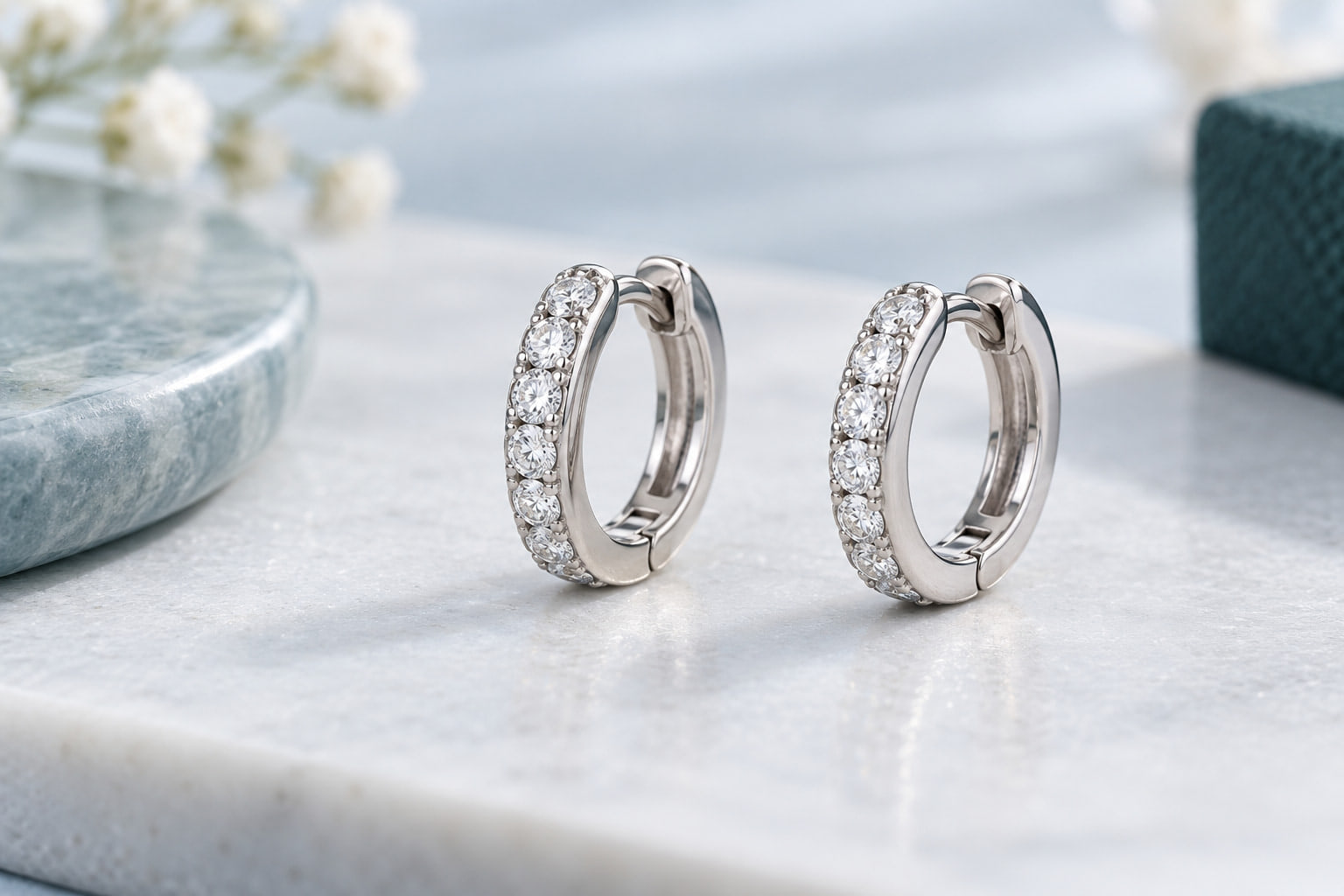
For lab grown diamond huggie earrings, approve the earring's inner diameter, cross-section, hinge movement and closure before finalizing the stone order. Then define the number, diameter and depth of stones along each visible arc and match the left and right earrings as a pair. Total carat weight alone cannot establish fit, comfort or a balanced appearance. Test the actual prototype for opening access, closure engagement, stone clearance and the intended wearing position. Keep the loose-stone specification separate from finished-jewelry responsibility: a diamond coordinator does not automatically supply hinges or complete earrings. Order a labeled matching repair reserve, and preserve the approved arc map so future replacement stones fit without disturbing the compact setting.
Which Huggie Dimensions Should Be Fixed Before Selecting Diamonds?
Specify the usable inner opening rather than only the outside diameter. The wearer experiences the space inside the hoop, while the outside dimension also includes metal and stones. Record whether the inner shape is circular, oval or another profile. Two earrings with the same exterior measurement may fit differently if their cross-sections differ.
Identify the intended position and customer fit range without promising one size fits every ear. A compact huggie needs enough clearance for the particular wearing position and an accessible opening path. Use physical fitting samples and clear product dimensions. Avoid deriving a universal comfort claim from one model photograph.
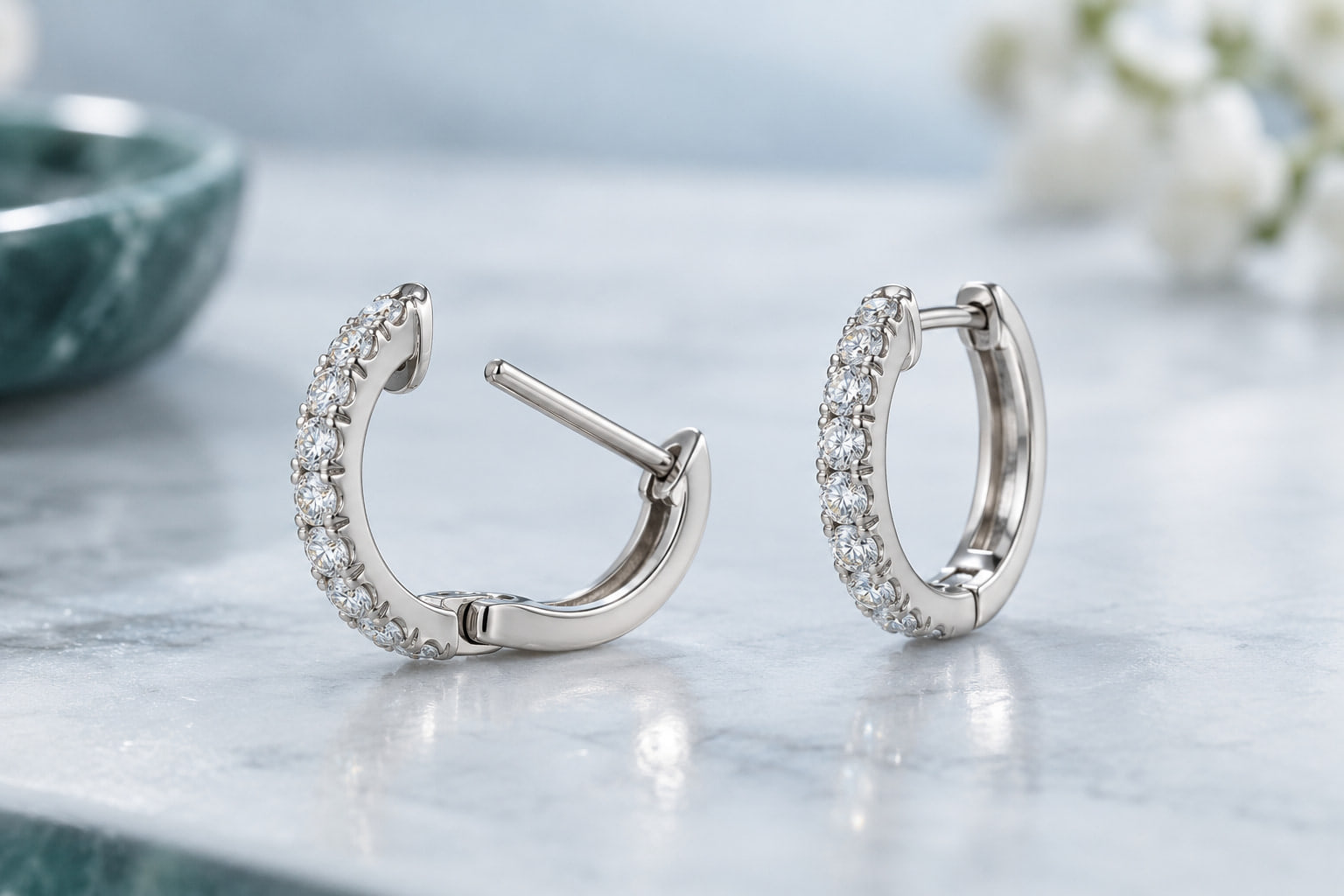
Mark the post, hinge, closure and stone-bearing area on the profile drawing. The stone arc should not interfere with the moving component or force metal to become too thin around a seat. Have the finished-jewelry manufacturer identify the validated clearance and strength requirements rather than asking the diamond seller to invent them.
Connect the design to our everyday jewelry application and specify the round melee requirement only after the prototype geometry is understood. A sourcing order is easier to approve when the drawing distinguishes cosmetic dimensions from the spaces that control movement and fit.
Uniform Stone Arc VS Graduated Stone Arc: Which Is Easier to Control?
Both layouts can work, but they produce different sourcing and repair tasks. A uniform arc emphasizes repeated spacing. A graduated arc can concentrate visual weight at the front, but each position needs a distinct map. Compare the actual prototype rather than assuming graduation automatically feels more luxurious.
| Decision | Uniform arc | Graduated arc | Required record |
|---|---|---|---|
| Stone selection | One principal calibrated window | Several position-specific windows | Diameter and depth by position |
| Pair matching | Match two repeated rows | Mirror the complete size sequence | Left-right arc map |
| Setting rhythm | Repeated seats and metal intervals | Changing seats and metal intervals | Approved top and side profile |
| Repair stock | One reserve group may cover many positions | Separate reserve sizes may be required | Reserve count by size and lot |
| Receiving | Check distribution within one main range | Keep size groups separate | Labeled sublots and count reconciliation |
| Design revision | Changing size affects the whole arc | Changing one size affects the visual progression | Renewed prototype review |
For a very compact hoop, a small depth change can matter even when the face-up row looks unchanged. Ask the setter which positions have the tightest pavilion clearance, especially near moving components. Do not use a larger stone simply to reach a target total weight if the available metal cannot support the seat.
Use calibrated parcel selection for repeat size groups. If the layout is graduated, pack and label each group by position or drawing reference. The setter should not have to infer the intended sequence from a mixed bag of small stones.
How Should a Huggie Prototype Be Checked Around the Stone Arc?
Review the open and closed states. In the open position, check access and whether the moving arc approaches a stone edge or setting feature. In the closed position, inspect the intended alignment and engagement. A photograph of a closed hoop cannot show how the mechanism behaves through its movement.
Have the jewelry manufacturer define and perform its appropriate closure and durability checks. Record the method, acceptance criteria and sample revision. This article does not set a universal mechanical test standard or guarantee a finished earring's safety. A procurement team can require a reviewable result without inventing a technical threshold.
Inspect the stone-bearing section after the trial. Look for shifted seats, rubbing, unexpected gaps or changes in the closure alignment. If the bench adjusts the metal around a stone to make the mechanism work, capture that change in the drawing before production. Undocumented manual corrections are difficult to repeat across many pairs.
The GIA care guide explains that diamond hardness does not eliminate chipping and that loose stones can wear metal. In a small moving product, secure setting and serviceability deserve attention alongside sparkle. Ask how the earring can be inspected and how a stone or closure issue will be repaired without unnecessarily disturbing the whole arc.
How Many Stones and Repair Pieces Should a Huggie Order Contain?
Hypothetical project, the Nine-Stone Huggie Pair: a brand plans 100 pairs, each earring using nine stones. Each pair therefore needs eighteen stones, and production needs 1,800 accepted pieces. The buyer chooses a reserve of ninety matching pieces, making 1,890 accepted stones required. That reserve is an internal planning decision, not a universal percentage recommendation.
For a graduated version, imagine each earring uses three stones in each of three size groups. Production requires 600 accepted stones per group. A reserve of thirty per group creates three separately labeled lots of 630, still totaling 1,890. This arithmetic preserves the ability to repair any position rather than leaving all spares in one convenient size.
The prototype drawing labels positions from the hinge toward the front. The pair map then mirrors the two earrings so the largest visible stones face consistently when worn. Equal quantities without the orientation map can produce two individually attractive earrings that do not read as a balanced pair.
MEITUO can coordinate the melee size groups and discuss matching reserves against the approved map. Confirm the actual diameter windows, depth constraints and appearance reference before quotation. A total-weight target is a secondary result of the approved design, not permission to mix sizes until the scale reaches a number.
At receiving, reconcile the three groups separately, then build a first pair before releasing the full order. If the setter needs to change one position's seat, review whether that change affects the whole arc and the repair stock. Keep production consumption and reserve withdrawals separate in the inventory record.
Which Market Questions Matter for Huggie Melee Sourcing?
The sourcing channel must understand a compact arc and pair continuity. Ask who controls calibration and who takes responsibility for finished-hardware performance. These are different tasks, even if one business coordinates introductions or quotations for both.
USA / Small repeated parcels
Can a US Trade Channel Support Huggie Repair-Size Continuity?
A US trade channel may be convenient for small follow-up parcels, but a huggie repair needs the original size and depth window rather than any small round stone. Stuller's laboratory-grown resource page describes a loose-diamond offering; it does not confirm the particular calibrated arc sizes or hardware service your project needs. A US seller also does not establish US growth origin.
Ask whether the supplier can retain a reference to the approved parcel and supply matching pieces for the planned service period. Confirm how a dimensional hold is handled before stones are set. If the retailer buys finished earrings from a separate maker, keep that maker's closure and setting responsibilities distinct from loose-stone replenishment.
For a return, record which earring and stone position are affected. Send the measured requirement with the repair request rather than relying on total pair weight. That makes a domestic replenishment channel more useful and reduces the risk of solving a missing-stone problem with a replacement that disturbs the compact arc.
CHINA / Position-specific sorting
How Should a Chinese Coordinator Receive a Huggie Arc Schedule?
For MEITUO's Qingdao sourcing role, provide the huggie arc as a table with position, count, diameter range, depth limit and appearance reference. This can be passed to upstream suppliers without relying on an informal description such as tiny hoop diamonds. Ask who performs final sorting and how each size group is labeled.
If a supplier proposes a wider commercial size category, confirm whether project-specific selection is possible and what it costs. A compact huggie may have little room for a deeper or wider replacement, so do not approve a broad category simply because the nominal size sounds close.
Request separate packing for production and reserve stock, with matching lot references. Keep the two earring arcs mirrored in the drawing even when loose stones are delivered by size group. The coordinator can help preserve those instructions, but the jewelry maker must still validate hinge clearance, closure engagement and finished setting performance through the agreed prototype process.
INDIA / Group and pair consistency
What Should an Indian Melee Offer Establish for Matched Huggie Arcs?
An Indian supplier search should identify the contact responsible for sorting and the entity making the commercial offer. Greenlab's official contact information lists Surat and Mumbai locations, which illustrates the distinction between technical and sales conversations without proving availability of a particular huggie parcel.
Ask whether all size groups can be selected to one approved appearance reference and whether the reserve can come from the same accepted selection. If several source parcels are combined, request that the supplier explain how visible outliers are removed and how the final lots remain identifiable.
For graduated arcs, quote the quantity by size instead of requesting only a total weight. Confirm the actual accepted count in each group before dispatch. A complete shipment that is short in the largest front position can still prevent production of complete pairs. Keep the final packing schedule aligned with the drawing, and require approval before replacing one group with a different diameter or depth range.
How Should Buyers Inspect Matched Huggies and Preserve Repair Continuity?
Inspect the finished pair together under neutral light, in the same orientation and at normal viewing distance. Check that stone sequences, metal spacing and apparent arc length balance. Turn both earrings through the same angles rather than judging one from the front and one from the side.
Review the intended wearing profile using representative fitting samples. The aim is to identify contact, access and presentation issues before the product description is finalized. Record limits honestly: a prototype trial does not establish comfort for every wearer or every piercing position.
Keep a repair card with the drawing revision, stone sizes by position, accepted depth limits and reserve location. A later repair should start with that card, not a visual guess from an online image. If the original reserve is exhausted, compare the proposed replacement in the actual seat and visual arc before approving it.
Use our repeat-order guide to maintain the stone history. Keep hardware service records with the finished-jewelry manufacturer. When a return involves both closure behavior and a missing stone, those separate histories help identify the cause without assuming every problem originates in the loose diamond.
For a returned pair, mark the affected earring and position before removing any stones. Record whether the complaint concerns closure access, fit, a missing stone or appearance. If a closure adjustment changes the stone-bearing arc, have the maker inspect the neighboring seats again rather than treating hardware and setting as completely isolated events. When only one earring needs repair, compare the completed result with its partner before return to the customer.
Keep a service disposition for the removed component and any unused reserve stones. If a deeper reserve piece does not fit the original seat, do not enlarge the seat informally to consume available stock. Request a suitable replacement or approve a documented design change through the maker. That preserves the connection between the original prototype and the repaired pair.
What Can MEITUO Coordinate for a Huggie Earring Project?
MEITUO is a sourcing and supply-chain coordination partner located in Qingdao, Shandong, China. It serves jewelry brands, wholesalers, retailers and designers through product selection, supplier communication, quality-requirement confirmation and order follow-up. For huggies, that work can focus on calibrated melee groups, left-right appearance consistency and a clearly labeled reserve plan.
The broader sourcing range includes loose centers, side stones, matched pairs and sets, and fancy-color options. Buyers should confirm the particular size windows, documents, treatment information, MOQ and lead time available for the proposed order. MEITUO's diamond coordination role does not establish a finished-earring offering or responsibility for hinge engineering.
Contact [email protected] with the approved arc map, stone schedule and acceptance criteria. Identify the finished-jewelry manufacturer responsible for the mechanism and setting trial. Clear responsibility lets the team coordinate the stone supply without turning an unresolved hardware question into an assumed diamond specification.
What Should a Huggie Diamond RFQ Include?
Attach an open-and-closed profile drawing and a numbered stone arc. State whether the design uses one size group or graduation, with accepted diameter and depth limits at each position. Include the total pair count and reserve quantities by size. Make clear whether the quotation is for loose stones or another explicitly confirmed scope.
Ask for consistent appearance across both earrings and an inspection approach suitable for the repeated row. Request actual lot references and the available laboratory-grown screening documentation, with its scope explained. Do not treat an individual sample report as proof of every stone in a bulk parcel.
Require approval before changing any size group. A substitution that keeps total weight unchanged may still disrupt fit, hinge clearance or the mirrored arc. The copyable brief below gives the supplier a meaningful stone task while leaving finished-mechanism validation with the appropriate maker.
Please quote loose laboratory-grown diamonds for [huggie design] in [pair quantity]. The attached mirrored arc uses [stone count] per earring, with size groups [diameter and depth limits by position]. Quote production and [reserve count by group] separately, preserving one approved appearance reference. Identify measured count and weight, sorting method, lot references, screening scope and available treatment information. State any conflict between the requested windows and supply availability before proposing alternatives. No change may affect the approved arc without written review. Confirm MOQ, lead time, shipping and shortage remedies. Finished hinge, closure and setting validation will be arranged separately.
FAQ: Lab-Grown Diamond Huggie Earrings: A Buyer’s Checklist
Does Total Carat Weight Tell Me Whether Huggies Will Fit?
No. Inner opening, profile, post, hinge and closure determine much of the fit. Stone weight alone does not describe those dimensions. Review the actual prototype and provide clear measurements to customers.
Can Graduated Stones Be Supplied in One Mixed Parcel?
They can be delivered that way only if the project has a reliable sorting process, but separate labeled groups are easier to reconcile. Specify count and dimensions for each position range rather than rely on total weight.
Should Both Earrings Use Identical Stone Sequences?
They should follow the approved mirrored pair map. The intended wearing orientation decides how the sequences relate. Review both earrings together so the visible fronts balance.
Who Should Validate the Hinge and Closure?
The finished-jewelry manufacturer should define and perform the relevant mechanism checks. A loose-diamond supplier can coordinate stone specifications but should not be assumed to validate the hardware.
What Repair Reserve Is Most Useful?
Keep accepted matching pieces by size and depth group, tied to the original lot and drawing revision. For graduation, a reserve in only one size cannot cover every position.
When Is a New Prototype Needed?
Review again when the stone window, depth, cross-section, hinge clearance or closure geometry changes materially. A new total weight alone does not explain whether the earlier approval still applies.