 English
 Español
 Português
 Deutsch
 Français
 Italiano
 Nederlands
 العربية
 日本語
 한국어
 ไทย
Quick Answer
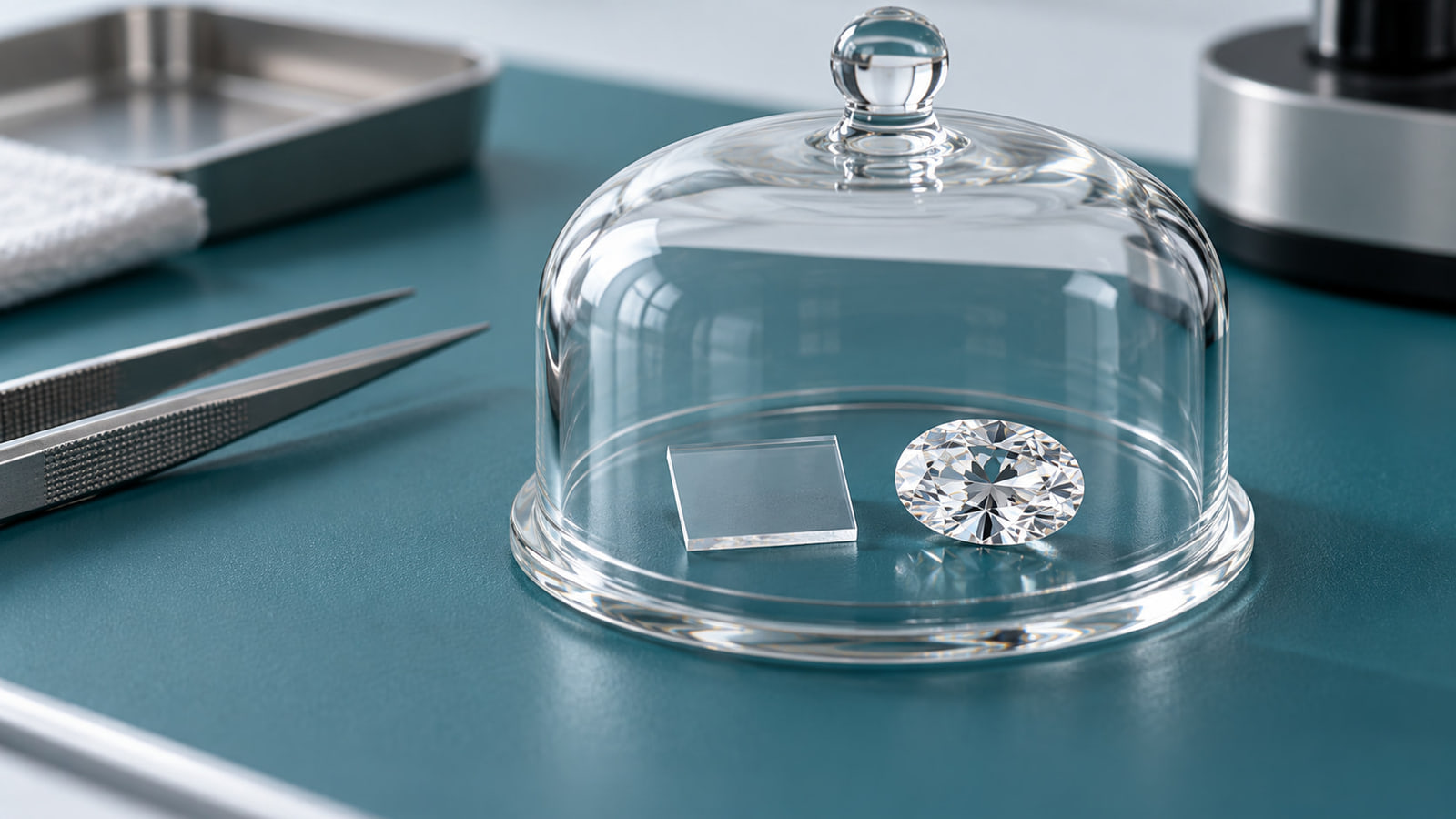
A CVD lab-grown diamond is diamond grown by chemical vapor deposition. CVD describes the growth route, while laboratory-grown describes the broader origin category. It does not automatically promise a particular color, clarity, transparency or treatment history. Buy against a finished-stone specification and verify the actual report comments, rather than treating the three letters as a quality grade. The most reliable buying decision combines the correct document scope with observations of the actual item and a written acceptance rule. Keep unresolved points visible before payment or setting. A supplier’s confident description is useful context, but the purchase record should distinguish confirmed facts from information that still needs verification.
What Does CVD Mean in a Laboratory-Grown Diamond Offer?
CVD stands for chemical vapor deposition. In diamond growth, carbon from a gas environment deposits onto diamond seed material. GIA’s process explanation describes the growth route; it does not grade the resulting polished stone. The commercial category laboratory-grown includes CVD-grown diamond and other growth routes, so the search phrase CVD diamond vs lab grown compares a subset with its parent category.
A more useful supplier conversation separates crystal growth, subsequent processing and finished quality. A CVD-grown stone can undergo post-growth treatment. Its growth method remains CVD, even when HPHT appears as the later processing method. If a purchase policy prohibits a particular processing step, record that requirement independently rather than assuming the letters CVD settle it.
Ask where the offered statement comes from. A report comment, a manufacturer’s declaration and a distributor’s product title are different sources of information. IGI’s report service states that growth process and treatment comments are noted upon request. That wording is a reason to confirm the scope you need, not to read every silent comment field as a negative treatment finding. Request any necessary detail before approving the stone.
CVD Origin Claims vs Finished-Stone Evidence: What Should Buyers Compare?
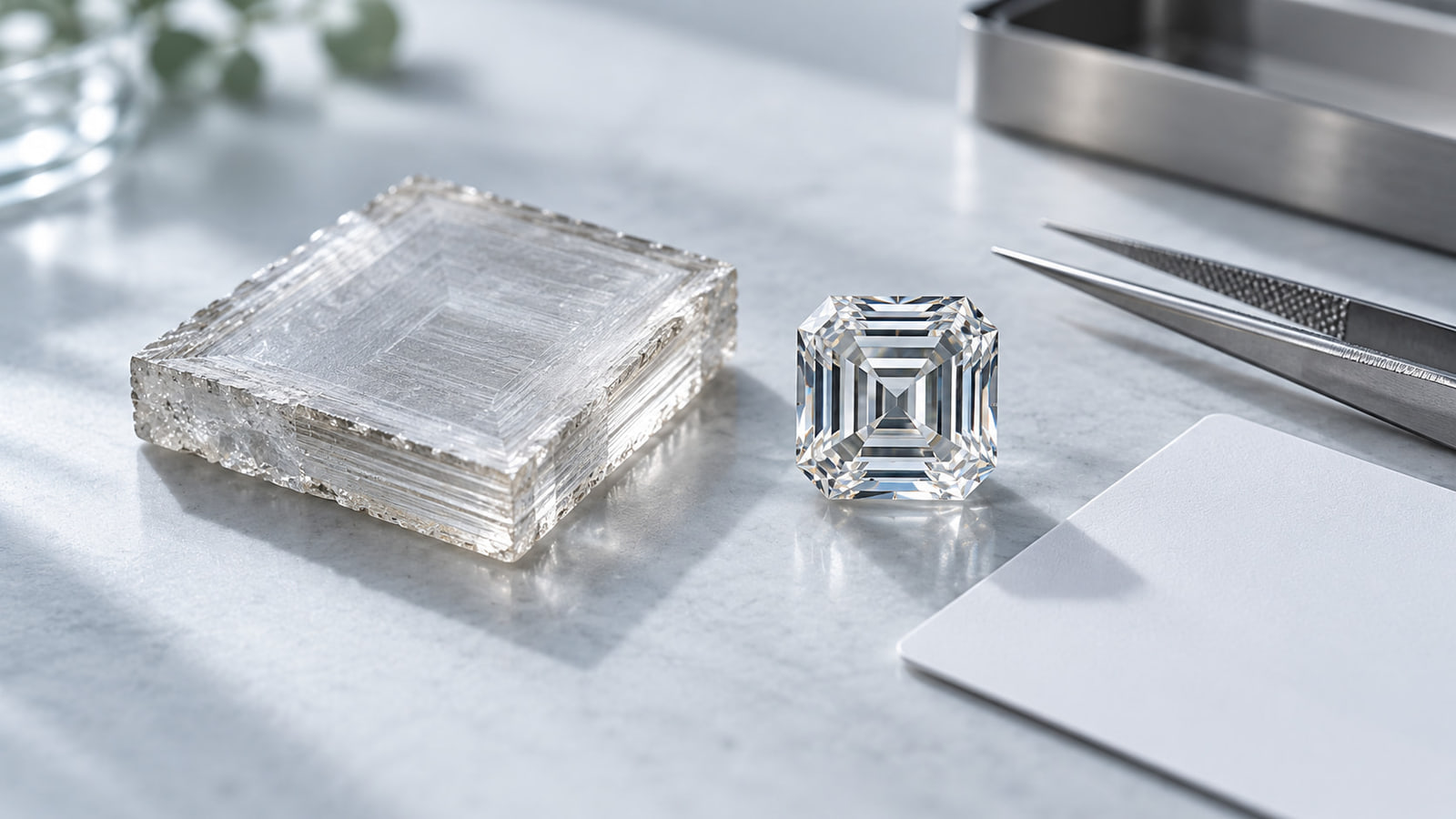
Compare an origin-only offer with one that answers the finished purchase brief. CVD identity is meaningful, but it cannot tell a buyer whether an emerald cut looks transparent, an oval has an acceptable outline or a set of centers will photograph consistently. The table shows what additional information turns a broad category offer into a selectable candidate.
| Decision | CVD origin only | CVD plus finished-stone evidence |
|---|---|---|
| Growth | Names the deposition route | Links growth wording to the individual offered stone |
| Treatment | Leaves later processing unstated | Requests explicit available treatment comments |
| Appearance | Assumes all CVD looks alike | Checks tint, transparency and optical pattern |
| Replenishment | Orders by acronym | Repeats dimensions and visual acceptance references |
A supplier might provide good origin information yet be unable to substantiate a no-post-growth-treatment requirement. Another might supply the requested history but offer stones outside the setting dimensions. These are different failures. Keep them separate so the remedy can be a suitable document service, an alternative candidate or a revised design decision, rather than an argument about whether CVD is better in general.
Where the collection permits treatment, the selection need not stop at that disclosure. Review the actual appearance and the customer-facing wording. Where the collection excludes a processing step, appearance alone cannot waive that policy. This is why the accepted offer should show both evidence fields and the physical selection result.
Which CVD-Specific Checks Help Select a Suitable Stone?
The following selection checks connect the topic to an actual purchase decision. Record the requirement, evidence and unresolved question against the same stock identifier so the supplier and receiving team review the same candidate.
Growth declaration. Confirm whether CVD is explicitly stated for the supplied stone. Request the relevant report comment or a clearly attributed supplier declaration. Separate reported method from a seller’s assumption based on its usual inventory.
Post-growth history. Confirm whether subsequent processing is disclosed or remains unknown. Request written treatment information with its evidence boundary. Ask what untreated means in this offer before copying it into retail descriptions.
Transparency and nuance. Confirm face-up appearance under consistent lighting. Request unedited comparison video of the actual candidate. Compare cleaned candidates under one setup so exposure changes do not create false transparency differences.
Cut and dimensional fit. Confirm outline, depth and face-up dimensions against the setting. Request a dimensional schedule approved by the designer. Evaluate actual polished dimensions; the growth method does not establish setting fit.
Apply the relevant checks to individual loose centers or matched pairs and sets according to the actual order. Preserve the approved reference and flag substitutions for review before they enter the packing list.
For designers and studios, share the intended setting before requesting alternatives. A candidate that meets the growth policy but misses the design’s depth allowance should be flagged before selection approval.
For an emerald cut, request a face-up view, a slight tilt and a side view of the same candidate. Compare the broad central facets and the appearance near the ends, then review the reported measurements against the seat. For an oval, outline and the distribution of darker areas during movement may be more relevant selection questions. These are finished-stone checks, not diagnostic tests of CVD growth. A supplier should not be asked to photograph the rough crystal to answer whether the polished center will fit a setting or satisfy a particular visual reference.
How Would a Designer Select CVD Emerald-Cut Centers?
Hypothetical worked B2B example. A hypothetical designer needs twenty emerald-cut CVD centers for a white-metal collection. Two candidates share the requested weight band and reported grades, but one looks less transparent in the agreed viewing setup. The buyer requests a clean repeat video beside the approved reference, then selects only stones that satisfy the optical requirement. The decision concerns the actual finished stones, not a claim that one growth route always wins.
For the emerald collection, the designer should define transparency in comparison with an approved sample, not by inventing a numerical clarity threshold that does not measure the concern. A higher clarity grade may still fail the intended optical look. The inspection file therefore preserves separate fields for reported clarity, observed transparency and final design approval.
A replacement emerald enters the review as a new candidate, including its own growth and treatment information. The buyer can keep the original size and shape brief while changing the selected stock. This avoids a common shortcut: accepting any CVD-labeled substitute simply because the launch schedule is tight and the initial candidate had already been approved.
Carry the accepted decision into repeat-order planning; where the product depends on several stones, retain the pair or set approval with the candidate schedule.
How Should Buyers Inspect Delivered CVD Diamonds?
Inspect the CVD stock list for two different fields: growth method and post-growth treatment information. If the seller combines them into one phrase, ask for clarification before transcribing the data. Preserve whether a statement comes from the report, the supplier or an unverified catalog description. The buyer should be able to see the strength and limitation of the evidence without re-opening every attachment.
Clean the candidates appropriately before reviewing transparency. Use the same light, background, camera exposure and orientation for the reference and candidate. A face-up clip should include slow movement, because one flattering angle can conceal an appearance concern. For open-facet shapes, inspect the center and edges rather than choosing solely from a brilliant highlight. Review actual dimensions against the approved setting envelope.
If a received stone appears different from the approved video, reproduce the agreed conditions before concluding that the item changed. Check the stock number and cleaning first. If the difference persists, preserve both records and follow the agreed physical review route. Do not reclassify a CVD diamond as defective merely because post-growth processing was disclosed; assess compliance with the treatment policy actually agreed.
For the ordering record, connect the findings to the RFQ fields and preserve the relevant side-stone specification when companion stones are included.
What Should CVD Buyers Ask Suppliers in the USA, China and India?
CVD sourcing questions change with the seller’s role. A distributor may arrange an outside document request; a polishing exporter may control the final optical selection; a sourcing coordinator may align several suppliers. The following market questions focus on those practical handoffs.
USA / trade channels and handoff
Can a US Distributor Separate Confirmed CVD Stock From Unspecified Laboratory-Grown Stock?
For a US jewelry business, the first CVD question is whether the distributor identifies the growth method for each reserved candidate or groups all laboratory-grown inventory together. Stuller’s loose laboratory-grown resource page is one example of a trade distribution channel. A US seller’s location alone does not establish the growth site, cutting site or processing history of a stone.
Ask the account representative to distinguish physically held stock from candidates sourced through another owner. If your collection requires a no-post-growth-treatment declaration, confirm that the distributor can obtain relevant documentation before promising the same to a retail customer. A listing title is not enough to fill a missing report comment.
For online selection, request the actual CVD candidate beside a reference under consistent light. If the buying decision depends on subtle transparency or hue, arrange an appropriate physical approval rather than relying on a compressed sales clip. Establish who handles rejection or reselection before the stone moves to your setter, especially when the inventory owner and sales contact are different businesses.
CHINA / sourcing coordination
Can a China Sourcing Partner Reconcile CVD Growth and Treatment Wording Across Suppliers?
When sourcing CVD diamonds through China, clarify the supplier chain instead of assuming a broad laboratory-grown catalog represents one growth route. A seller can coordinate stones from different participants; the buyer needs to know which declaration applies to each offered line. MEITUO’s Qingdao location identifies its sourcing coordination base, not a CVD growth facility.
A useful China-side brief asks the coordinator to reconcile growth wording, any processing information and the actual candidate list before export. If the documents use different terminology from the sales spreadsheet, resolve the difference while the supplier can still contact the relevant party. Do not permit a familiar CVD label to conceal an unanswered treatment question.
For a multi-size collection, ask for a final layout that preserves stock identifiers and shows the accepted appearance across sizes. Confirm availability and document scope per order, together with MOQ, lead time and shipping terms. The buyer’s main advantage from coordination is a coherent selection file and a clear path to reselection, rather than a country-based assumption about quality.
For its stated business role and Qingdao base, see MEITUO’s company introduction.
INDIA / manufacturing and export handoff
Can a Surat Seller Connect the Polished CVD Stone to the Document Actually Supplied?
For Indian CVD supply, distinguish growth, polishing and export responsibilities. GreenLab’s published locations provide a specific example of a Surat manufacturing address and Mumbai corporate office. That distinction is useful when asking a seller where a technical question can actually be answered; it does not establish the capability of every business in either city.
A polished-stone buyer should ask whether the same party controls the final candidates, any treatment declaration and the report submission. Where several businesses are involved, request a mapping between their reference numbers. Otherwise, a perfectly clear document may be difficult to connect to the emerald cut selected from a sales video.
Ask for final polished dimensions and appearance evidence after the last planned manufacturing step. A rough-growth declaration or an earlier cutting plan cannot establish the delivered optical result. For repeat orders, share the accepted reference and clarify whether equivalent CVD stock can be selected under the same treatment policy, rather than merely asking for another batch with the same nominal grades.
How Can MEITUO Coordinate a CVD Sourcing Brief?
A CVD collection brief often arrives as several separate requests: a growth-method preference, a treatment policy, an appearance reference and a dimensional schedule. MEITUO can help organize these into questions suppliers can answer against identified stock. It is a sourcing and supply-chain coordination partner in Qingdao, Shandong, China, supporting jewelry brands, wholesalers, retailers and designers.
For this topic, a useful request to MEITUO would explain why CVD is required, which processing disclosures matter and how the designer will approve transparency. Its product-selection and supplier-coordination role can help identify missing information and follow up on proposed alternatives. The buyer should still decide whether the evidence and actual stones meet the collection’s acceptance policy.
MEITUO’s range includes loose centers, melee, side stones, matched pairs and sets, and fancy-color options. It does not issue independent grading reports or claim to grow or cut the diamonds. Ask about available documents, treatment information, MOQ, lead time and shipping terms for the particular order at [email protected].
What Belongs in a CVD Diamond RFQ?
Specify CVD only if the collection has a reason to require that growth route. If any laboratory-grown route is acceptable, do not accidentally restrict the supplier pool with unnecessary wording. Where CVD is mandatory, identify the accepted evidence and require the seller to flag stock whose growth method is merely assumed. Treat post-growth treatment disclosure as a separate answer.
Give the supplier the intended shape, dimensional tolerances and transparency reference. State whether visible hue exclusions or a no-post-growth-treatment sourcing policy apply. A blank report comment should not silently satisfy such a policy. Confirm the document service capable of answering the question, and keep the optical acceptance process available even when the paperwork is fully in order.
Please quote laboratory-grown diamonds for [jewelry application] in [shape and quantity], with [weight range] and [dimensions or tolerance]. Our priority is confirmed CVD origin, required treatment disclosure, transparency comparison, dimensional tolerances and repeat-order appearance. Supply available evidence linked to each stock line or clearly identified parcel. State [accepted document service], current stock location, proposed substitutions and any information you cannot confirm. Please separate product and service inclusions, confirm MOQ and lead time for this order, and provide [shipping destination and terms]. We require written approval before substitution or dispatch and a mutually agreed process for discrepancies identified at receiving.
FAQ: What Is a CVD Lab-Grown Diamond? A Quality Checklist
Is CVD Different From a Lab-Grown Diamond?
CVD is one growth route within the laboratory-grown diamond category. The comparison CVD versus laboratory-grown therefore mixes a subset and the broader category. Ask whether the actual offered stone is documented as CVD rather than inferring its growth method from a generic laboratory-grown listing.
Can a CVD Diamond Have HPHT in Its Paperwork?
Yes, when HPHT refers to post-growth processing rather than crystal growth. Keep those two fields separate. Read the exact comment and ask for clarification if the seller shortens the description to HPHT, because that abbreviation can otherwise obscure which process happened at which stage.
Does CVD Mean That the Diamond Is Untreated?
No. CVD identifies growth and does not establish the absence of later processing. If a no-post-growth-treatment policy is mandatory, specify the accepted evidence. A silent comment field should not automatically be treated as a negative finding for every possible treatment.
Should I Reject a CVD Diamond Because Its Video Looks Hazy?
First confirm the actual stock identity, appropriate cleaning and comparable lighting. Request a repeat beside an approved reference. If the appearance concern persists, use physical review or the agreed examination route. A video can raise a question without diagnosing its cause or proving every CVD stone has that issue.
Is CVD Preferable for Emerald-Cut Collections?
Growth method alone cannot establish the best candidate. Inspect the actual emerald cut for transparency, outline, dimensions and visible features. A CVD requirement may reflect your sourcing policy, but it should sit beside the optical and design criteria rather than replace them.
What Should a Repeat CVD Order Preserve?
Carry forward the accepted growth and treatment policy, actual dimensional range and approved appearance reference. Identify whether substitutions need fresh document and optical review. The same nominal grades or the same CVD label do not guarantee that a new set of stones will suit the original collection.