 English
 Español
 Português
 Deutsch
 Français
 Italiano
 Nederlands
 العربية
 日本語
 한국어
 ไทย
Quick Answer
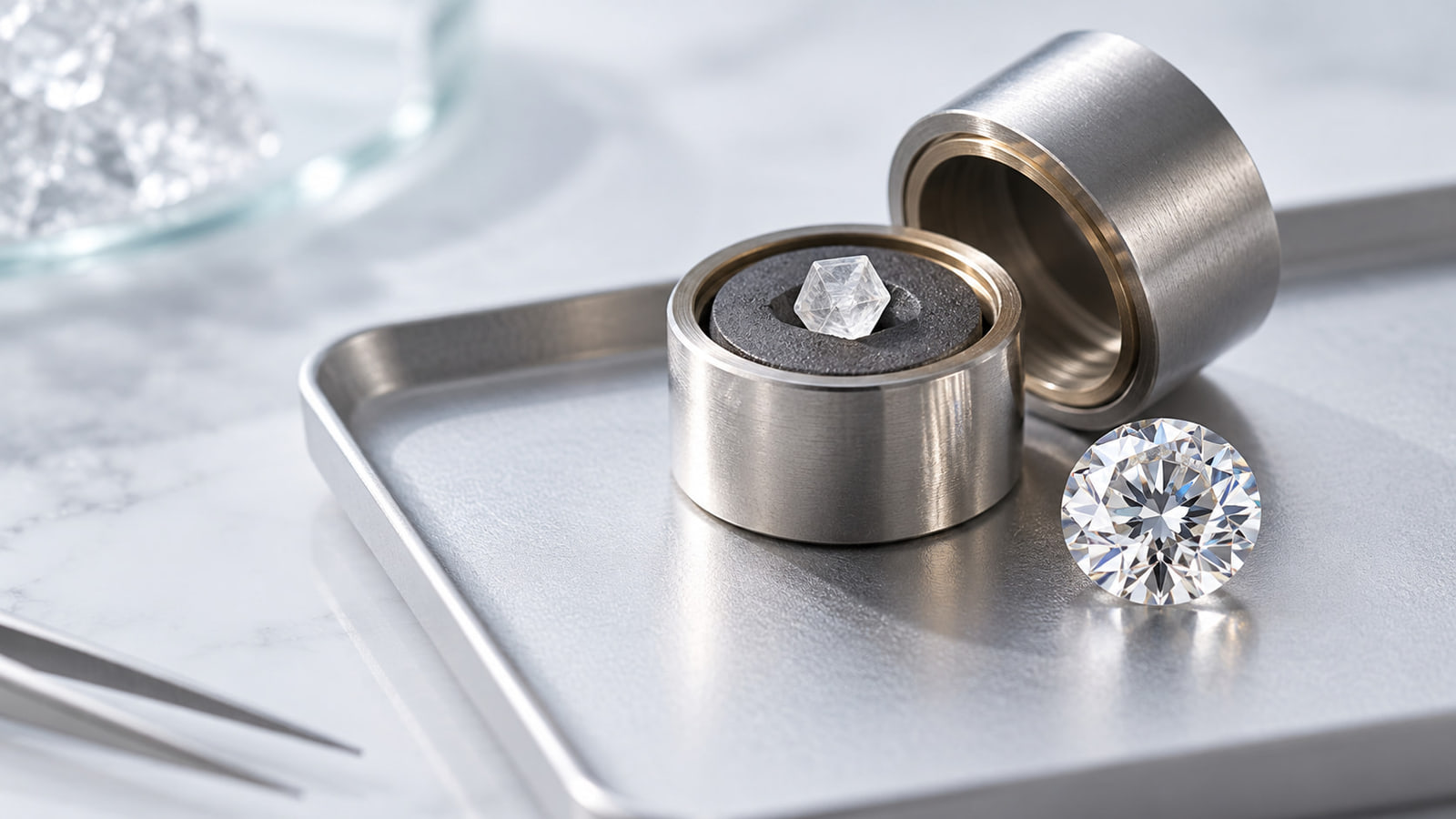
An HPHT lab-grown diamond is grown using high pressure and high temperature. HPHT can also describe a later treatment, including treatment of a diamond grown by another route, so ask whether the term identifies growth or processing. Evaluate each offered stone for its intended color appearance, transparency, dimensions and documentation. Blue nuance is a possible observation in some material, not a universal property of HPHT-grown diamonds. The most reliable buying decision combines the correct document scope with observations of the actual item and a written acceptance rule. Keep unresolved points visible before payment or setting. A supplier’s confident description is useful context, but the purchase record should distinguish confirmed facts from information that still needs verification.
What Should Buyers Check in an HPHT Lab Grown Diamond?
Keep three procurement questions distinct: Is this stone laboratory-grown? Was its growth method HPHT? Did any later treatment take place? The same abbreviation can appear in different answers. A listing that says HPHT treated CVD is not describing an HPHT-grown stone. Neither phrase alone tells a setter whether the finished stone fits the design or a merchandiser whether its face-up tone suits the collection.
GIA describes HPHT growth as a pressure-and-temperature process using a growth chamber. Its growth explanation also discusses boron-related blue coloration; buyers should not generalize that observation to every HPHT stone. See GIA: HPHT and CVD growth processes.
For growth or treatment comments, confirm the requested scope with IGI’s laboratory-grown report service rather than assuming every document automatically states both.
HPHT Growth Versus HPHT Treatment
The distinction matters when a supplier uses the same acronym in two different fields. Compare the original growth statement with the processing comment rather than trying to choose between vaguely labeled HPHT and CVD inventory. After the terminology is settled, apply the same finished-stone inspection needed for the jewelry design.
| Decision | HPHT-grown stone | HPHT-treated stone |
|---|---|---|
| Meaning | Identifies how the crystal was grown | Identifies a processing step after growth |
| Possible origin | Laboratory-grown growth route | Original growth may require separate identification |
| Paperwork | Ask for origin and growth evidence | Ask for growth plus treatment comments |
| Buying decision | Inspect actual optical and setting fit | Apply the same inspection plus required disclosure |
Which HPHT Checks Belong in the Buying Brief?
The following selection checks connect the topic to an actual purchase decision. Record the requirement, evidence and unresolved question against the same stock identifier so the supplier and receiving team review the same candidate.
Terminology. Confirm whether HPHT describes growth, treatment or both. Request separate supplier answers in two clearly named fields. Do not let one abbreviation serve as both an origin statement and a treatment statement.
Face-up nuance. Confirm any unwanted hue against the collection reference. Request neutral-light comparison of cleaned stones. Observe nuance in normal light before interpreting special testing behavior.
Individual documentation. Confirm whether the report belongs to the supplied center stone. Request report lookup and physical reconciliation. Retain original document wording so later staff can distinguish processing from growth.
Batch consistency. Confirm whether multiple sizes remain visually coherent. Request a sorted layout with unique stock identifiers. Compare the complete assortment rather than accepting each packet in isolation.
Apply the relevant checks to individual loose centers or matched pairs and sets according to the actual order. Preserve the approved reference and flag substitutions for review before they enter the packing list.
For diamond wholesalers, MEITUO can coordinate HPHT assortment questions across proposed stock lines. The useful brief identifies the required growth route, accepted appearance and whether each item or a defined parcel needs supporting documents.
For HPHT-grown melee, size calibration and visual sorting deserve their own acceptance schedule. A center-stone report cannot establish the identity or appearance of the small stones around it. Ask whether the lot is segregated by diameter and whether the stated weight is individual or aggregate. Where lot-level screening is offered, identify its coverage and any unresolved items before combining packets.
For larger centers, inspect the actual outline and the way darker and brighter areas move in normal viewing. This is a product-selection exercise, not a growth-method test. A pleasant isolated photograph can leave uncertainty about the stone’s appearance in motion. Ask for a slow view from agreed angles and keep the viewing setup consistent with the approved reference.
If unwanted nuance is a concern, tell the supplier whether the exclusion is absolute or requires comparison with a reference. Vague language such as no blue can be interpreted differently in different surroundings. A neutral background and consistent light make the conversation more reproducible. If remote imagery cannot resolve a subtle difference, use physical approval instead of endlessly adjusting camera settings.
Define how replenishment will be selected when exact stock is no longer available. Retaining an approved sample or identified reference gives the next supplier a practical target. The buyer may accept a visually coherent alternative while keeping the same documented growth policy. Any policy change, especially one affecting customer-facing treatment wording, should be explicit rather than hidden inside an urgent replacement order.

How Does HPHT Review Work in a Real Ordering Sequence?
Hypothetical worked B2B example. A hypothetical wholesaler sources sixty round HPHT-grown stones for three pendant sizes. One packet has a visibly cooler appearance than the approved reference under the shared light. The buyer separates it for review instead of asserting that all HPHT diamonds are blue. The supplier can propose replacement selection, and the wholesaler retains the same approved reference for the next order.
The three pendant sizes may use different dimensions, so the wholesaler should approve a reference for each size family where appearance changes visibly. An isolated cool-looking stone should not automatically lead to rejection of every packet. The log can identify the affected stock lines, normal-light observation and the candidate replacement proposed by the seller.
If replacement selection solves the appearance requirement, retain the revised layout and the original reason for the hold. That history helps the next order: it asks for a consistent finished look rather than banning an entire growth method. The brand’s staff can then explain the supplied origin accurately without making a claim about every HPHT diamond.
Carry the accepted decision into repeat-order planning; where the product depends on several stones, retain the pair or set approval with the candidate schedule.
How Should Buyers Resolve a HPHT Mismatch?
Check the first HPHT reference in the offer and ask what noun it modifies: growth, treatment or both. A line headed CVD with an HPHT processing comment is not the same growth declaration as HPHT-grown. Keep the original wording intact in the inventory system and add separate normalized fields only after its meaning is confirmed. Do not shorten both descriptions to HPHT stock.
For a color-sensitive parcel, inspect a layout in normal, consistent lighting before sorting individual stones into production packets. Compare the approved reference at the same time rather than relying on a remembered impression. If one size group appears cooler or warmer, investigate the actual candidates and conditions. Do not infer a universal color property of the growth method from one group’s appearance.
Keep screened or referred stones in clearly identified positions. A device response should be interpreted within that device’s instructions and cannot independently justify calling an HPHT-grown diamond moissanite. Where a result conflicts with the document, reconcile the item identity and arrange appropriate identification. The seller should receive the exact observation and instrument scope, rather than a vague accusation that the parcel failed a diamond test.
For the ordering record, connect the findings to the RFQ fields and preserve the relevant side-stone specification when companion stones are included.
What Should Buyers Ask HPHT Suppliers in the USA, China and India?
Supplier geography can change communication and handling, but it does not settle HPHT. Use these localized questions to understand the seller’s role, where the actual stock sits and who can supply the evidence required for this particular order.
USA / trade channels and handoff
Does the US Seller Describe HPHT as Growth or Treatment on Its Stock Offer?
For US trade purchasing, request an explicit HPHT-grown declaration rather than relying on an abbreviated stock filter. Ask whether the sales system distinguishes growth from later HPHT processing. A representative who handles both kinds of inventory should preserve the original description when preparing a reserved candidate list, instead of shortening all related wording to HPHT.
If the collection is sensitive to cool nuance, share the accepted normal-light reference before asking for selection. Do not turn the request into a claim that every HPHT stone has a blue appearance. A useful distributor response identifies the actual candidates and supplies comparable imagery or an agreed physical review route.
Clarify where reselection happens if a received parcel does not match the approved layout. The distributor may need cooperation from another inventory owner, especially for a multi-size order. Establish who can obtain replacement candidates, how those stones receive fresh approval and whether any unresolved device referral remains outside the accepted stock.
Use Stuller’s trade resources as a distributor-role example, while requesting candidate-specific HPHT wording.
CHINA / sourcing coordination
Can a Chinese Supplier Keep an HPHT Melee Lot Consistent With the Approved Center Stones?
For HPHT sourcing through China, keep individually selected centers and parcel-based melee requirements separate. A brief for tiny stones may emphasize size sorting and consistent assortment appearance, while a reported center needs its own document and identity review. One shared HPHT heading should not conceal these different acceptance tasks.
A Qingdao sourcing coordinator such as MEITUO can communicate the buyer’s normal-light reference and ask suppliers to identify growth and treatment wording separately. The coordinator’s location does not make it a growth facility or an independent laboratory. Ask which party can answer the technical question and which evidence actually applies to the proposed stock.
Before consolidation, inspect the different size groups together if they will share a product family. Keep the approved reference visible when suppliers offer substitutes. Confirm document availability and treatment information for the actual order, then agree MOQ, lead time and shipping terms. A general catalog statement should not replace final acceptance of the selected assortment.
For its stated business role and Qingdao base, see MEITUO’s company introduction.
INDIA / manufacturing and export handoff
Does an Indian Seller Distinguish HPHT-Grown Stock From HPHT-Treated CVD Stock?
For an Indian offer, the important terminology question is whether HPHT identifies the original growth route or post-growth processing of a CVD stone. Request the full original wording and ask the seller to separate those fields in its quotation. A shortened invoice description can otherwise create confusion that was not present in the laboratory comments.
If polishing and trading occur through different parties, ask who controls the final measured stock. An exporter should be able to reconcile the offered candidates with the documents and accepted layout, rather than referring only to an earlier cutting plan. Any substitute should preserve the same appearance and evidence requirements.
For repeat pendant or earring programs, give the seller an accepted reference for each relevant size family. Request a final layout before dispatch where consistency matters. Resolve unexpected screening results through suitable identification instead of relabeling a stone based on a single probe. The seller’s address provides context, while the actual evidence determines whether the order meets the brief.
GreenLab’s Surat and Mumbai listings demonstrate separate manufacturing and corporate roles; verify who holds your offered HPHT stock.
How Does MEITUO Support HPHT Diamond Purchasing?
MEITUO is a sourcing and supply-chain coordination partner in Qingdao, Shandong, China, serving jewelry brands, wholesalers, retailers and designers. For HPHT diamond purchasing, its useful role is to turn the buyer’s collection requirement into an actionable supplier request: confirm whether HPHT describes growth, treatment or both, organize available evidence and follow up on unresolved selection questions.
Its sourcing scope includes loose center stones, melee, side stones, matched pairs and sets, and fancy-color options. To avoid confusing growth with treatment, ask MEITUO to request the original supplier wording and arrange comparable normal-light images of the actual HPHT-grown candidates. The final acceptance criteria should remain with the buyer’s approved brief and the evidence supplied for the actual order.
MEITUO does not replace an independent grading or identification laboratory. Available stock, documents, treatment information, MOQ, lead time and shipping terms need confirmation per order. Send the intended application and HPHT requirements to [email protected] so selection and order follow-up can start from specific questions.
What Should a HPHT RFQ Specify?
State HPHT-grown when that is the intended requirement. Add a separate question asking whether subsequent processing is known and what evidence is available. Define whether the buyer needs individual reported centers or a documented parcel supply. These choices influence both the available stock and the appropriate inspection method, so they should not be left for the packing stage.
For the finished appearance, describe unacceptable nuance by reference and agreed viewing conditions. Include diameter or outline matching requirements for the actual jewelry sizes. Request final approval images of the identified lot and clarify how additional replacement stones will be selected later. A repeat order should reproduce the accepted product brief rather than merely repeat the abbreviation HPHT.
Please quote laboratory-grown diamonds for [jewelry application] in [shape and quantity], with [weight range] and [dimensions or tolerance]. Our priority is HPHT growth confirmation, separate treatment wording, neutral-light hue acceptance, size sorting and approved reference matching. Supply available evidence linked to each stock line or clearly identified parcel. State [accepted document service], current stock location, proposed substitutions and any information you cannot confirm. Please separate product and service inclusions, confirm MOQ and lead time for this order, and provide [shipping destination and terms]. We require written approval before substitution or dispatch and a mutually agreed process for discrepancies identified at receiving.
FAQ: What Should Buyers Check in an HPHT Lab Grown Diamond
Is HPHT Growth the Same as HPHT Treatment?
No. Growth describes how the crystal was produced, while treatment describes a later processing step. A CVD-grown diamond can have HPHT processing in its history. Keep those descriptions separate and read the original comments before abbreviating a stock record.
Are All HPHT-Grown Diamonds Visibly Blue?
No. Do not generalize a possible nuance to every stone. Compare the actual candidates against the accepted collection reference under consistent normal lighting. If the appearance is unsuitable, request reselection based on the observed requirement rather than a blanket assumption about the method.
Should HPHT Melee and Center Stones Use the Same Checklist?
They share a need for accurate identity and specification, but the evidence may be scoped differently. Individually reported centers and small parcels have different handling constraints. Define size sorting, lot identification, documents and screening coverage for the specific product rather than copying one checklist unchanged.
Does a Tester Referral Prove an HPHT Stone Is Not Diamond?
No. Interpret the exact device result within its supported scope. A referral or unusual response can require additional examination, not an immediate simulant label. Reconcile the item and arrange suitable independent identification when the result remains unresolved.
Can a Seller’s HPHT Label Establish Treatment Absence?
No. The label may identify growth, processing or ambiguous sales terminology. Ask explicitly what is known about subsequent treatment and what evidence supports it. If absence of a specific process is mandatory, agree the relevant documentation before approving the order.
What Should Be Retained for an HPHT Repeat Order?
Retain the separate growth and treatment descriptions, accepted normal-light references and the final dimensional layout. New stock should receive the relevant checks again. Repeating an abbreviation or a broad grade band does not establish the same assortment appearance.