 English
 Español
 Português
 Deutsch
 Français
 Italiano
 Nederlands
 العربية
 日本語
 한국어
 ไทย
Quick Answer
Do lab grown diamonds last forever? They are durable diamond material suitable for many everyday jewelry applications, but no stone or finished setting is indestructible. Diamond ranks 10 on the Mohs hardness scale, which concerns scratch resistance rather than immunity to impact. A diamond can chip, cleave or suffer damage under unsuitable conditions, and a loose setting can create its own failure risk. Laboratory-grown origin does not justify a promise of endless wear without inspection or maintenance. Choose a sound stone, protect vulnerable points, inspect the setting and use an appropriate repair and care process. For buyers, durability acceptance should cover the stone’s condition and the complete jewelry construction, not only a hardness number printed in a supplier brochure.
How Hard Is a Lab-Grown Diamond, and What Does Hardness Miss?
GIA’s care guide separates hardness, toughness and stability. Hardness describes resistance to scratching and abrasion. Toughness concerns breaking and chipping. Stability concerns the effects of chemicals and temperature. These properties answer different customer questions and should remain separate in staff training.
Laboratory-grown diamond shares diamond’s high hardness. That does not mean a ring can be stored loose beside other diamonds without abrasion risk. Nor does it mean a pointed stone can tolerate any impact. Diamond’s directional structure creates cleavage considerations, and a hard blow in an unfavorable location can damage a finished stone.
Describe the benefit precisely: strong resistance to ordinary abrasion, combined with a need for appropriate handling and setting. Avoid slogans such as cannot scratch or impossible to break. A customer may interpret them as permission to wear a ring during work that exposes it to concentrated blows or heavy pressure.
Procurement should inspect existing chips, abrasions and vulnerable edges before setting begins. A stone that arrives with a condition issue is different from a sound stone damaged later in use. Keep photographs and stock references so a future service discussion can distinguish the initial acceptance record from subsequent wear or repair history.
Scratch Resistance Versus Impact Resistance: What Changes in Practice?
A practical durability table connects the property to a purchasing or service action. It does not assign a fake lifetime to a particular shape. Real performance depends on the stone, setting, condition and use, so the buyer should preserve those details rather than reducing the decision to a single strong or weak label.
Use this framework during design review and when writing aftercare instructions. The customer needs an actionable explanation of what to protect, not a technical number without context.
| Risk | What the property tells you | What it does not guarantee | Buyer action |
|---|---|---|---|
| Scratching | Diamond has very high scratch resistance | No abrasion from contact with other diamonds | Store items separately and inspect surfaces |
| Chipping | Toughness concerns response to impact | Pointed corners survive every blow | Review vulnerable points and protective setting design |
| Setting failure | Metal construction secures the stone | A hard stone cannot become loose | Inspect prongs, seats and movement |
| Repair heat | Stability matters under temperature exposure | Any torch or thermal shock is harmless | Use a qualified bench process informed by condition |
| Existing fracture | Condition affects handling decisions | A grade label resolves every repair risk | Disclose observations and assess before work |
| Cleaning equipment | The complete article determines suitability | An ultrasonic is safe because diamond is hard | Inspect setting and other materials first |
A warranty should describe the service actually offered. If it covers inspection or workmanship, do not rewrite it as an unconditional guarantee against all stone damage.
How Should a Buyer Specify Durability for a Pointed-Stone Collection?
Consider a hypothetical order for 50 pear-center rings. The buyer approves the outline and appearance, then asks the setter to review the pointed end, girdle condition and seat design before production. The design goal is to protect a vulnerable area while retaining the intended silhouette. The stone’s hardness does not make this review unnecessary.
Request a sample setting and inspect it before committing the complete assortment. Confirm that the stone sits securely without relying on excessive pressure at one point. Ask the workshop to identify its dimensional limits and the conditions that require a revised seat. A pear with the same carat weight can have different length, width and depth, which changes the setting task.
Document the accepted sample and receiving condition. If a later shipment contains an edge chip, isolate that stone before setting and follow the agreed remedy process. Do not assume that a small defect will be hidden safely by a prong. The appropriate decision may require a qualified assessment of the location and severity.
For assortment planning, review loose centers alongside shape selection guidance. MEITUO can help coordinate the stone dimensions and supplier requirements, while the setting workshop remains responsible for its own design and bench decisions.
What Should Retailers Tell Customers About Scratches and Daily Wear?
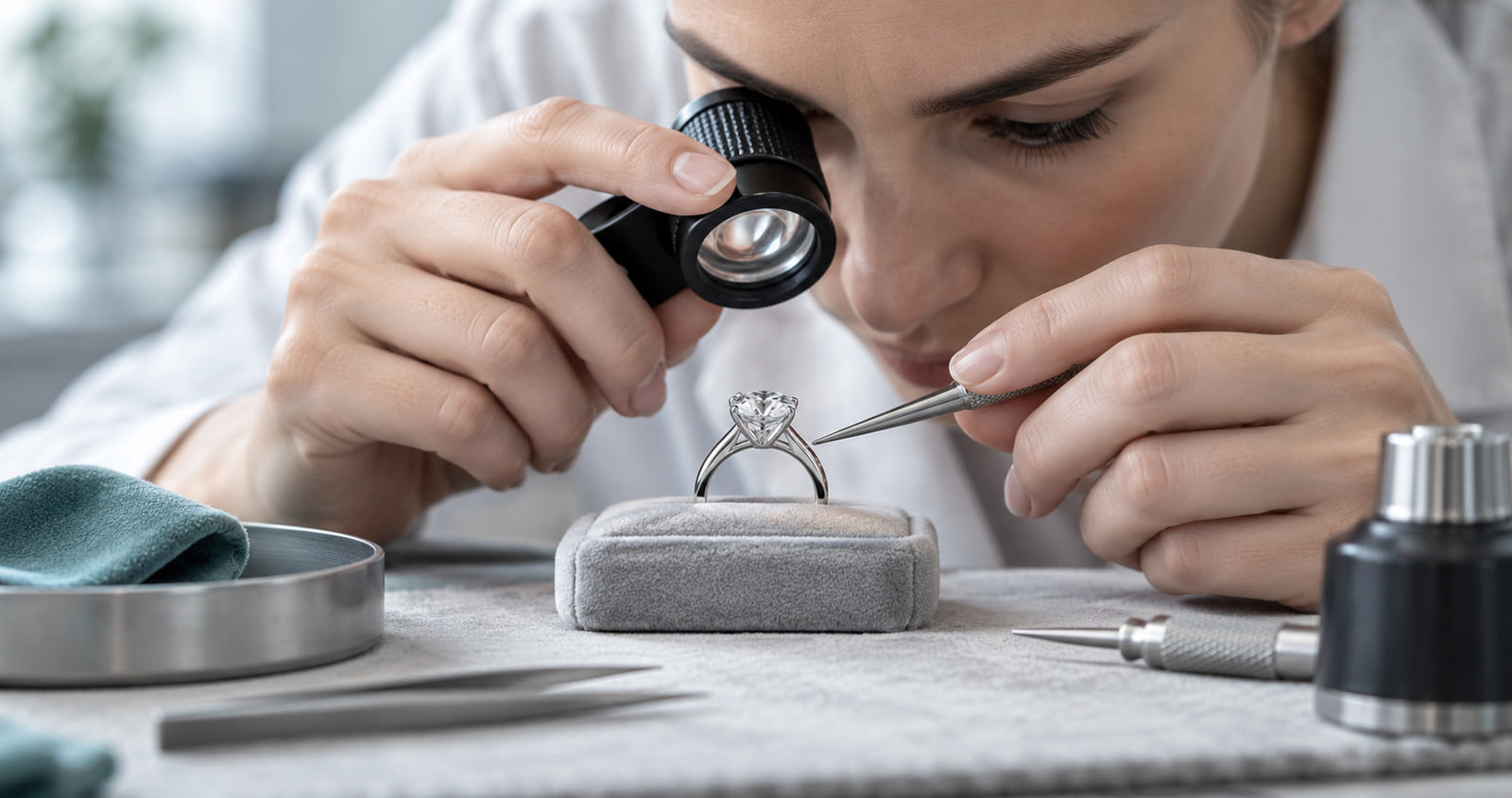
Explain the complete article. A diamond can remain intact while its metal setting wears, bends or loosens. A moving stone can also affect the surrounding metal. A retailer should therefore offer a sensible inspection route and advise the customer to seek service if a stone moves, a prong snags or the piece suffers a significant impact.
Recommend separate storage and gentle handling when jewelry is removed. Avoid a universal calendar promise that all pieces need the same service interval regardless of design or use. The retailer or qualified jeweler can set an appropriate inspection plan for the actual article and explain what symptoms require earlier attention.
For everyday jewelry, identify likely use conditions during design. Rings typically face different contact and impact patterns from pendants. Earrings also need secure backs and regular attention to the setting. The customer’s lifestyle can influence the practical choice of profile and protective features.
Do not turn care guidance into a guarantee that damage cannot occur if the customer follows a checklist. The purpose is risk reduction and early detection. A balanced explanation supports confidence because it tells the customer what the material does well and which ordinary maintenance responsibilities remain.
How Should Repair and Receiving Workflows Protect Lab-Grown Diamonds?
At receiving, record the actual stone reference, visible condition, dimensions and any relevant document. For a set, inspect all members rather than assuming matching also means identical condition. Review side-stone options with the setter because thin or pointed outlines may require application-specific handling.
Before repair, capture the article’s condition and history. Ask about prior work, impacts and any known treatments. A bench jeweler should decide how to protect or remove stones for the planned operation. GIA describes thermal shock and high-heat risks in its care guidance; hardness should not be used as permission for unrestricted heat exposure.
For matched sets, a damaged member can create a replacement problem beyond one stone. Define whether the retailer will attempt a single replacement or reselect the pair, and explain that appearance and dimensions must be reapproved. Keep service stock plans proportional to the collection rather than assuming any equal-weight stone will fit.
Close the workflow with a release inspection after setting or repair. Confirm security, condition and the final appearance, then provide the applicable care information. A stone-level report is useful evidence, but it does not certify that a later setting operation was performed correctly or that the finished article needs no maintenance.
How Should Buyers Qualify Suppliers in the USA, China and India?
Durability-sensitive sourcing needs condition evidence and a clear handoff to the setting workshop. Identify who inspects the loose stone, who approves the application and who checks the completed piece. The market questions below focus on those responsibilities rather than treating a national supply channel as a guarantee against chips or setting failure.
USA / SERVICE TERMS
What Should US Retailers Confirm About Durability Warranties?
A US retailer should read the supplier’s warranty and discrepancy terms before converting them into a customer promise. Ask whether the policy covers stone condition at delivery, setting workmanship, routine inspection or accidental damage. These are different services, and a broad lifetime phrase can obscure exclusions that matter when a claim occurs.
For a store with an external bench partner, identify who inspects the piece before repair and who records the initial condition. Keep the stone reference, customer history and proposed operation in the service file. If a replacement is needed, confirm whether the original setting can accept the available dimensions without redesign.
When selecting new stock through a trade distributor, request actual measurements and any condition information relevant to setting. Do not assume a domestic invoice establishes the suitability of every stone for every design. The retailer’s aftercare explanation should connect the material’s scratch resistance with practical setting inspection and appropriate handling, rather than presenting durability as an exemption from maintenance.
Stuller documents a trade-only US channel. Qualify the particular offer independently.
CHINA / CONDITION RECORDS
How Should China-Based Sourcing Specify Condition Before Setting?
For China-based sourcing, define whether the order is loose stones, completed jewelry or a coordinated program involving separate stone and setting suppliers. The acceptance record should identify which party inspects the stone before setting and which party checks the finished article. This prevents a later chip or loose stone from becoming an undocumented dispute between businesses.
Request dimensions and edge-condition evidence for pointed centers or side stones. A general grade band is not a substitute for the setter’s application requirements. If a sample setting is approved, preserve the sample reference and the permitted variation in later stones.
MEITUO works from Qingdao, Shandong, as a sourcing and supply-chain coordination partner. A buyer can ask it to coordinate condition questions, matching requirements and order follow-up for the proposed assortment. Confirm the actual inspection scope, document options and discrepancy remedies per order. Do not represent sourcing coordination as a guarantee that a diamond cannot chip or that a completed setting will never need service.
GIA’s 2024 review documents Chinese HPHT melee production. This industry context does not verify a specific seller.
INDIA / EDGE AND DIMENSION CHECKS
What Should an India-Based Polished Supplier Disclose for Setting Risk?
When purchasing from an India-based polished supplier, ask for the actual stone dimensions and any condition information relevant to the intended setting. Clarify whether the seller selected the polished goods, performed cutting or coordinates another party’s inventory. Each role can provide different evidence, so identify who will answer a condition question before release.
For a graduated side-stone set, request a labeled layout with dimensions and orientation. A correct total weight does not establish that all members can be set safely in the proposed design. The setter should review the actual assortment, particularly where the design uses pointed or narrow shapes.
Agree the remedy for an observed delivery chip before the buyer performs setting work. Preserve photographs and parcel references while the original condition remains clear. If a later repair requires replacement, obtain a fresh matching approval rather than assuming equal weight gives an interchangeable stone. A seller’s location or growth-method label cannot replace the condition and application checks needed for the specific goods.
GreenLab lists Surat manufacturing and a Mumbai office. Distinguish those roles in any supplier comparison.
How Can MEITUO Support This Sourcing Decision?
MEITUO is a sourcing and supply-chain coordination partner in Qingdao, Shandong, China, serving jewelry brands, wholesalers, retailers and designers. For durability-sensitive collections, its relevant contribution is helping buyers communicate the stone dimensions, condition expectations and matching requirements that the setting workshop needs.
The product range includes loose center stones, melee, side stones, matched pairs and sets, and fancy-color options. MEITUO supports product selection, supplier coordination, quality-requirement confirmation and order follow-up. Buyers can request an assortment organized around the actual application instead of treating every equal-weight diamond as interchangeable in a setting.
Availability, documents, MOQ, lead time, treatment information and shipping terms require confirmation per order. Contact [email protected] with the design, dimensional limits and inspection plan. A qualified jeweler should make the setting and repair decisions for the actual article. MEITUO does not guarantee immunity from scratches, chips or service needs, and its coordination does not replace professional condition assessment or bench workmanship.
What Should Your Purchasing Brief and Acceptance Record Contain?
Define durability acceptance through observable requirements: initial condition, permitted dimensions, setting suitability and the release inspection. Keep the diamond’s material properties separate from the workshop’s construction responsibilities. If a stone or setting fails review, isolate it before further work and document the agreed remedy.
Prepare aftercare wording at the same time as the purchase specification. Customers should know to seek inspection after a significant impact or if a stone becomes loose. Keep any warranty tied to its actual terms. The following brief helps align supplier selection with the setting application without asking for an impossible promise that the finished piece will last forever under all conditions.
Please propose [quantity and shapes] laboratory-grown diamonds for [jewelry application]. Required dimensions are [ranges], with edge and condition criteria [details]. Provide actual-stone or labeled-set views, relevant documents and treatment information. Confirm the inspection performed before release and the remedy for observed chips, fractures or dimensional discrepancies. Identify matching requirements and any replacement-selection process. Our setting workshop will approve application suitability before production. State MOQ, availability, lead time and shipping terms. Do not make indestructibility or unconditional lifetime claims, and do not substitute stones or alter condition without written approval.
FAQ: Lab-Grown Diamond Durability: Hardness, Scratches and Daily Wear
Can Lab-Grown Diamonds Scratch?
Diamond has very high scratch resistance, but contact with other diamonds can cause abrasion. Store diamond jewelry separately and inspect condition when a mark is suspected. A hardness rating does not mean every scratch-like appearance is a scratch or that the complete setting is equally hard.
Are Lab-Grown Diamonds as Hard as Natural Diamonds?
Both are diamond material and rank 10 on the Mohs scale. This concerns scratch resistance. It does not mean every specimen has the same condition or that either category is immune to chipping, cleavage or damage during unsuitable handling.
Can a Lab-Grown Diamond Chip?
Yes. A concentrated impact or unfavorable stress can damage a diamond. Pointed areas, existing condition issues and the setting design deserve attention. Use a qualified inspection when damage is suspected and do not assume a chip can simply be hidden under a prong.
Does a Lifetime Warranty Mean No Maintenance?
No. Read the actual contract. It may cover specific services or workmanship and may contain inspection requirements or exclusions. Explain those terms clearly rather than turning the word lifetime into an unconditional promise against all stone or setting damage.
Is High Heat Safe Because Diamond Is Hard?
Hardness and thermal stability are different properties. Repair methods must account for the stone, condition, treatments and complete article. A qualified bench jeweler should determine the appropriate process and protection rather than relying on a hardness number.
What Should Happen After a Ring Suffers a Hard Impact?
Check for movement, damaged prongs and visible condition changes, then seek qualified inspection if there is any concern. Avoid continued wear of a loose setting. Record the event and condition before repair so the service decision is based on the actual article.