 English
 Español
 Português
 Deutsch
 Français
 Italiano
 Nederlands
 العربية
 日本語
 한국어
 ไทย
Quick Answer
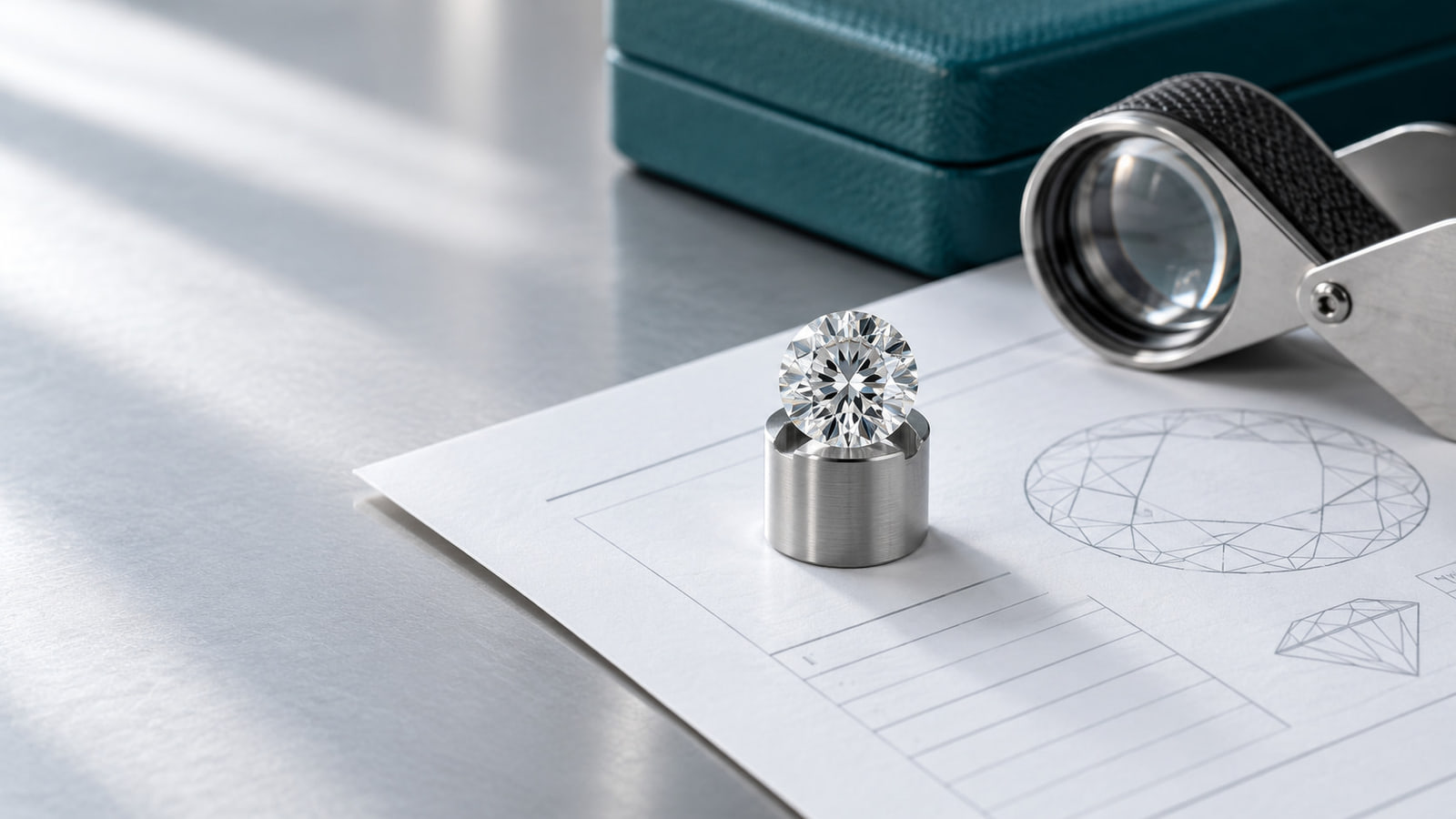
Yes, certification can strengthen trust in lab-grown diamonds by independently documenting identity and quality. Its value depends on verifying the report and matching it to the actual stone. It does not, by itself, guarantee the supplier’s delivery, a diamond’s resale value or the consistency of an entire parcel.
For B2B buyers, a dependable decision combines three records: the laboratory document, the physical item or lot, and the agreed purchase specification. MEITUO helps buyers connect these requirements during sourcing, rather than treating a certificate logo as the whole quality-control process.
Buying principle: verify the issuer, match the item, then confirm the order terms.
How Does Lab-Grown Diamond Certification Build Buyer Trust?
When buyers ask, “does certification impact trust in lab grown diamonds?”, the practical question is whether the evidence can be checked independently. A clear report gives the buyer a reference outside the supplier’s sales description. It also gives purchasing, merchandising and customer-service teams a shared product record.
That matters when two quotations both describe a two-carat oval. Similar weight does not establish identical dimensions, appearance or documentation. A report helps clarify the offered item; inspection and purchasing criteria answer the remaining questions. This is a procurement benefit, not proof that certification automatically increases conversion or guarantees a price premium.
Consider an illustrative collection launch with ten center stones. The purchasing team approves specific item references, while the website team prepares ten listings. If one stone is replaced after approval, copying the original report into its replacement listing breaks the evidence chain. A simple revision rule prevents that mistake: any item substitution triggers a fresh document match, media review and listing approval. Trust comes from maintaining that connection through the transaction, not merely collecting ten PDFs at the beginning.
Use precise language. Buyers commonly search for a “lab-grown diamond certificate,” while laboratories provide specific reports or assessments. Those documents concern the examined item within their stated scope. An appraisal concerns value; a commercial warranty concerns agreed obligations. None should be substituted for another.
For example, MEITUO can coordinate a request for loose lab-grown diamonds around the required report, dimensions and intended setting. This keeps the documentation question connected to the collection being purchased.
What Certifications Apply to Lab-Grown Diamonds: IGI vs GIA?
There is no universal “best certification for lab grown diamonds” independent of the buying task. Identify the issuer, service name, issue date and item scope before comparing documents. IGI describes reports recording quality characteristics, with growth-method and treatment comments available upon request. Read the offered document rather than assuming every field is included.
GIA’s current eligible colorless-to-near-colorless service uses an overall Premium or Standard assessment for loose laboratory-grown diamonds of at least 0.15 carats. GIA identifies October 1, 2025 as the start of this system in its assessment criteria. Colored-diamond services have different scopes.
| Compare | IGI laboratory-grown report | GIA eligible colorless assessment |
|---|---|---|
| Quality description | Relevant 4Cs and item characteristics within the service scope. | Overall Premium or Standard classification. |
| Item context | Check loose-stone or jewelry service; mounting can limit assessment. | Loose, eligible colorless-to-near-colorless stones, 0.15 carats or more. |
| Growth / treatment | Ask for the required comments and check the actual report. | Check the specific service; do not import fields from a different report. |
| Buyer’s task | Verify the official record and item match. | Verify the official record and item match. |
An older report is not automatically invalid because the issuer’s current service changed. Verify the original record and its context. Do not convert a GIA overall classification into an invented one-to-one IGI grade. Our IGI and GIA procurement guide develops this document-level comparison.
How Do You Verify a Lab-Grown Diamond Certificate?
Start with the issuing laboratory’s official lookup, then check the physical stone. A PDF, QR code or successful number search alone does not establish that the diamond in a parcel is the diamond described.
- Open the issuer directly. Use IGI report verification or GIA Report Check, rather than relying only on a forwarded link.
- Compare the fields. Match the document number, shape, carat weight, measurements and relevant comments to the supplier’s item reference.
- Check available identification. Where applicable, examine the girdle inscription using suitable magnification. Combine this with measurements and professional examination when needed.
- Record the handoff. Keep the approved item ID, document and media together. If the stone changes, recheck the associated files before payment or listing.
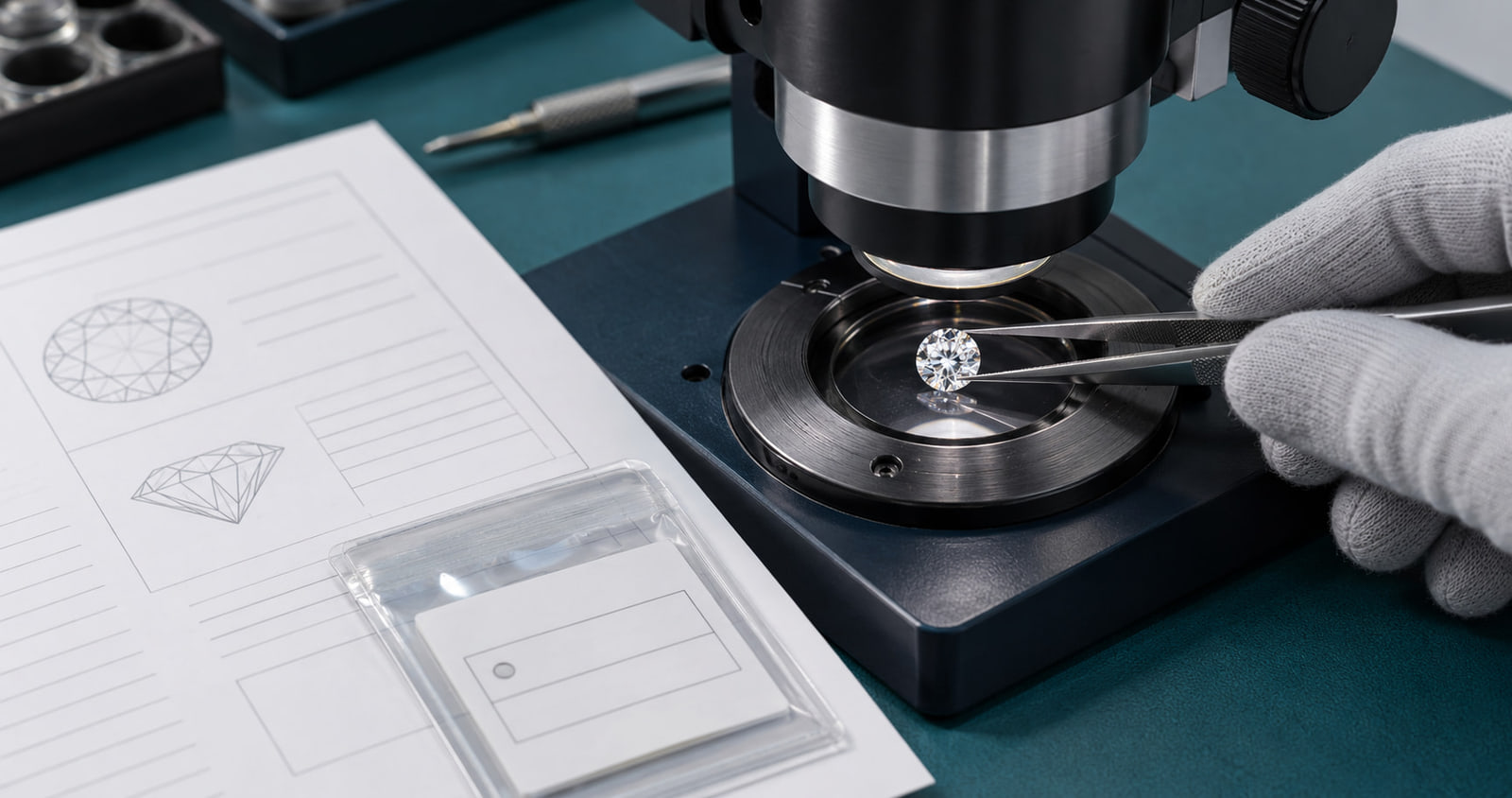
Use this as a review aid; it does not authenticate a diamond.
If the fields conflict, pause approval and request clarification. MEITUO’s IGI-documented sourcing page provides a starting point for discussing item records and documentation requirements.
Keep a short exception log for unresolved questions. Record the item reference, discrepancy, supporting image, responsible contact and decision. A missing inscription photograph and conflicting measurements are different issues; treating both as a vague “certificate problem” makes resolution harder. Where your team lacks suitable equipment or expertise, agree on independent examination before release. A checked box should represent completed work, with evidence your receiving team can retrieve.
Certified vs Uncertified Lab-Grown Diamonds: What Changes for Wholesale Buyers?
The useful distinction is often independently reported versus supplied without an individual report. “Uncertified” does not automatically mean simulated or unsuitable. It means the buyer must understand what evidence is available and what further checking the purchase requires.
| Buying question | Individual report supplied | No individual report supplied |
|---|---|---|
| Independent record | Check the issuer’s documented scope and verify the item match. | Ask what screening, inspection and identification records are available. |
| Comparison | Use relevant document fields alongside appearance and dimensions. | Define specifications and inspection requirements before comparing offers. |
| Commercial terms | Confirm acceptance criteria, delivery and remedies separately. | Confirm the same terms, including responsibility for additional testing. |
For a prominently marketed center stone, independent documentation can support a specific customer listing. For small accent stones, a defined parcel specification and appropriate screening may be more practical. Compare the evidence required for the application, rather than demanding identical paperwork for every line.
Ask MEITUO to clarify documentation at quotation stage. A low headline price is difficult to compare if report scope, inspection costs or the supplied purchasing unit remain unresolved.
Also distinguish a report’s cost from the cost of uncertainty. A quoted saving may disappear if your team must arrange extra identification, replace mismatched stones or rebuild product content. Conversely, buying unnecessary individual paperwork for a tightly specified production parcel can add work without answering its principal matching questions. Choose the evidence package deliberately and document the rationale in the purchase approval.
How Should Buyers Compare Lab-Grown Diamond Suppliers in the USA, China and India?
Supplier location, growth location, cutting location and report-issuing location are separate facts. For each market, request the legal seller’s identity, item-level evidence and destination-specific order terms. A country name does not establish quality, origin or delivery capability.
United States / jewelry-trade distribution
USA Lab-Grown Diamond Suppliers: Clarify Distribution and Disclosure
- Local reference
- Stuller, Lafayette, Louisiana
- Buying focus
- Report scope, product disclosure and fulfillment terms
For US jewelry businesses, established trade distributors are one sourcing route. Stuller’s current resource page distinguishes loose lab-grown diamonds offered with and without grading reports. Its company information locates the business in Lafayette, Louisiana. This is an example of a US trade channel, not evidence that every offered stone was grown in the United States.
When comparing a domestic distributor with cross-border sourcing, ask who holds the inventory, which legal entity invoices you, how item substitution is handled and what review or return terms apply. Compare the full offer using the same dimensions and documentation requirements.
For US-facing listings, the FTC explains clear disclosure of laboratory-grown origin. A report link does not replace an accurate product description. MEITUO can discuss a US-destination brief, with availability, shipping arrangements and responsibilities confirmed for the particular order.
China / manufacturing and sourcing coordination
China Lab-Grown Diamond Suppliers: Separate the Growth Source From the Seller
- Supply-chain context
- Henan and Zhengzhou manufacturing cluster
- MEITUO location
- Qingdao, Shandong, China
GIA’s 2024 manufacturing overview describes China’s established HPHT production, including melee, and also discusses Chinese CVD producers. It names businesses such as Zhengzhou Sino-Crystal, Zhongnan Diamond and Henan Huanghe Whirlwind. These are manufacturing-context examples, not a ranking or a statement about their current stock.
When buying from China, establish whether the counterparty is a grower, cutter, exporter or sourcing coordinator. Ask which organization supplies the offered goods, what treatment information is available and how the invoice, parcel reference and reports stay connected. Confirm responsibility for export documents and destination arrangements before final approval.
MEITUO, based in Qingdao, works as a sourcing and supply-chain partner. Buyers can discuss coordinated selections, matching requirements and documentation through one sourcing conversation. Our location is distinct from the growth and cutting origins of any particular diamond; request those details for the offered goods.
India / Surat and Mumbai trade network
India Lab-Grown Diamond Suppliers: Connect CVD Offers to Verifiable Records
- Manufacturing reference
- Surat, Gujarat
- Trade reference
- Bharat Diamond Bourse, Mumbai
Surat is a practical starting point for researching India’s lab-grown diamond supply chain. GJEPC’s buyer-seller program documents organized trade activity in the city. As a specific supplier example, GreenLab describes its CVD and B2B supply business; its contact page identifies manufacturing in Surat and a corporate office in Mumbai.
For a Surat or Mumbai quotation, ask whether the price covers rough, polished loose stones or finished jewelry. Confirm the actual item references, growth and treatment disclosures, report arrangements, currency and shipment terms. Supplier capabilities should be established for the specific order, rather than inferred from the city’s reputation.
Use the same specification when comparing an Indian producer, a US distributor and a China-based sourcing partner. MEITUO’s wholesale and distribution applications can help frame that discussion around the buyer’s business model and replenishment needs.
Supplier examples illustrate different supply-chain roles. They are not a ranked shortlist, an endorsement or a claim of affiliation with MEITUO. Verify current availability and terms directly.
Do Lab-Grown Melee Diamonds Need Individual Certificates?
Set the documentation requirement according to the purchasing unit and application. Do not assume a report for one center stone describes every accent stone in the same shipment. Nor should a parcel description be presented as an individual laboratory report.
For lab-grown melee diamonds, define diameter groups, acceptable tolerances, color and clarity requirements, quantities or weight units, and the agreed identity-screening arrangement. Specify who performs the checks and what happens if a parcel fails the agreed criteria.
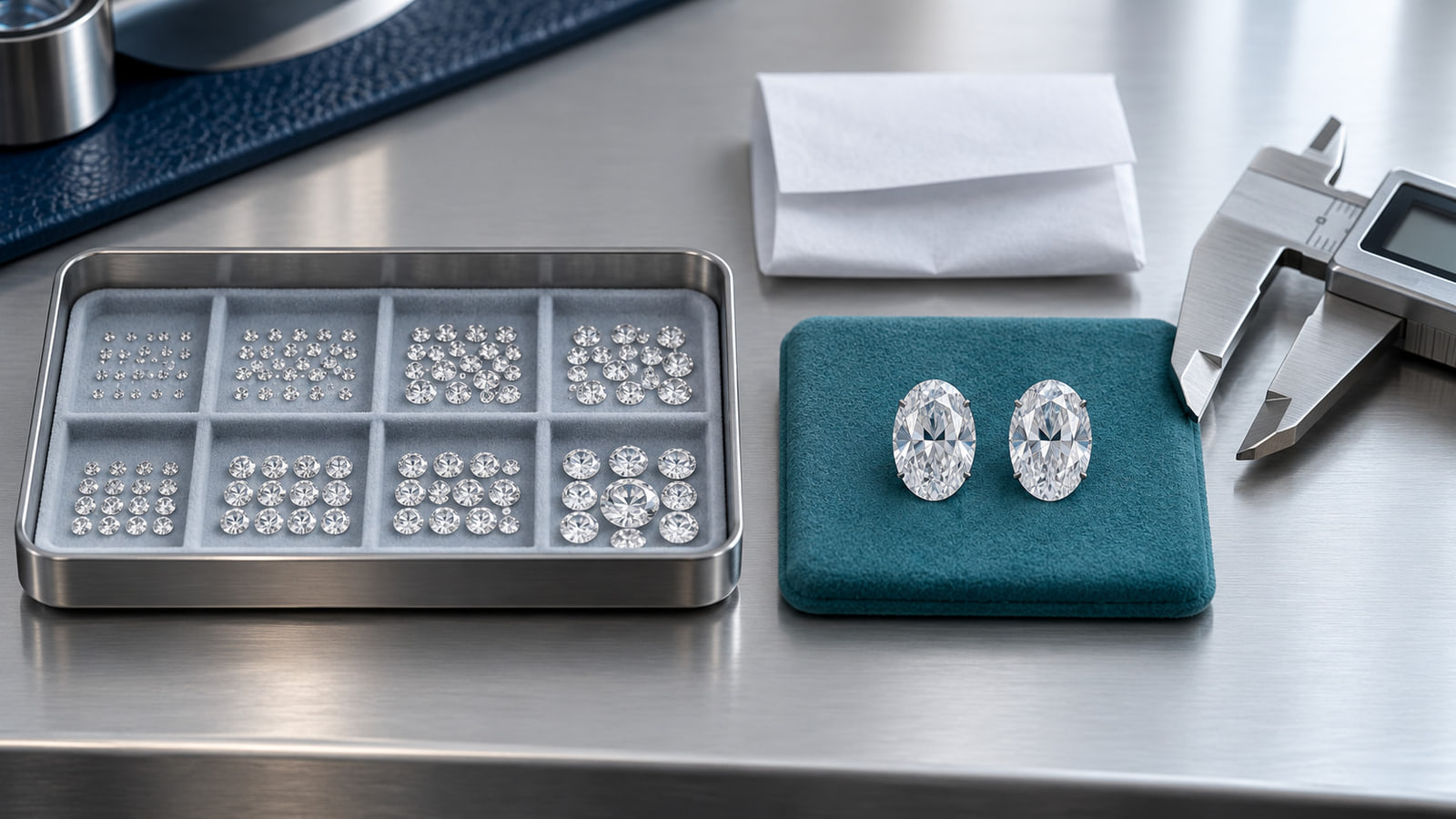
For matched pairs and coordinated sets, documentation also leaves a visual question: do the stones work together? Compare face-up dimensions, outline, color appearance and setting fit. MEITUO can coordinate these sourcing requirements alongside the offered documentation, subject to the agreed order scope.
Your sourcing partner
How Can MEITUO Support Certified Lab-Grown Diamond Sourcing?
MEITUO is a lab-grown diamond sourcing and supply-chain partner in Qingdao, Shandong, China. We support jewelry brands, wholesalers, retailers, designers and other business buyers through product selection, supplier coordination, quality-requirement confirmation and order follow-up.
Our sourcing discussions cover loose center stones, melee and accent diamonds, matched pairs, coordinated assortments and fancy-color requirements. Selection considers dimensions, appearance, cutting style, color, clarity, intended settings and purchasing cost.
Where grading reports are supplied, we pay attention to the correspondence between the goods and their documentation. CVD or HPHT growth information and disclosed post-growth treatment can form part of the brief. Product availability, supporting documents and delivery terms are confirmed for each order.
For a collection launch or repeat purchase, bring MEITUO a defined specification and the questions your customer-facing team needs to answer. We can coordinate sourcing discussions around those requirements. Laboratory grading remains the issuing laboratory’s role; our value is keeping selection and procurement information aligned.
What Should a Lab-Grown Diamond RFQ Include?
A useful request for quotation makes the offer comparable before a laboratory logo enters the conversation. State the product application, required specifications and documentation separately. Include a delivery destination so the supplier can clarify the relevant arrangements.
For a trial order, identify which criteria will decide the repeat purchase. A brand might approve an individual center stone by its item record, an earring pair by its matched appearance, and accent parcels by agreed size groups and screening arrangements. These are separate acceptance decisions. Ask the supplier to respond to each line, mark exceptions clearly and confirm whether any proposed substitution requires written approval. This gives the next order a usable reference.
Suggested RFQ brief: We are sourcing lab-grown diamonds for [application]. Please quote [shape], [carat or millimeter range], [color / clarity requirements] and [quantity or total weight]. Confirm the available report issuer and service, item references, growth / treatment information, matching criteria, inspection arrangements, quotation currency, lead time, delivery to [city, country], and agreed remedies for nonconforming goods.
Keep the approved specification with the final quotation. If a supplier substitutes an item, revisit its documentation and media before publishing the product. For a more detailed handoff, use MEITUO’s lab-grown diamond RFQ guide or send your sourcing requirements.
FAQ: Lab-Grown Diamond Certification and Supplier Trust
Does Certification Impact Trust in Lab-Grown Diamonds?
It can support trust by providing an independently checkable item record. Verify the issuer’s record, match the stone to the document and confirm commercial terms separately. Certification alone does not guarantee supplier performance.
Do Lab-Grown Diamonds Come With Certificates?
Some are offered with individual laboratory reports, while others are supplied without them or as documented parcels. Ask which item the proposed document covers and whether its scope meets your purchasing requirements.
What Is the Best Certification for Lab-Grown Diamonds?
Choose the report service that provides the information your purchase requires. Compare actual scope, terminology, date and verification options. IGI reports and GIA’s current eligible colorless assessments should not be treated as interchangeable formats.
Can a Valid Report Number Prove a Diamond Is Authentic?
A valid lookup confirms that a record exists. It does not, by itself, prove that the stone offered matches that record. Review measurements, available inscriptions and appropriate physical examination together.
Does a Report Prove US, Chinese or Indian Manufacturing Origin?
A supplier address or laboratory location does not establish where a diamond was grown or cut. Ask for origin information and supporting supply-chain records for the specific goods when this matters to your purchase.
Can MEITUO Help With Certified Lab-Grown Diamond Procurement?
MEITUO can discuss product selection, supplier coordination, quality requirements and the documentation offered for a sourcing brief. Availability, report arrangements and delivery terms are confirmed for the particular order.