 English
 Español
 Português
 Deutsch
 Français
 Italiano
 Nederlands
 العربية
 日本語
 한국어
 ไทย
Quick Answer
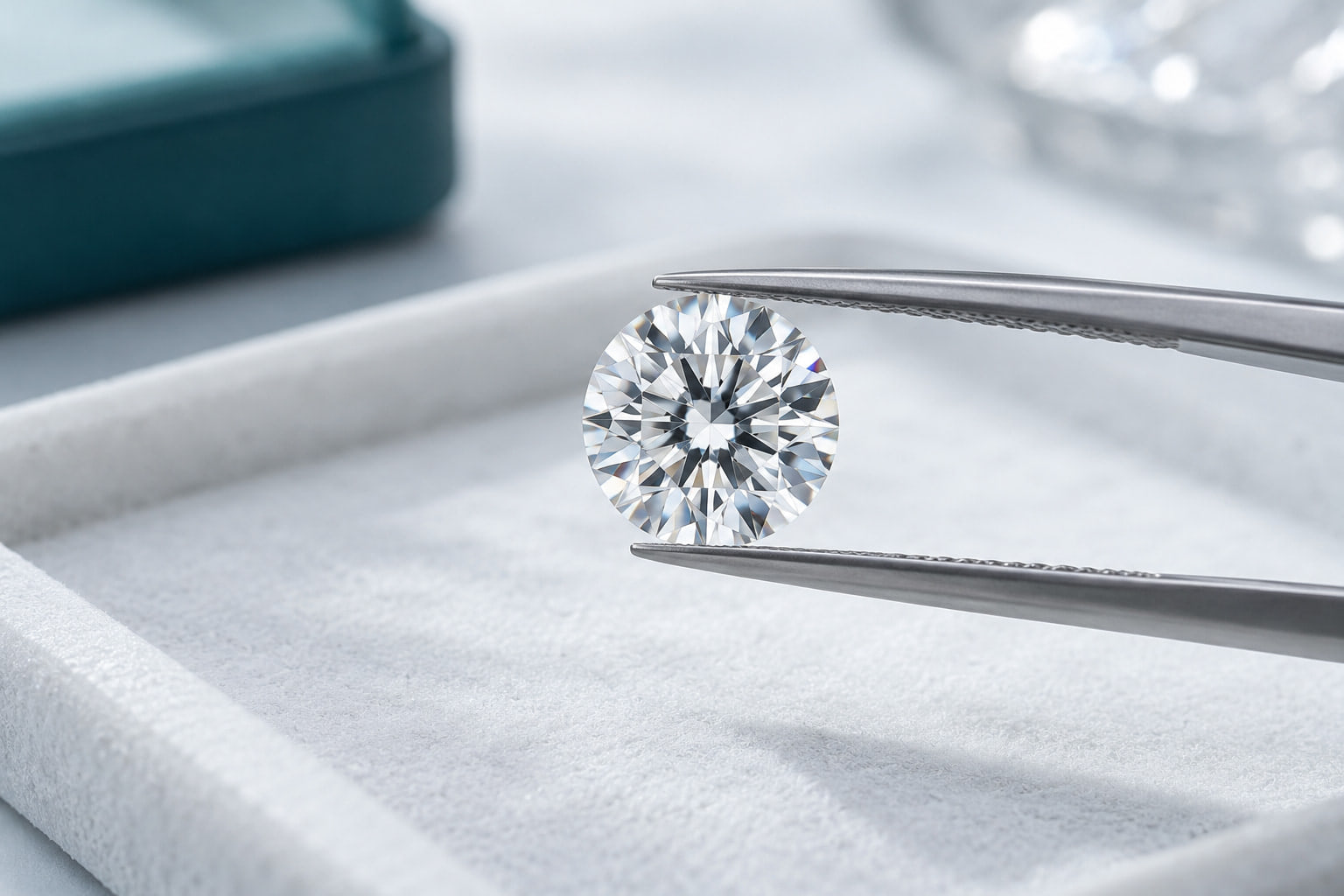
Choose round lab-grown diamonds by combining the actual laboratory document, face-up appearance and the dimensions required by the mounting. A round label does not establish balanced light return, and a desirable cut description does not make two stones interchangeable in a fixed setting. Review the whole pattern under controlled movement, check diameter and depth against the setter's envelope, and retain an accepted visual reference for repeat orders. Current laboratory services use different reporting systems, so read the service and fields on the document rather than translating every report into the same grade. For a round lab-grown diamond engagement ring, approve the stone and the mount together before releasing production.
What Does a Round Diamond Cut Description Actually Establish?
Separate shape, cutting style and the reported assessment. Round describes the outline; round brilliant identifies a facet arrangement. A seller may also use marketing descriptions such as ideal or premium. Ask who issued each description and what assessment it refers to. A laboratory's terminology and a retailer's collection name are not interchangeable evidence.
GIA publishes cut-estimation resources for standard round brilliant diamonds. That scope matters: do not use those tables to grade every other cutting style or treat an isolated proportion as a complete result. For a submitted laboratory-grown stone, inspect the actual document and current service rules. GIA currently describes Premium or Standard assessments for its eligible colorless-to-near-colorless loose laboratory-grown service. Do not promise a historical format without checking which report the stone actually has.
Record the report number, stated dimensions and inscription information where applicable. Verify the document through the issuer and connect it to the physical stone. The report supports defined gemological findings. It does not approve a mounting, guarantee a customer preference or establish that every vendor photograph is the delivered item.
For a production assortment, use a document matrix with one row per center. Record the laboratory, service, issue date and the fields actually present. If the collection accepts more than one reporting system, define acceptance for each explicitly. A spreadsheet that silently converts every favorable label to the same grade loses information. The round loose-diamond category provides a relevant starting point for stating the actual selection request.
How Should Buyers Inspect a Round Diamond’s Light Pattern?
Begin with a clean stone in a neutral setup. Observe it face-up, then tilt and rotate it slowly. Use a diffuse viewing condition and a second ordinary light source rather than relying on a single spotlit clip. Compare candidates at the same camera distance and similar exposure. Otherwise a brighter image may reveal the photography more than the diamond.
Look for an appealing pattern across the center and edge, how bright and dark areas change with movement, and whether a distracting area remains prominent through several views. Darkness in one frame is not automatically a defect: facets reflect the surrounding environment, including the camera and observer. Equally, a single exciting flash cannot establish consistently attractive behavior. The objective is to evaluate the complete sequence.
Ask for an unedited comparison clip alongside an accepted round. Keep the background and support the same. If a candidate looks unusually dark, repeat it with a different support and viewing distance before assigning a cause. Record a specific observation, such as a persistent dark center under both setups, instead of a vague rejected-quality label.
An image of a symmetrical pattern can be useful when its capture method is understood, but do not treat an unknown marketing graphic as an independent measurement. Ask whether it depicts the exact stone and what instrument or setup produced it. Where advanced optical analysis is needed, agree the competent reviewer and method before ordering. For most small collection pilots, consistent visual evidence plus physical review is a clearer starting point than collecting unexplained diagrams.
Round Brilliant VS Oval: What Changes for a Collection?
Both shapes can support an elegant bridal range, but they create different approval tasks. This comparison concerns design and sourcing workflow. It does not rank all rounds above all ovals or make a universal claim about price.
| Requirement | Round brilliant | Oval brilliant | Procurement implication |
|---|---|---|---|
| Outline control | Compare diameter consistency and circularity | Compare length, width, shoulders and elongation | Use shape-specific measurement fields |
| Viewing sequence | Review the full radial pattern through movement | Also follow the central bow-tie pattern | Retain complete clips rather than a best frame |
| Mount geometry | Round head with its own depth and contact limits | Directional head with a defined orientation | Do not reuse a seat without engineering review |
| Pairing | Match face-up diameter and visual character | Also match outline family and direction | Approve matched sets side by side |
| Product imagery | A radial reference can stay orientation-neutral | Long-axis orientation affects presentation | Store a consistent image protocol |
A round-centered range can simplify one aspect of silhouette matching, but it still needs real dimensional controls. Two round stones of equal weight may have different diameters or depths. An oval range can offer a longer silhouette, but weight alone cannot tell the buyer how long the delivered stone will look.
If the customer brief allows either shape, review oval alternatives before the mounting is frozen. Once a head has been produced, a change of shape should become a new approval, not an informal commercial substitution. Keep the reason for choosing each style visible in the collection plan.
How Can a Round-Stone Pilot Expose Mounting Mismatches?
Hypothetical example: a bridal brand plans eighteen round-center rings. The setter defines a sample envelope of 7.35 to 7.45 mm face-up diameter and a project-specific maximum depth recorded on the drawing. These are invented manufacturing requirements, not ideal proportions or a standard diameter for a particular carat weight. The buyer requests twenty centers, including two proposed reserves.
Candidate A measures 7.40 mm across its recorded dimensions and fits the depth limit. Candidate B has similar weight but a 7.58 mm maximum diameter. B should not enter the approved stock code simply because its face-up size looks generous. It needs a different head or a written engineering exception. Candidate C fits the diameter but exceeds the depth clearance, producing a different rejection reason.
Suppose seventeen stones pass both visual and setting review, two remain on hold for clearer movement clips and one fails the seat envelope. The purchase is not yet ready for eighteen assemblies plus two reserves. The buyer has seventeen provisionally accepted stones and three unresolved requirements. This count is specific to the hypothetical group; it is not a supplier acceptance-rate statistic.
The brand can wait for replacements, revise the launch quantity or commission a separately approved mounting variant. It should not solve the gap by quietly widening the specification after marketing photographs have been approved. Each choice has a different inventory consequence.
Save the accepted stone list, the actual drawing revision and one consistent comparison clip. The next order can then reference an approved family rather than the phrase same quality as last time. An attractive pilot becomes commercially useful only when its acceptance logic can be repeated.
Which Round-Stone Details Matter After the First Order?
Ask the setter which dimensions and girdle conditions affect the planned contact points. A round head may tolerate some variation, but only its responsible maker can approve the envelope. Keep the stone identity linked to the mount while the design is being finalized. Where an individual head is made for one center, preserve that pairing through packing and workshop handover.
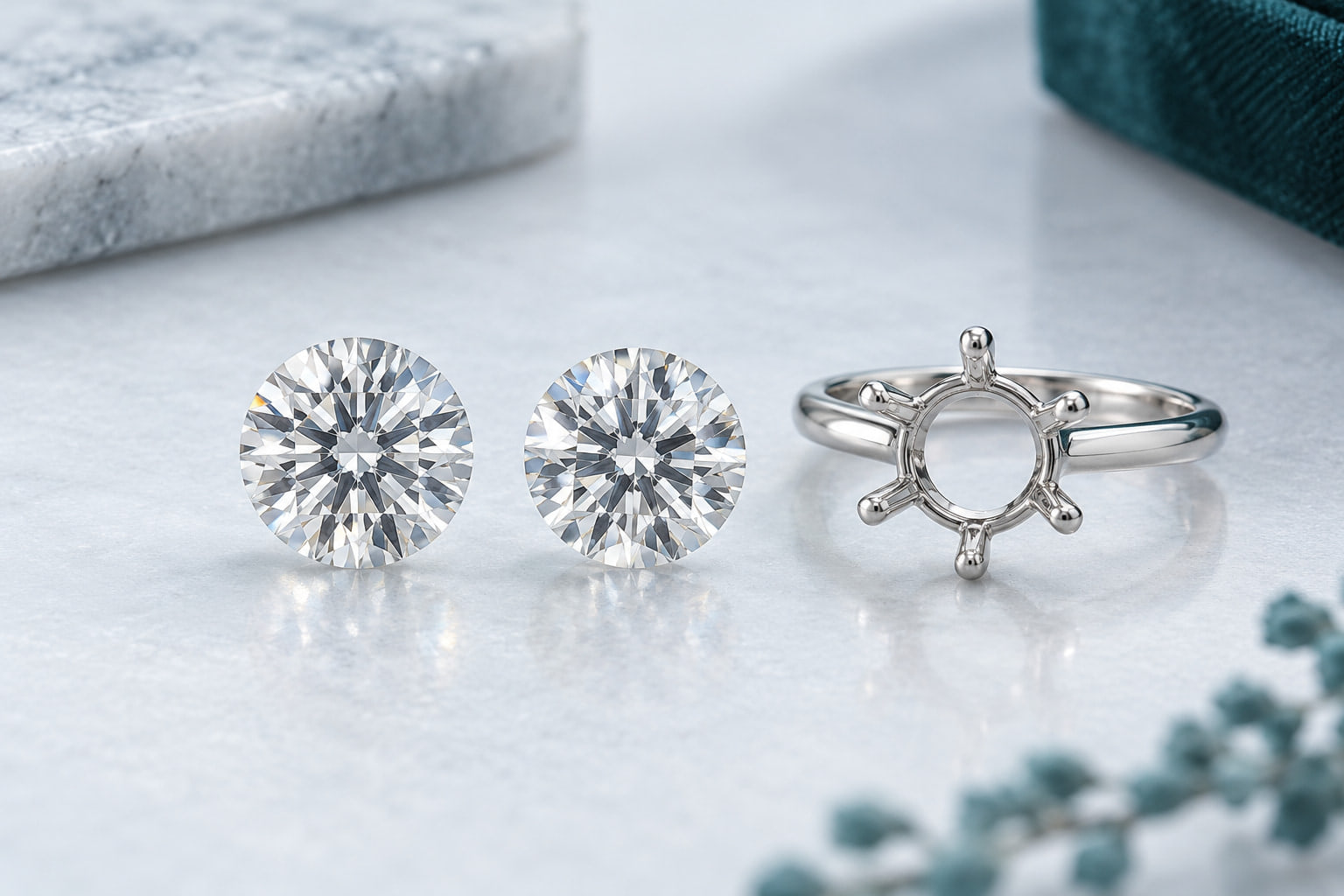
For earring pairs, compare two actual stones together at the same scale. Match diameter, color appearance and movement character, then have the proposed setting reviewed. A document pair that looks similar in a spreadsheet may still create visibly different earrings. Use the matched-pair sourcing category for that distinct requirement rather than adding a second unrelated round to a center-stone order.
Create a replacement rule before a sold ring needs service. If an exact physical reference is unavailable, retain actual-scale photographs, measurements and the accepted visual family. Confirm whether a replacement can use the existing mount or requires modification. The repeat-order guide helps organize this history.
MEITUO can coordinate candidate options against the retained brief and flag differences for buyer approval. For a coherent launch, connect that sourcing request to the bridal and engagement application. The acceptance decision should still identify who reviewed the stone and who approved the setting.
How Should Buyers Compare Round-Diamond Supplier Channels?
For a round program, the useful local question is who can show the actual inventory, reserve it and reconcile mounting exceptions. Compare these capabilities separately from country. A domestic trading channel and an overseas producer can each involve more than one party before the stone reaches the setter.
USA / Actual-stone comparison
What Should a US Round-Diamond Buyer Ask a Trade Distributor?
Stuller’s laboratory-grown selection provides a US trade-channel example. That channel can be relevant when a retailer needs individual round candidates and a setting discussion. It does not prove that a proposed stone was grown in the United States or that a particular reserve is currently available. Confirm the exact item reference before scheduling a review.
Ask whether a video shows the offered stone and whether the selected head can be checked with that stone before the final order. A domestic service conversation may simplify a pilot, but the buyer still needs the actual return and reservation terms. Avoid assuming that a catalog mount accepts every center with the same carat description.
For a US bridal collection, preserve the reporting language used on the invoice and customer page. If several laboratories are accepted, give sales staff a short explanation of the documents actually carried by the collection. A familiar laboratory name should not become a promise of a field that is absent from the offered report. Keep appearance approval separate from that disclosure review.
CHINA / Mounting envelope
How Should a Qingdao Coordination Brief Describe Round Centers?
The MEITUO sourcing team in Qingdao can receive a round-center brief that separates appearance from mounting fit. Do not infer a growth site from the coordinator's address. Ask which seller controls the exact shortlisted stones and how the reservation is maintained while your setter reviews measurements.
Send one drawing revision and one visual reference to all candidates. When samples come from different stock lists, keep their identifiers intact. A request for approximately the same diameter is insufficient if the mount already exists. Name the maximum depth and any corner-free girdle contact requirements supplied by the setter, without inventing tolerances the workshop has not approved.
For combined centers and small accent parcels, use different stock codes and acceptance records. A well-calibrated melee lot does not approve the round centers, and an attractive center sample does not establish the consistency of hundreds of accents. Confirm packing and exception reporting before consolidation. This keeps the practical China sourcing conversation about accountable item control rather than an unsupported country-level quality claim.
INDIA / Visual-family continuity
What Should a Surat or Mumbai Contact Demonstrate for Repeat Rounds?
GreenLab lists Surat and Mumbai contacts, illustrating production-region and trading contact points that an overseas buyer may encounter. Ask the contracting seller who can provide the exact round-stone clips and reserve the selected items. An address does not establish that a particular diamond was grown or cut at that location.
For a recurring bridal size family, request several candidates viewed together. A supplier may offer many rounds while only a subset matches your mounting envelope and visual preference. Record which criteria the shortlist satisfies and which remain subject to physical review. If repolishing is proposed, obtain the resulting dimensions, weight, document implications and timing before treating it as a solution.
Keep each selected center's identity connected through export and receiving. When a Mumbai trading contact changes between orders, the retained file should still explain the accepted appearance, seat limits and document scope. Ask how later replacements will be proposed when the original lot is exhausted. A credible review procedure is more useful than an assurance that every future round will be identical.
How Can MEITUO Support a Round-Diamond Collection?
MEITUO is based in Qingdao, Shandong, China and works as a sourcing and supply-chain coordination partner for jewelry brands, wholesalers, retailers and designers. For a round program, send the preferred visual reference, actual mounting envelope, reporting requirements and quantity schedule. The team can help communicate those requirements to suppliers, compare available candidates and follow the order through agreed checkpoints.
Its product scope includes loose center stones, melee, side stones, matched pairs and sets, and fancy-color options. That breadth can support a center-and-accent conversation without treating different stone groups as one approval. Request confirmation of availability, documents, MOQ, lead time, treatment information and shipping terms for the proposed order. MEITUO does not replace a grading laboratory or the setter responsible for fit. The jewelry-brand solutions page can frame the collection context. Contact [email protected] with the accepted sample reference and identify which differences require your written approval.
What Belongs in a Round Lab-Grown Diamond RFQ?
Define the shape and cutting style, document expectations, visual protocol and dimensional envelope. State whether each stone must match an existing head or whether the head will be made after stone selection. That one timing detail can change the feasible shortlist more than a broad quality adjective.
Request actual-stone references and a reservation period long enough for your review. Separate accepted, held and rejected candidates. If the quote includes pairs or a reserve, list them as distinct line items. Ask the seller to identify any proposed exception before dispatch. The following brief turns a general round-diamond inquiry into a reviewable sourcing task.
Please propose round brilliant laboratory-grown centers for [collection and quantity]. Our mounting envelope is [diameter range and maximum depth] under drawing [revision]; state whether each candidate fits it. Provide actual-stone document references, available inscription information, scale images and slow movement clips in neutral lighting. Our accepted visual family is [reference]. Separate matched pairs, main assembly quantity and reserve stones. Confirm growth and treatment information, reservation period, MOQ, lead time, shipping terms and review conditions. Flag all dimensional or document exceptions before substitution, and identify the party responsible for final setting-fit approval.
FAQ: Round Lab-Grown Diamonds: Cut Quality and Setting Fit
Does a Round Shape Automatically Mean Excellent Cut?
No. Shape identifies the outline, while cutting style and assessed quality are separate descriptions. Review the actual laboratory service and the stone’s behavior under controlled movement instead of treating a round label as a complete quality result.
Can Two Rounds of Equal Carat Weight Fit the Same Head?
They may have different diameters, depths and girdle profiles. Use the actual measurements and the setter’s approved envelope. Equal weight alone does not establish interchangeability.
Must Every Dark Reflection Be Rejected?
No. Facets reflect their surroundings and contrast changes with movement. Repeat the view under controlled conditions and identify any persistent distracting feature. An isolated dark frame cannot establish a complete optical assessment.
Do All Current GIA Laboratory-Grown Documents Use Historical Grades?
No. The current eligible colorless-to-near-colorless loose laboratory-grown service uses Premium or Standard assessments. Read the actual service and fields rather than promising a historical report format for every newly offered stone.
How Should a Matched Round Pair Be Approved?
View the two actual stones together at equal scale and under identical lighting. Compare diameter, color appearance and changing facet character, then check the intended settings. Similar report entries do not by themselves establish a visually matched pair.
What Should a Supplier Receive for a Reorder?
Send the accepted measurements, report references, visual-family clips, mounting revision and exception rules. State whether the existing setting is fixed. This gives the supplier a repeatable requirement instead of an ambiguous request for the same quality.