 English
 Español
 Português
 Deutsch
 Français
 Italiano
 Nederlands
 العربية
 日本語
 한국어
 ไทย
Quick Answer
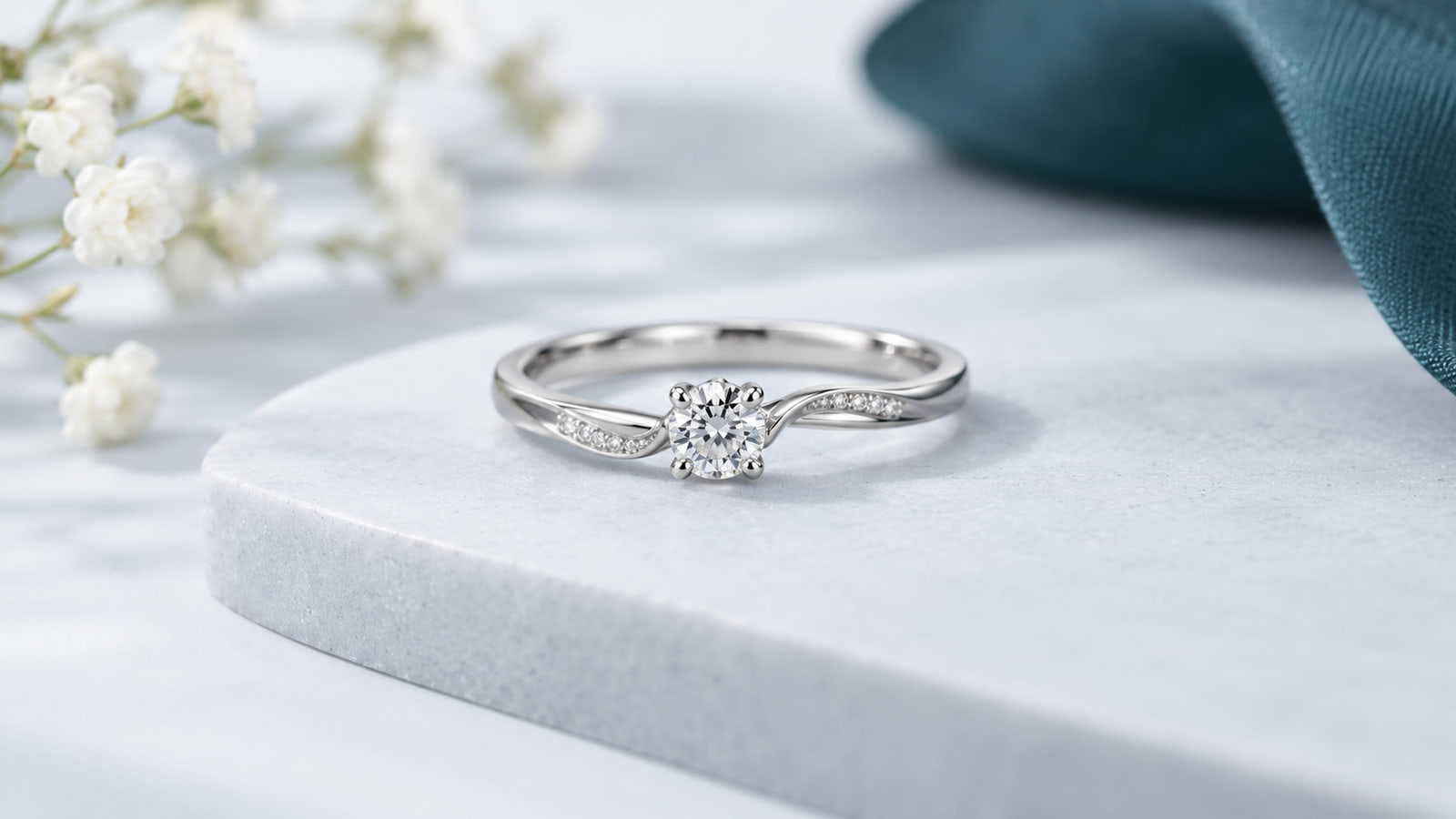
A lab grown diamond promise ring should be specified around a readable motif, an honest stone-weight description and a controlled range of dimensions. There is no universal promise-ring size, customer demographic or required center weight. For a small-scale line, compare a single-center motif with a cluster at actual display size, then approve how the diamond layout and metal outline work together. Record individual center weight separately from combined cluster weight, and select loose stones against the maker's accepted seats. Keep the assortment focused enough that variants remain identifiable. The buyer's evidence should be actual-scale samples, a motif-specific stone map and clear product data, rather than an unsupported claim that a particular design suits every customer.
How Do You Judge a Small Promise-Ring Motif?
Start with the feature that should be recognizable without magnification. It may be a heart outline, a knot-like metal form, a geometric symbol or another original design. Identify which parts are metal and which are diamonds. A customer should not need an enlarged render to understand the intended silhouette, but the buyer must decide that through actual-scale review rather than an invented universal minimum dimension.
Ask the designer to supply a front drawing at intended size and an enlarged technical version. The small view tests visual hierarchy; the large view identifies seats and finishing details. A motif that looks clear in the enlarged drawing may become visually crowded once metal surrounds, gaps and reflections are included at real scale.
Compare the motif on the proposed band width. A small symbol can look isolated on a broad shank or disappear beside a visually dominant shoulder. Neither result is automatically wrong, but it should be deliberate. Keep the selected proportion in the product reference so a later cost reduction does not quietly narrow the motif while retaining the old marketing image.
The everyday-fashion application brief can frame intended use. Promise is a positioning choice, not a technical guarantee or evidence of a particular buyer age. Let the product specification describe the actual object.
Single Center VS Small Cluster: What Changes in a Motif Line?
| Decision | Single-center motif | Multi-stone cluster motif |
|---|---|---|
| Visual structure | One diamond anchors a surrounding form | Several diamonds contribute to the outline or symbol |
| Weight description | Identify the individual center weight | Identify combined weight and any distinct center separately |
| Stone map | One main seat with possible accents | Position-specific count, sizes and symmetry |
| Sample priority | Center-to-metal proportion | Motif legibility, gaps and matching between positions |
| Replacement problem | Match the focal seat and appearance | Match a named cluster position and neighboring stones |
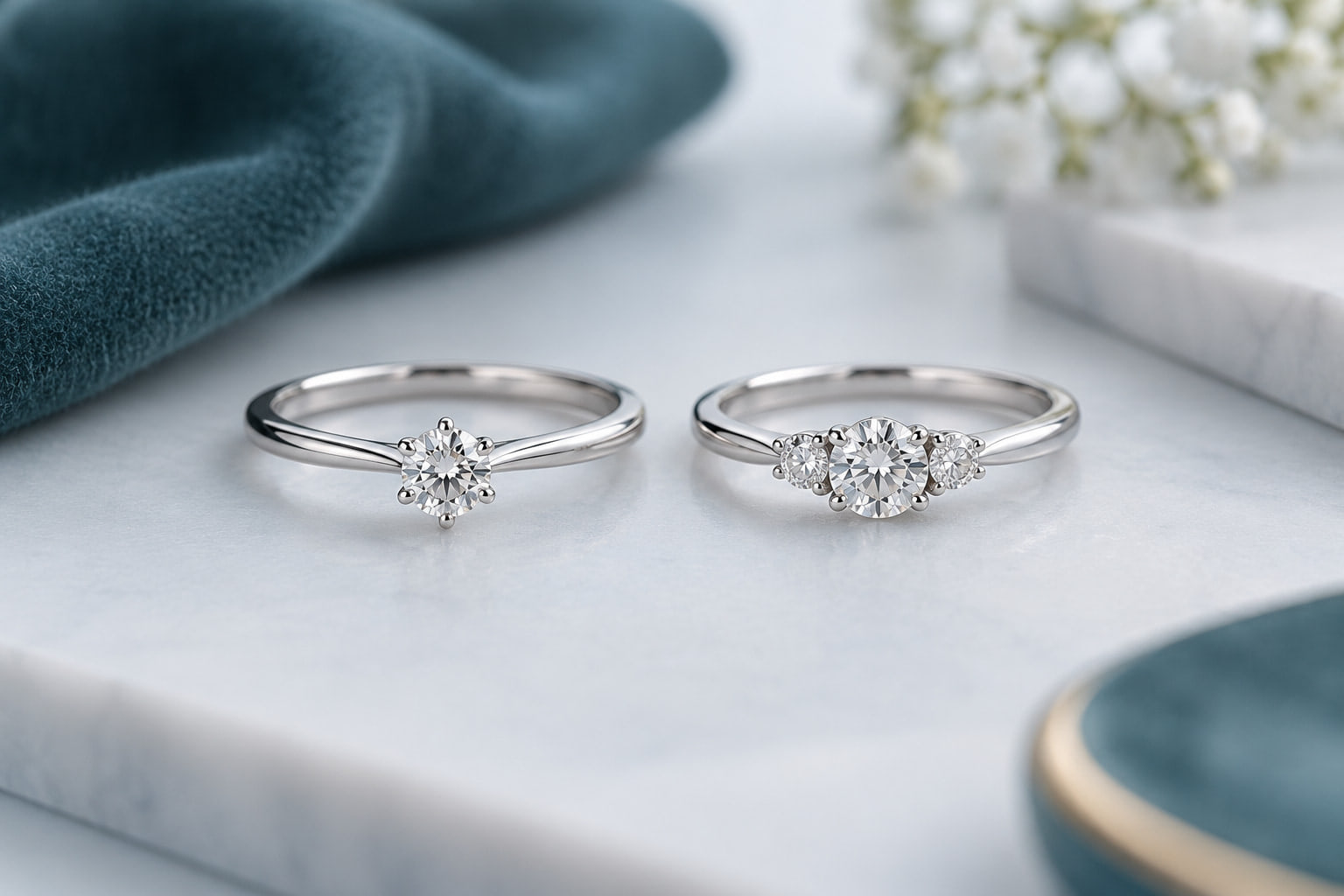
Do not describe equal combined weights as equivalent center sizes. A five-stone cluster and a single stone can share a nominal total while producing different outlines, seat requirements and merchandising information. Compare the actual design, not only the weight number.
A cluster may support a recognizable small symbol, but it also creates more position and matching decisions. A single-center design may simplify the map while relying more heavily on the metal motif. Neither is automatically the lower-cost or more premium route; quote the approved construction and selected diamonds.
How Can Buyers Build a Focused Promise-Ring Assortment?
Define the invariant design idea before adding variants. A focused range might preserve one motif outline while changing metal appearance or offering two approved stone configurations. Each change should have a reason that the customer can understand. Avoid creating a large matrix of nominally different products whose only distinction is an internal stone category.
For each variant, record motif width and height, band width, stone map and accepted appearance. State which dimensions remain fixed across ring sizes and which are revised by the maker. A smaller ring size does not automatically require a smaller symbol, but the producer should confirm the actual geometry and the buyer should review relevant samples.
Use the melee range for repeated small positions and the loose center range when there is a true focal stone. Keep the roles distinct even when the same seller supplies both. An invoice should not make a cluster total look like one center.
Plan product data at the same time as the physical range. Each variant needs a literal stone description, actual dimensions and a clear photograph of the supplied configuration. If a motif has symbolic meaning in the brand story, present it as the brand's design intention rather than a claim about every customer's relationship or reason for buying.
Decide how many physical variants the launch can support with actual evidence. If the team approves one symbol in two metal appearances and two stone layouts, that creates four combinations before ring sizes are considered. The buyer should identify which combinations need distinct photographs and samples. A configurable product page should not offer unreviewed combinations merely because its software permits them.
Keep a variant matrix showing the motif code, layout, metal appearance and accepted sample. Where the same stone family is shared, note that explicitly; where the motif changes, retain a separate drawing. This lets purchasing combine compatible loose demand without pretending that the finished variants are identical.
If one variant is deferred, remove that option from the launch matrix rather than leaving an unsupported configuration visible in the order form.
Hypothetical Example: A 0.20 Ct Motif Is Not Always One 0.20 Ct Center
An invented motif line compares two stone layouts inside the same design concept. Layout A uses one hypothetical 0.20 ct diamond. Layout B uses five hypothetical 0.04 ct diamonds, also totaling 0.20 ct. The arithmetic is identical in combined weight, but the component and visual decisions are different. These numbers illustrate disclosure and allocation, not recommended stone dimensions or live prices.
For layout B, the maker supplies a five-position map: one upper position, two shoulders and two lower positions. The buyer reviews whether the gaps still communicate the intended symbol at actual size. It cannot infer that the five stones occupy the same area as layout A, because weight does not establish the outline or spacing of a cluster.
The first cluster prototype loses the motif's lower point in a normal-scale photograph. The team asks the designer to compare the metal outline and lower positions, then reviews a revised sample. It does not increase every diamond by a fixed percentage without checking the seats and overall symbol.
The final product data uses separate descriptions: individual center weight for A and combined cluster weight for B. A purchase order for 100 rings of B needs 500 accepted mounted stones allocated to the five positions, whereas 100 rings of A needs 100 centers. The buyer can now compare actual component quotations without confusing equal total weight with equal stone count or equivalent design behavior.
Which Channel Can Support Small Motif Consistency?
Ask suppliers to respond to the motif's actual stone map and dimensions. A broad promise-ring category does not demonstrate small-scale readability. Identify who supplies loose stones, who produces the motif and who approves the finished object and sales description.
USA / Literal configuration disclosure
What Should US Product Data Say About a Promise-Ring Cluster?
A US-facing promise-ring listing should distinguish the emotional design story from the physical configuration. For the small cluster discussed here, state combined diamond weight and do not imply that it is one center. Keep laboratory-grown origin wording consistent with the actual supplied stones and the applicable advertising requirements.
A retailer sourcing loose diamonds through a trade channel still needs a maker-approved motif sample. Ask the commercial contact whether the quoted parcel has been selected for the required positions or is a broader stock category. A stone offer does not prove that a heart-like or geometric motif will remain legible after assembly.
For store presentation, retain an actual-scale photograph of every approved layout. Staff should be able to explain the difference between the single-center and cluster variants without using a weight total as the only comparison. When a customer requests another size, identify whether the motif remains the same or needs a separate producer-approved version before promising an identical appearance.
CHINA / Position identities at small scale
How Should a Chinese Coordinator Preserve a Small Motif Map?
In a China-facing procurement brief, provide an enlarged position map and a true-scale silhouette together. MEITUO's Qingdao coordination can use the position requirements for loose selection, while the jewelry maker uses the complete motif drawing. Neither document alone answers both the fit and readability questions.
Label every dimension family, especially when the lower point or shoulders use different stones. If a supplier proposes combining similar groups, ask the maker whether the same window is actually accepted in all those seats. A small dimensional convenience can change a symbol's appearance, so it should not be approved only to simplify sorting.
For dispatch, keep the single-center and cluster allocations distinct and identify variant codes on the packing list. Ask for any unresolved difference from the accepted appearance reference to be presented before shipment. The receiving workshop should not have to reconstruct a five-position symbol from a mixed parcel and a marketing photograph. Clear position labels preserve the intended design through handover.
INDIA / Selected positions rather than nominal totals
What Should an Indian Melee Offer Show for Motif Work?
Greenlab lists Surat manufacturing and Mumbai corporate contacts. For an Indian melee inquiry, provide the motif's actual position families and ask for usable counts after selection. A nominal total weight does not tell the workshop whether every required shoulder and lower position can be filled.
Ask the seller to identify how the offered stones compare with the retained appearance reference. For a small repeated symbol, an isolated bright or dull-looking position may distract from the whole. Review actual selected stones under consistent conditions rather than accepting a general stock video as evidence for the motif.
Before export, reconcile position counts and actual weight separately. If the supplier proposes a different size family, obtain maker and buyer approval before allocation. The change may affect the symbol rather than merely the parcel yield. Keep the selected reference with the shipment record so the receiving team can compare the same layout instead of evaluating each small stone without its design context.
What Should Inspection and Merchandising Check?
Approve actual-scale front and oblique photographs beside the technical map. The buyer should be able to point to the feature that makes the motif legible. If the actual product differs from the enlarged promotional image, revise the product or the image before launch rather than assuming customers will interpret the symbol as intended.
At receiving, reconcile stone counts by layout. For clusters, preserve position groups where dimensions differ. After setting, examine the motif as a whole and then inspect individual seats with the producer's agreed process. A correct count does not establish that the symbol reads clearly or that the setting has been verified.
FTC guidance addresses clear laboratory-grown origin disclosure. Keep that material statement visible alongside the design description. Also identify whether weight refers to a single center or the combined stones. Do not let an emotionally expressive product title replace literal product information.
For repeat orders, compare the same motif size and configuration. A slightly different metal outline may change the perceived symbol even when the diamonds meet their dimensional window. The repeat-order record should include both stone and motif references so the team can diagnose which component changed.
During merchandising review, inspect the photograph on the actual intended mobile product page as well as in a large desktop view. This is a presentation check, not a claim about every customer's eyesight. If the motif disappears at the planned image size, change the crop or provide an additional detail view while retaining a truthful scale reference. Do not enlarge the apparent ring relative to the hand merely to make the symbol seem more prominent.
For repair, record the motif position rather than requesting any small diamond of the same weight. A lower-point replacement and a shoulder replacement may need different dimensions or orientation even within one cluster.
How Can MEITUO Support a Focused Promise-Ring Line?
MEITUO is a sourcing and supply-chain coordination partner in Qingdao, Shandong, China, working with jewelry brands, wholesalers, retailers and designers. Its stated product range includes loose centers, melee, side stones and matched sets. A small promise-ring project benefits from a clear distinction between a single focal stone and a multi-position motif parcel.
The team can support product selection, supplier coordination, quality-requirement confirmation and order follow-up. Buyers can provide the accepted motif map and ask for separate responses by position family or layout. The jewelry maker remains responsible for the motif's physical construction, setting and finished sample, while the buyer approves how the design is presented in the assortment.
Contact [email protected] with configuration quantities, dimensions and appearance references. Confirm availability, documents, MOQ, treatment information, lead time and shipping terms for the specific order. The jewelry-brand application page provides context for a coordinated launch without implying a guaranteed customer profile or commercial outcome.
What Should a Promise-Ring RFQ Make Unambiguous?
Name the motif and attach the literal stone map. State which parts are metal, which are diamonds and which dimensions define the accepted silhouette. List single-center and cluster variants separately, with the weight basis clearly identified. Include actual-scale images so the supplier understands that readability matters alongside the technical seat requirements.
Ask for accepted count and actual weight by position family, not only a combined parcel total. Require approval before changing motif dimensions, stone count or the metal outline. If the maker proposes another layout, treat it as a separate design option with new sample evidence rather than a routine substitute under the same promise-ring name.
Use the RFQ guide for commercial terms and add the approved variant codes. A focused brief should let the buyer compare a reproducible small design, accurate product data and an identifiable component allocation without making demographic assumptions or promises about the customer's reason for purchasing.
Please quote laboratory-grown diamonds for promise-ring motif [code], layouts [single center or cluster] and quantities [mix]. Use the attached true-scale silhouette, enlarged position map, dimension windows and appearance references. State individual center weight separately from combined cluster weight. Provide accepted counts and actual weight by position family, with [service stock] separate. Flag changes to motif outline, count or dimensions for renewed approval. Confirm documents, treatment information, MOQ, lead time, packing labels and shipping terms. Separate loose selection from motif construction, setting and final inspection, which will be approved with the jewelry producer.
FAQ: Lab-Grown Diamond Promise Rings: Designing a Focused Line
Is There a Standard Promise-Ring Diamond Size?
No universal size defines the category. Choose dimensions around the approved motif, band proportion and intended assortment, then document the actual configuration.
Does a 0.20 Ct Cluster Equal a 0.20 Ct Center?
They share a combined weight in the hypothetical example, but differ in count, outline, seats and disclosure. Do not imply that the cluster contains one center of that weight.
Should a Promise-Ring Line Target a Presumed Age Group?
Do not treat the product name as demographic evidence. Use the brand's own customer research if segmentation matters and describe the actual design clearly.
Why Approve True-Scale Images?
An enlarged render can make a small symbol appear clearer than the finished object. Actual-scale review tests the intended visual hierarchy.
Can Stone Groups Be Merged for Easier Packing?
Only when the accepted dimensions and matching requirements permit it. Preserve distinct position families when the motif needs them.
What Changes Require a New Motif Review?
Changes to metal outline, overall dimensions, stone count or position geometry can affect readability. Review the revised object rather than assuming the old image remains representative.