 English
 Español
 Português
 Deutsch
 Français
 Italiano
 Nederlands
 العربية
 日本語
 한국어
 ไทย
Quick Answer
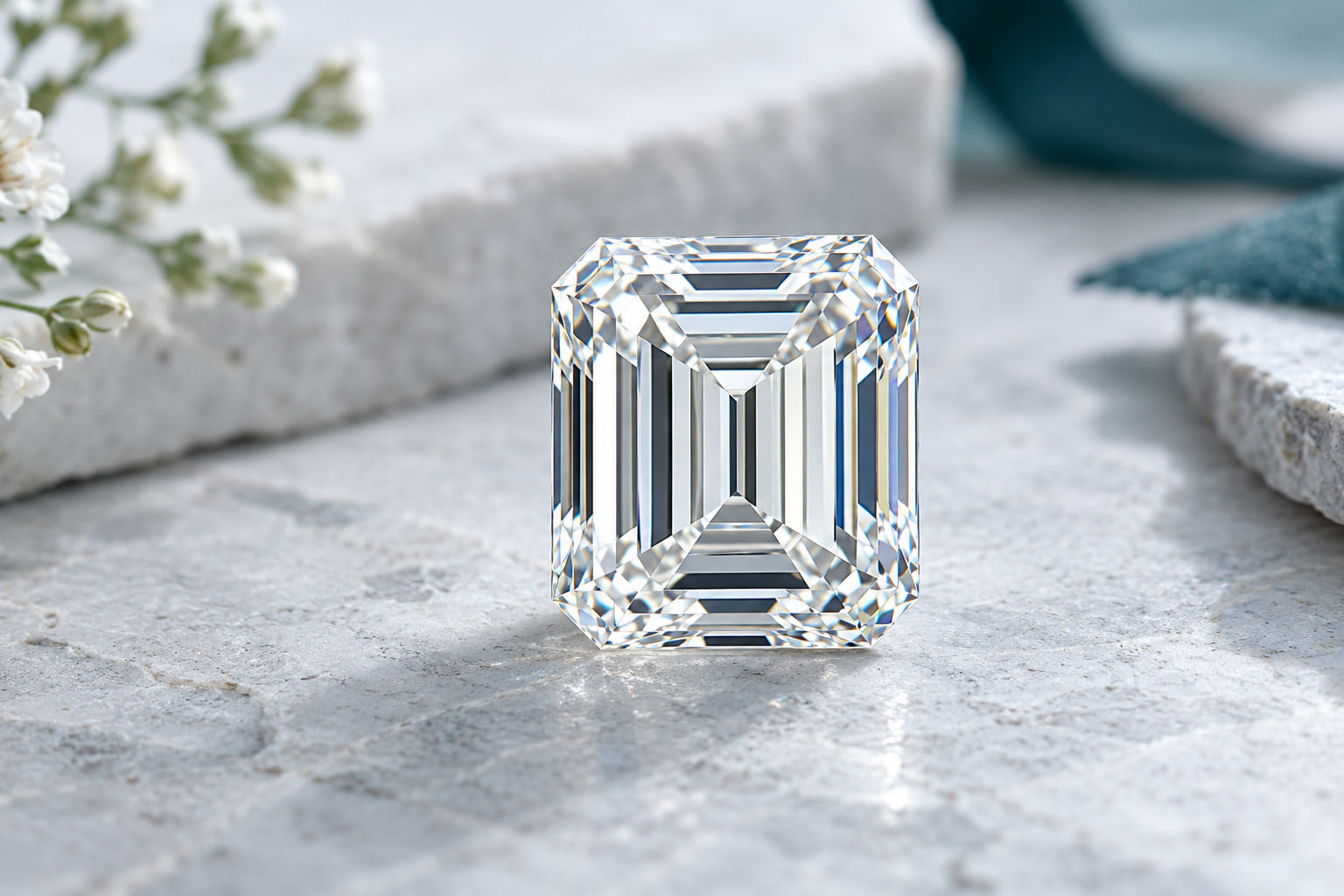
For a lab grown emerald cut diamond engagement ring, select the stone by its moving step pattern, face-up transparency, outline and actual mounting dimensions. Start with verified identity documents, then compare clean stones under identical diffuse and directional lighting. Broad alternating flashes are part of the style; a persistent face-up area that reveals the support underneath needs investigation. Do not reject every temporary dark band or tilted window. Check long-edge parallelism, corner clips and girdle condition before approving CAD. Compare an emerald cut with a radiant when the design brief is uncertain: their rectangular outlines can be similar, but their optical personalities differ substantially. Keep an approved video and physical reference so replacements reproduce the collection's appearance rather than merely its carat weight.
How Should Buyers Inspect Emerald-Cut Step Facets?
Think of the face-up image as a sequence of frames, not a single photograph. With the table approximately level, note whether the central rectangle and surrounding steps show a coherent pattern. Tilt a little along the long axis and then across the short axis. Bright and dark bands should change as the relationship between stone, light and observer changes. A dark band in one frame is not by itself evidence of a poor cut. A large region that remains inactive through the intended viewing movement deserves a second comparison.
Windowing is a separate observation from darkness. In its discussion of diamond cut evaluation, GIA describes windowing as concentrated see-through areas. For buying purposes, record what can be seen, the viewing direction and the support used. If a colored holder appears through the table, repeat the inspection away from that holder before blaming the stone. Metal reflections, fingers and a camera lens can all alter the appearance.
Use a clean, neutral support and leave space below the pavilion. Make two short unedited videos using the same camera distance. One should use a broad light source; another should show ordinary movement under smaller sources. Lock exposure when the equipment permits. Do not use the spectacular spotlight clip as the sole acceptance record. It can make a lively border conceal an unappealing central area.
At actual selling distance, judge whether the changing bands feel balanced. Then use magnification to investigate an observed defect. This order keeps a harmless microscopic feature from overwhelming the visual decision, while still preserving a route to investigate transparency, polish or surface condition.
Which Emerald-Cut Dimensions Matter Beyond Length and Width?
Length divided by width is a useful description of elongation, not a quality grade. Two stones with the same ratio can have different corner clips, table outlines and apparent shoulders. Place face-up photographs on the same millimeter scale. Compare the four long-to-short transitions, checking whether opposing clips are similar and whether the long sides appear parallel. A tilted camera can simulate asymmetry, so repeat the image before making a rejection.
For a four-prong design, the clips are functional surfaces. A corner that is much larger than the CAD assumption changes where the prong reaches the girdle. A small clip can place the bearing closer to an abrupt edge. Obtain a clear profile and an oblique corner photograph for the setter. The setter should establish suitable bearing positions and clearance from actual geometry; the buyer should not prescribe a universal prong pressure or stone thickness.
Depth also matters independently of carat weight. A deeper pavilion may require a taller basket or a different bridge. Confirm clearance from the culet to metal and from the gallery to the customer's intended wedding band. These clearances are design decisions for the manufacturing team. A report's overall depth does not describe every local surface the bearing will contact.
Inspect each clipped corner under magnification before and after setting. Record existing abrasions, chips or surface-reaching features with an identifying image. A receiving note that simply says good condition is difficult to use later. Number the corners clockwise in the reference photograph and connect any exception to that numbering. The same convention helps the setter and buyer discuss a problem without rotating the stone differently.
Emerald Cut VS Radiant: Which Rectangular Style Fits the Brief?
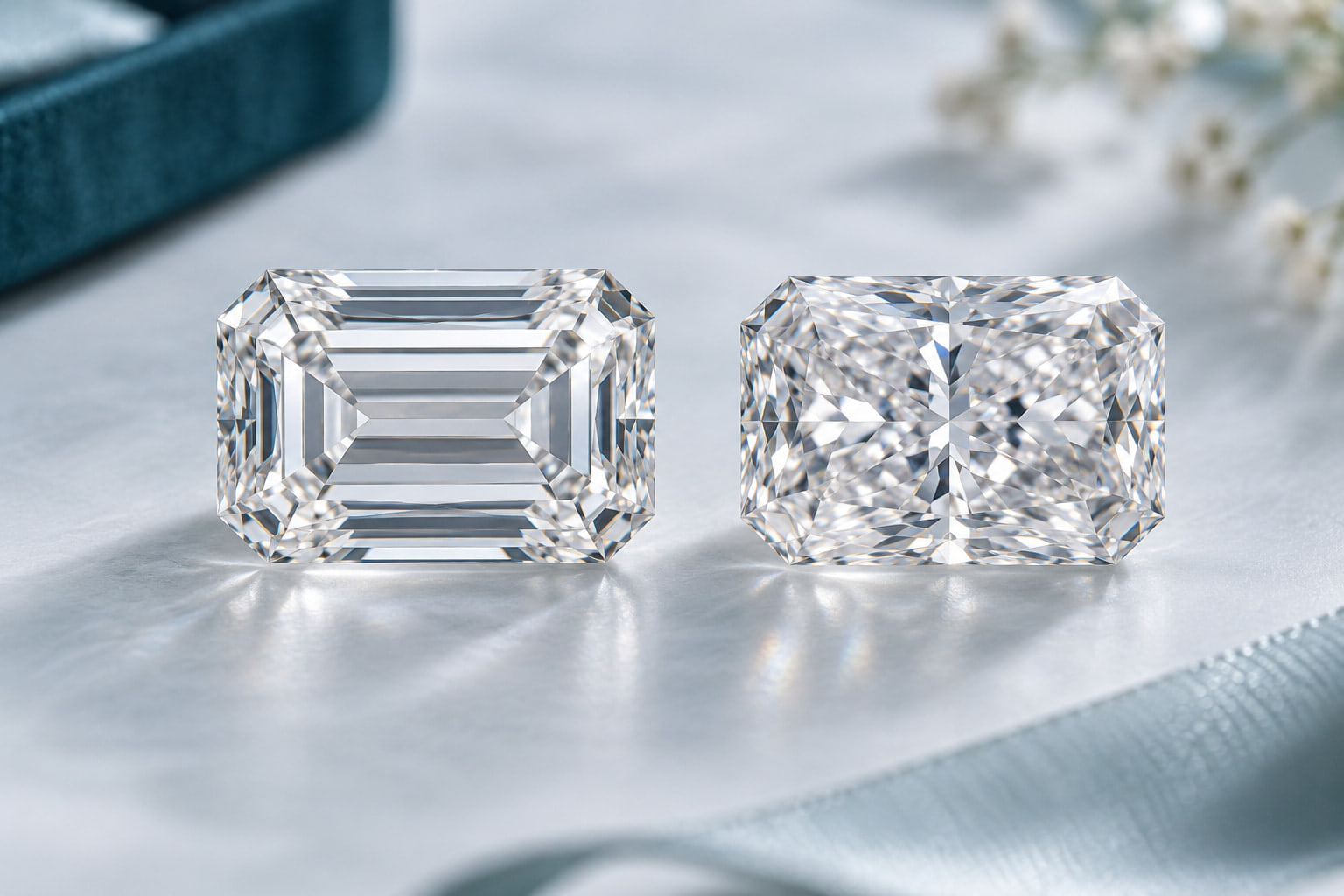
| Buying decision | Emerald-cut step style | Radiant brilliant style |
|---|---|---|
| Visual rhythm | Broad geometric bands and open-looking planes | More subdivided flashes, varying with facet arrangement |
| Useful selection test | Follow central steps and persistent transparency during slow tilts | Compare texture, distribution of brightness and inactive zones |
| Clarity concern | Investigate visible features beneath the open table | Check actual visibility rather than assuming busy facets hide everything |
| Mounting interface | Match clipped corners and long step surfaces to the seat | Check clips plus pavilion contour and depth independently |
| Collection matching | Match band width, outline and contrast rhythm | Match broad-flash or finely fragmented visual character |
Neither style wins every brief. A restrained architectural ring may depend on the emerald cut's broad reflections. A buyer seeking more distributed sparkle may prefer a radiant. Show both on the same background rather than using promotional photographs from separate vendors. The radiant product category is a useful alternative discussion alongside the emerald-cut selection.
A style change is also a manufacturing change. Similar maximum dimensions do not guarantee identical seats. Recheck the pavilion and corner contact points before using an existing model. If the collection needs both styles, create separate approval samples and stock codes. Otherwise a substitute may pass dimensional inspection while changing the product customers thought they ordered.
How Does a Practical Emerald-Cut Selection Exercise Work?
Hypothetical example: the Twelve-Seat Step Collection. A brand needs twelve center stones for a rectangular solitaire. Its sample envelope is 9.0 to 9.2 mm long and 6.2 to 6.4 mm wide; these are invented project limits, not industry ideals. Candidate A measures 9.10 by 6.30 mm, giving a ratio of about 1.44. Candidate B measures 9.20 by 6.20 mm, giving about 1.48. Both fit the broad envelope, but they will not necessarily look interchangeable.
The buyer compares their outline overlays and slow-tilt clips. A has fuller corner clips and balanced changing steps. B has narrower clips and a center that repeatedly shows the colored holder. The buyer repeats B's examination with a neutral noncontact support. If the visible area disappears, the holder was contributing to the problem. If it persists face-up under both setups, B goes to a separate review rather than being accepted solely because its weight matches.
Assume eight stones match the reference immediately, three need better photography and one fails the mounting envelope. That creates three operational groups: eight provisional selections, three unresolved candidates and one replacement request. It does not establish an acceptance rate for the supplier. The denominator is only this hypothetical group, and the unresolved stones cannot honestly be counted as approved.
Ask MEITUO to coordinate a shortlist against the reference and identify which differences are negotiable. The buyer might accept 0.1 mm additional length after setter review but keep corner balance nonnegotiable. Put that priority in the order instead of allowing an intermediary to guess. For coordinated side stones, use the matched-pair planning guide and approve the complete three-stone layout at actual scale.
What Should Emerald-Cut Receiving Inspection Record?
Separate identity, visual approval and setting approval. Link the parcel label to the report number and physical inscription where available, and verify the report through its issuing laboratory. Inspect measurements and shape description, then compare the actual stone with its retained media. An attractive photograph does not establish that the delivered stone is the photographed one.
Read the service name as well as the laboratory name. GIA's current colorless-to-near-colorless loose laboratory-grown service uses Premium or Standard for eligible stones of 0.15 ct and above. Historical reports and other services can use different fields. Do not promise customers a traditional color and clarity pair on every current GIA document. IGI says growth and treatment comments are provided upon request; request the needed information explicitly.
At receiving, clean safely, photograph the corners and inspect with magnification. Repeat the established movement test. Record whether an objection concerns identity, a new surface defect, optical appearance or CAD incompatibility. These need different remedies. A disputed inscription calls for identity reconciliation; a different corner geometry may require replacement or engineering review. Retain the stone unset until the agreed inspection window closes and the decision is documented.
The repeat-order guide helps connect this record to replenishment. Keep a reference to the accepted visual family, not only the highest specification ever purchased.
How Should Emerald-Cut Buyers Compare Suppliers by Market?
Choose the channel according to who can show the actual steps and corner geometry, who controls the parcel, and who can resolve a failed fit. Country identifies a commercial context; it does not grade the emerald cut or establish where an individual crystal was grown.
US / Step-cut distribution
What Should US Emerald-Cut Buyers Request From a Trade Distributor?
A US trade distributor can be useful when a retailer wants to compare a few emerald cuts before committing a mounting. Stuller's education page describes its loose lab-grown selection; that demonstrates a distribution channel, not that a listed stone was grown in the United States. Ask which stones can be shown in person, which require a supplier reservation, and whether the online clip depicts the exact inventory item.
For an architectural bridal line, have the distributor repeat the long-axis and short-axis tilt with a neutral support. A retailer approving remotely should request the same camera distance as its existing sample. Confirm responsibility for the return shipment if a candidate's clips will not seat in the planned head. Separate a local shipping advantage from an optical claim: proximity may simplify review but cannot make two step patterns match. Keep a documented approval before ordering the final mount, and use any memo or return arrangement only under its actual written terms.
CN / Corner and center coordination
How Should China Sourcing Separate Emerald Centers From the Melee Channel?
GIA's 2024 industry review describes China's substantial HPHT activity, including melee production. That background does not prove that a particular supplier has well-matched emerald centers. A center-stone program needs access to individual stones, detailed corner images and a way to reserve the exact accepted parcel. Ask whether the seller controls those steps directly or is relaying another business's stock list.
When sourcing through Qingdao coordination, send the same reference to every candidate and require measurements in the same orientation. Avoid requests translated merely as long rectangle: specify step cutting, four clipped corners and the desired visual rhythm. If Chinese melee accompanies the centers, assign separate approval rules; round accents cannot validate center transparency. Request an itemized packing list with each center's identity and exception notes. Before consolidating shipments, establish where the buyer's review occurs and whether an unresolved center can remain out of the shipment while accepted accent parcels proceed.
IN / Cutting and parcel selection
What Should Buyers Ask an Indian Emerald-Cut Cutting or Trading Contact?
India's cutting and CVD ecosystem offers different contact points for a step-cut search. GreenLab's own contact page lists Surat and Mumbai locations, illustrating that production-region and trading contacts can be distinct. Those addresses do not establish where any offered stone was cut. Ask the contracting seller to identify who can answer pavilion and corner questions and who can actually reserve the stone.
For a replenishable emerald collection, request several candidates photographed side by side, rather than one impressive isolated center. Ask whether proposed recutting is only a suggestion or a committed service, and obtain revised weight, dimensions, documentation and timing before approving it. Do not treat a possible recut as a free remedy for a failed inspection. A buyer needing twelve similar rectangles may benefit more from selecting an existing coherent group than maximizing the dimensions of one stone. Preserve the selected corner images and step-pattern clips with the purchase order so a later trading contact can understand the original acceptance decision.
How Can MEITUO Coordinate an Emerald-Cut Order?
MEITUO is a sourcing and supply-chain coordination partner based in Qingdao, Shandong, China. For an emerald-cut program, its useful role is to turn an aesthetic brief into questions that candidate suppliers can answer: which corners were photographed, whether the actual parcel has movement videos, and which dimensions remain subject to setter approval. It can support product selection, supplier coordination, quality-requirement confirmation and order follow-up.
Its product scope includes loose center stones, melee, side stones, matched pairs and sets, and fancy-color options. For this style, a buyer can request coordination between the center and matching side-stone outline rather than treating them as separate purchases. MEITUO does not replace an independent laboratory or the manufacturer's engineering approval. Documents, availability, MOQ, lead time, treatment information and shipping terms need confirmation for the specific order. Send the reference image, mounting drawing and ranked acceptance criteria to [email protected]. The designer and studio application page provides a relevant starting point for a design-led inquiry.
What Belongs in an Emerald-Cut Diamond RFQ?
Put visual evidence beside dimensional requirements. State whether the buyer prefers broad, clearly separated steps and specify the viewing sequence used for approval. Include the mount's acceptable length, width and depth envelope, corner photographs and whether the setter can consider alternatives before casting. If the design is already cast, say so; a supplier should not assume the mount can move around the stone.
Define the exception process before selection starts. An offer outside one limit should carry the actual measurement and reason for proposing it, rather than being quietly included in the parcel. Request a list of reserved stones, a time-limited availability confirmation and the agreed review conditions. Quantities and media requirements can be copied into the following brief, then refined through the diamond RFQ guide.
Please quote emerald-cut laboratory-grown centers for [collection] in [quantity]. Our target dimensions are [length range] by [width range], with depth limited by [mount drawing]. Provide actual-stone reports, inscription references, face-up scale images, four clipped-corner views and neutral-support videos tilting in both axes. Our visual reference is [sample ID]; flag persistent face-up transparency and any outline departure separately. State growth and treatment information, available reservation period, MOQ, lead time, shipping terms and review conditions. Do not substitute a radiant or a different corner profile without written approval from [buyer contact].
FAQ: Emerald-Cut Lab-Grown Diamonds: Selecting Clear Step Cuts
Does a Higher Clarity Grade Guarantee an Attractive Emerald Cut?
No. Clarity documentation addresses characteristics under a defined assessment, while an attractive step pattern also depends on the stone and viewing conditions. Investigate visible inclusions under the table, but compare contrast and transparency separately. Paying for a higher grade cannot repair an unappealing outline or a persistent face-up window.
Should Buyers Reject Every Dark Stripe?
No. Alternating bright and dark reflections create the step-cut appearance. Review whether the stripe changes with controlled movement and whether the complete pattern remains appealing at actual viewing distance. A fixed photograph cannot establish the full optical behavior.
Can an Emerald Cut Replace a Radiant in the Same Setting?
Only after dimensional and engineering review. Similar length and width do not establish matching clipped corners, pavilion contours or bearing positions. Have the setter approve the actual replacement rather than using a shape label as proof of fit.
Is There One Ideal Emerald-Cut Ratio for All Buyers?
No. The ratio describes elongation and can help maintain a collection preference. Corner clips, table outline and dimensions still affect appearance. Establish your acceptable family with physical samples and photographs rather than presenting a preferred ratio as a universal grading rule.
How Can a Buyer Investigate a Suspected Window Remotely?
Request a repeat face-up video with a neutral support and space under the pavilion, then a controlled tilt in both axes. Compare with an accepted stone using identical lighting. If the result remains ambiguous, make physical review a condition before setting instead of resolving the question from edited images.
What Should Be Retained for an Emerald-Cut Reorder?
Keep the report reference, accepted measurements, face-up scale image, four corner views, movement clips and mounting version. Record which differences were accepted as exceptions. A future supplier can then distinguish the intended step-cut style from an accidental feature of the first parcel.